

You’ve scaled your agency into the $1M–$5M revenue range. That’s proof that your positioning, sales motion, and client trust are working.
But growth introduces a new constraint: capacity.
Every new Shopify project triggers the same internal question: “Can we deliver this at the same quality, speed, and margin without burning out our team or breaking our systems? “This is where many agencies stall. Not because demand dries up, but because their delivery model doesn’t scale.
White label Shopify development service replaces people-dependent delivery with a repeatable, scalable system. This guide explains how it actually works, step by step, and why growth-focused agencies increasingly rely on it to scale with confidence.
TL;DR
- Scaling agencies don’t fail because of sales; they fail because delivery can’t keep up
- Freelancers and in-house hiring create cost, quality, and capacity risk at scale
- White-label Shopify replaces individual capacity with systemic capacity
- Agencies keep strategy, brand, and client ownership; partners handle execution
- The result: predictable margins, consistent quality, and scalable growth
Written for: Digital agency owners with recurring Shopify demand and capacity constraints, looking for a white label shopify partner for agency
Why trust this guide: E2M Solutions has partnered with 400+ agencies over 13 years, delivering white-label services that scale
Find Your Shopify Delivery Ceiling
A free 60-second quiz that shows exactly where your delivery model slows down — and what to fix before your next growth phase.
Table of Contents
- What Is White-Label Shopify Development?
- How Agencies Leverage This
- The Capacity Crisis: Why Hiring Breaks Agencies at Scale
- What You Get from a Best White-Label Shopify Development Partner
- How the White-Label Shopify Model Works (Step by Step)
- What Shopify Services Agencies Can Confidently Sell
- The Profitability Formula Agencies Rely On
- What This White Label Shopify Model Gives You as an Agency Owner
- Final Takeaway: Scale Systems, Not Headcount
- FAQ
What Is White-Label Shopify Development?
White-label Shopify development is a business model that allows agencies to sell fully branded Shopify services without building everything in-house. Where a specialized third-party agency builds and manages e-commerce stores on behalf of another digital agency, which then rebrands and sells these services to its end clients.
A specialised white label shopify partner handles Store Development, App & API Integration, Migration Services, and Enterprise Solutions, while your agency delivers the service under its own brand.
Core Concept: Agencies partner with white-label service provider who builds Shopify websites, designs, and optimises Shopify stores (including themes, apps, payments, and SEO) as if the agency did it themselves.
This allows agencies to offer high-end full eCommerce solutions without the overhead of hiring or training an in-house technical team.
What white-label Shopify development is NOT:
- Freelance marketplaces
- One-off outsourcing projects
- Staff augmentation with shared, distracted resources
What it IS:
- A dedicated, invisible Shopify delivery system
- Built specifically for agencies with recurring Shopify eCommerce demand
- Designed to replace fragile, person-dependent execution
Before diving into how agencies leverage white-label partnerships, it’s worth understanding the technical capabilities that make modern Shopify development so powerful. From headless commerce architectures to AI-powered store optimization, the Shopify ecosystem has evolved significantly. Learn more about building multilingual stores and use generative AI to improve Shopify store and offerings.
How Agencies Leverage This
For agencies scaling Shopify ecommerce client delivery, white-labeling isn’t about cutting corners. It’s about building leverage through white label Shopify development service partnerships.
White label Shopify eCommerce means bringing in a expert delivery team that works under your brand. Think of it as a trusted part of your agency, including Shopify & Shopify Plus designers, web developers, payment specialist, QA specialists, and project managers, all working behind the scenes using clear, proven processes.
The Capacity Crisis: Why Hiring Breaks Agencies at Scale
When Shopify website design services demand increases, the first reaction is usually the same: “We need to hire.”
On paper, that sounds like the responsible move. In reality, it’s where most agency owners lock themselves into the next growth problem.
Hiring doesn’t actually give you flexible capacity.
It gives you fixed costs and long-term pressure.
In the USA a senior Shopify developer isn’t just a salary line item.

Once you include benefits, recruiting time, onboarding, and a slow ramp-up period, you’re easily looking at $120,000+ per year, before that hire ships consistent, margin-positive work & Average Annual Total Compensation is $249k as per 6figr.
And that’s the best-case scenario.
Here’s what agency owners really take on with every new hire:
1) One resignation can disrupt everything
When a key developer leaves, projects slow down, clients notice, and you end up stepping back into delivery mode.
2) You still pay full salaries during slow periods
Revenue may dip, but payroll doesn’t. Quiet months slowly eat into the margins you worked hard to build.
3) You become the delivery manager again
More people means more reviews, more check-ins, more explaining. Less time spent selling, leading, or growing the agency.
4) Quality starts to vary
Every hire has their own way of working. Keeping output consistent becomes harder as the team grows.
5) Capacity shows up late
Most hires take 3–6 months before they’re fully productive, often long after the opportunity that triggered the hire has passed.
The real risk?
Hiring forces you to commit to long-term costs based on future demand. Most agencies lose margin not because they lack work, but because they scale headcount before their delivery system is ready.
Not sure if your delivery model is built to scale?
How White-label Shopify service changes the equation?
Instead of locking your agency into salaries, you get elastic capacity, the ability to scale delivery up or down based on real demand, without carrying long-term risk, management drag, or brand exposure.
What You Get, as the Agency Owner, from a Best White-Label Shopify Development Partner
Not all white-label partners are equal.
Most provide capacity. Very few provide real business growth.
A high-quality white-label Shopify partner doesn’t just give you people to assign work to. They give you a delivery system you can rely on without constant supervision.
Here’s what actually separates a mature partner from a risky one:
Work moves forward without re-explaining context
You’re not re-onboarding new people for every project or correcting work caused by divided attention. The team already understands your standards, your clients, and your expectations.
Decisions are made with Shopify-specific judgment
You’re not paying for trial-and-error or generic design and development practices. Experience shows up as fewer reworks, better technical calls, and smoother launches—especially on complex builds and Shopify Plus projects.
Your agency keeps operating the same way
You don’t change tools, workflows, or communication rhythms to accommodate a partner. Delivery fits into your existing system instead of forcing you to manage a parallel one.
Deadlines become predictable instead of stressful
You stop chasing updates or wondering where a project stands. Progress, risks, and timelines are visible without you asking.
Costs stay aligned with real demand
You’re not locked into overhead that assumes future volume. Capacity expands or contracts based on what you’ve actually sold, not what you hope to sell.
The reality most agency owners learn the hard way:
Your brand takes the hit when delivery fails, never the partner’s.
That’s why mature white-label partners invest in process, QA, documentation, and redundancy, not just individual talent. They’re structured to protect your agency’s reputation, not just finish assigned tasks.
Ready to evaluate fit? Book a conversation with E2M’s Shopify delivery team →
How the White-Label Shopify Model Works (Step by Step)
Here’s how white-label Shopify design and development partnerships operate in practice:
Step 1: Discovery & Alignment
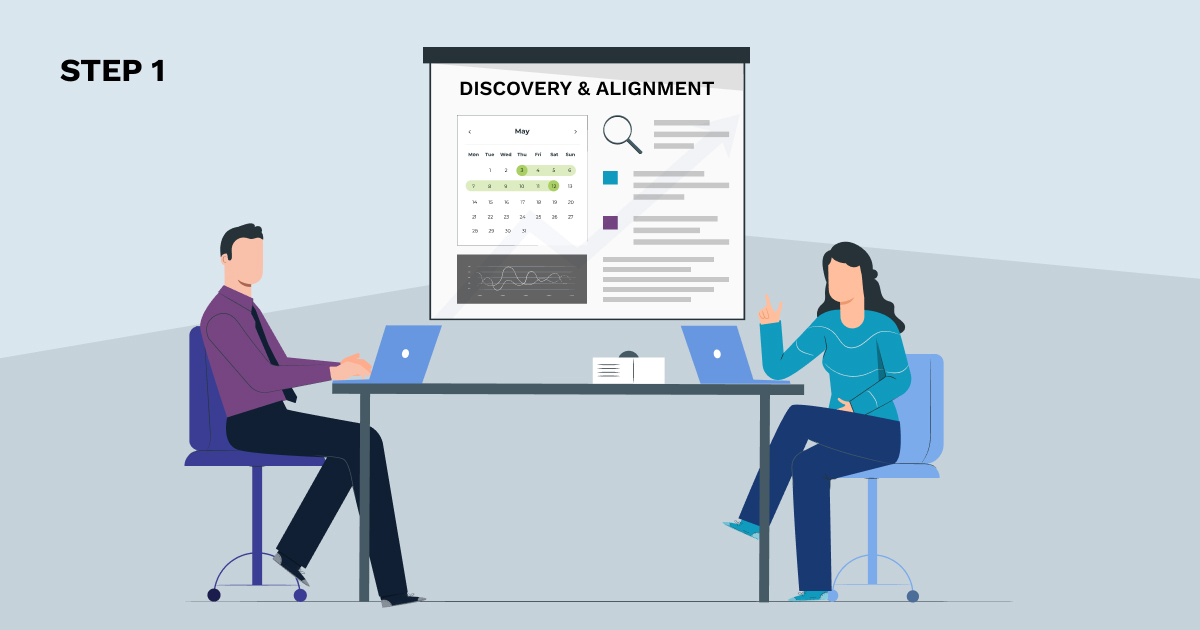
Your agency and the white-label partner align on:
- Current Shopify demand and delivery gaps
- Growth goals and capacity needs
- Quality standards and communication preferences
- Brand guidelines and client interaction protocols
This isn’t a sales call. It’s a strategic fit evaluation.
Step 2: Choose a Capacity Model
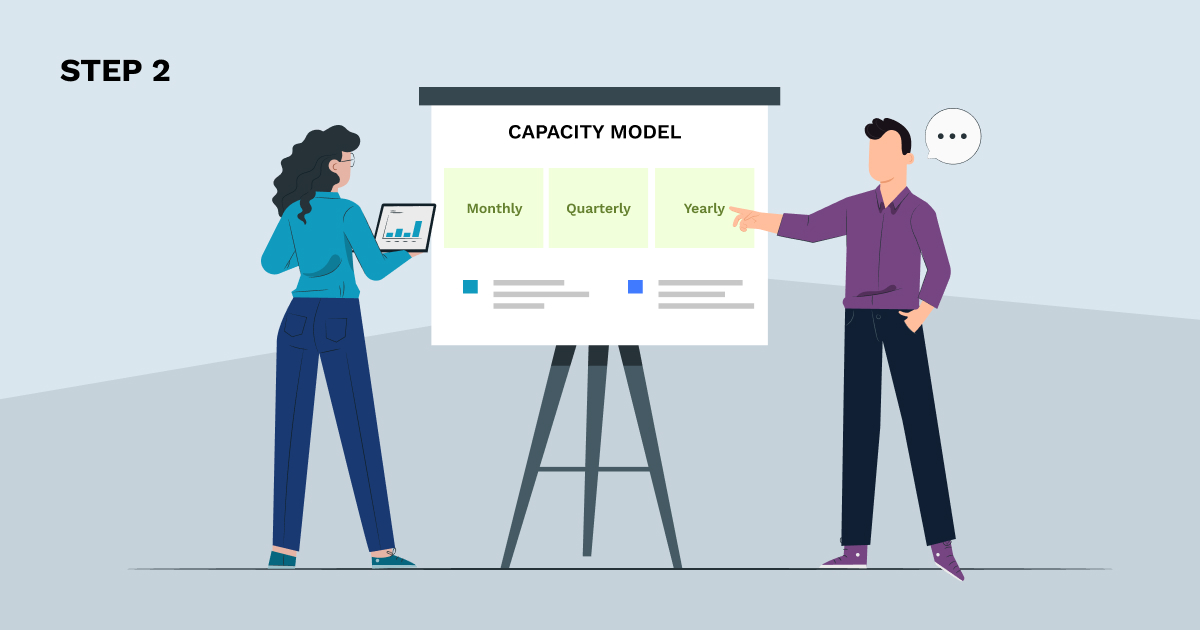
Select the engagement model that matches your sales pipeline:
- Monthly retainer: Fixed hours per month for predictable, recurring Shopify work
- Quarterly commitment: Scale up for seasonal demand or major launches
- Yearly commitments: Scale up for a yearly plan with ongoing projects
The model adapts to your business, not the other way around.
Step 3: Assign Shopify Work
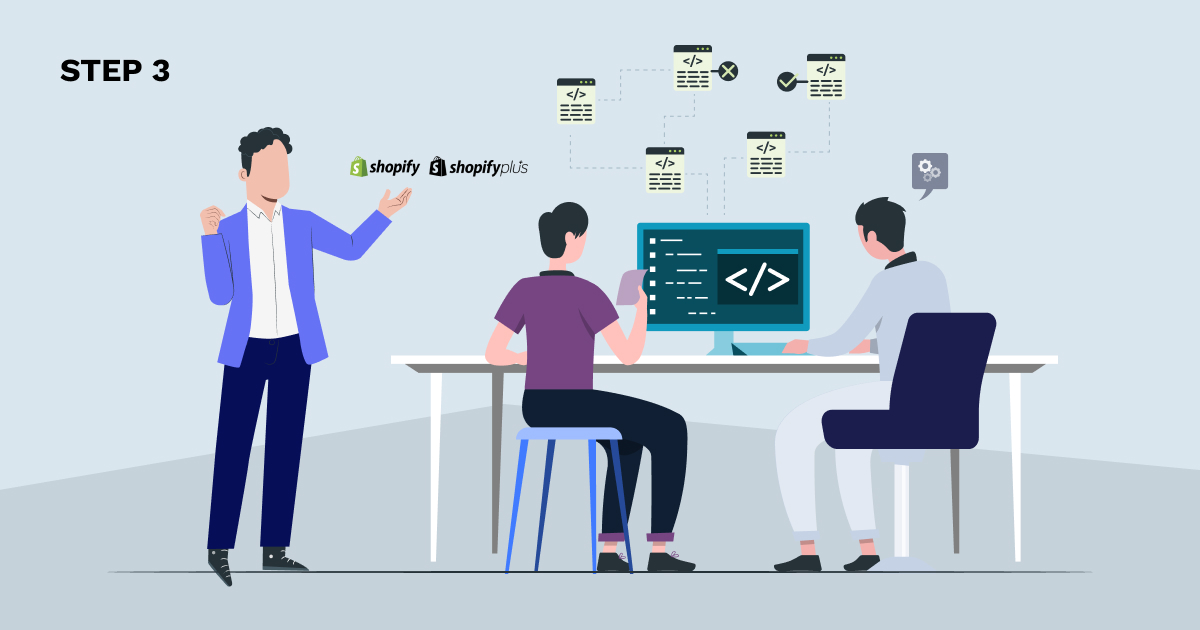
Your team scopes and assigns tasks through your existing project management system.
The white-label partner handles:
- Technical implementation
- Design execution
- Quality assurance
- Performance optimization
- Client deliverables (under your brand)
You maintain:
- Client relationships
- Strategic direction
- Brand control
- Project approval
- Final delivery
Step 4: Delivery Under Your Brand
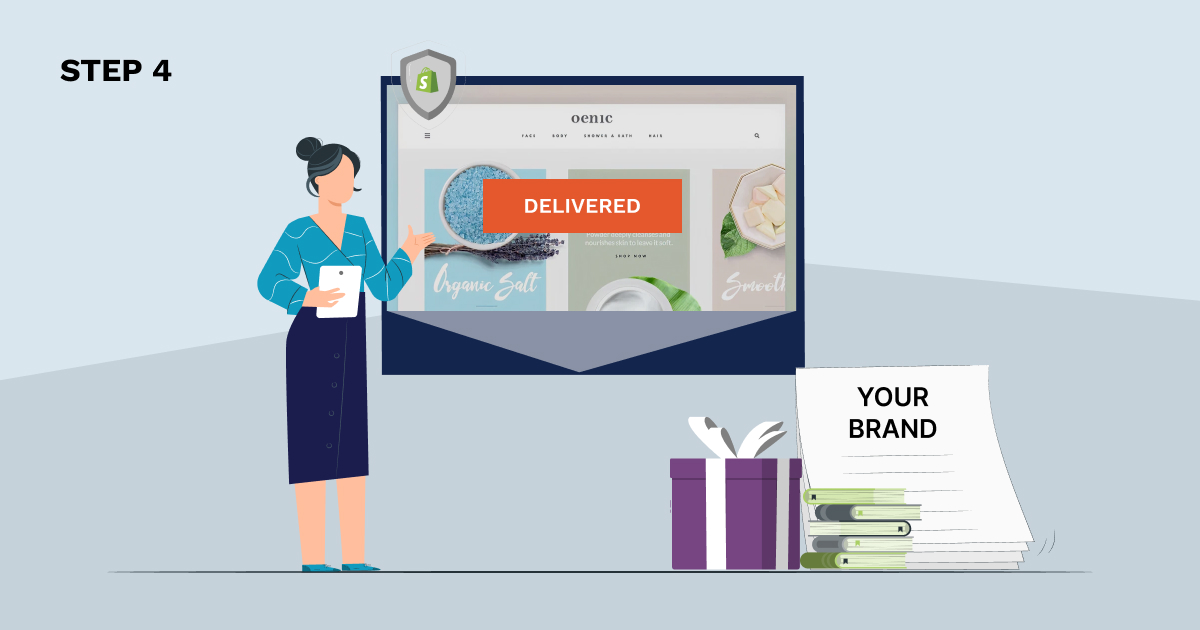
All work is delivered invisibly under your agency’s brand.
Clients never see the white-label eCommerce partner’s name. Communication flows through your team. Website, design, reports, and deliverables carry your branding.
The Reality: This simple model removes friction and lets your agency focus on sales, strategy, and client relationships.
Is your Shopify delivery model built to absorb 2–3x more volume?
Take E2M’s free 60-second diagnostic to identify exactly where capacity, margins, or quality are most exposed under growth pressure — before it shows up in client timelines.
What Shopify Services Agencies Can Confidently Sell
An experienced white-label Shopify partner supports the services that growth-focused agencies actually sell:
- Shopify store setup services: New store builds from strategy to launch, including comprehensive Shopify Store Development
- Shopify custom theme development: Online Store 2.0 custom builds tailored to brand requirements using white label shopify web design
- Shopify Plus development: Enterprise builds for high-volume merchants through a Shopify Plus eCommerce Agency Partnership
- Shopify app integration services: APIs, third-party tools, and custom functionality
- Shopify migrations: Platform transitions from Magento, WooCommerce, or BigCommerce to Shopify
- Core Web Vitals optimization: Performance engineering aligned with Shopify SEO requirements
- Shopify support and maintenance: Ongoing updates, troubleshooting, and enhancements
- Shopify SEO & PPC services: AI SEO and Paid advertising campaign management and optimization for Shopify store
- Custom Shopify Plus development: Advanced enterprise solutions with custom checkout experiences and headless commerce capabilities
- Authorize.net Shopify integration: Seamless payment setup and configuration
Staying current with Shopify’s latest features and architectural patterns is essential for delivering competitive services. Whether you’re exploring headless Shopify implementations for high-performance stores or keeping up with the latest Shopify updates, technical depth separates mature partners from generic providers.
The Reality: This ensures your agency remains competitive without expanding internal complexity.
The Profitability Formula Agencies Rely On
White-label Shopify profitability follows a simple equation:
With predictable Shopify delivery costs, agencies can:
- Model margins accurately: Know your costs before quoting clients
- Increase Shopify project capacity: Take on more work without hiring
- Scale sales without delivery fear: Grow revenue without delivery bottlenecks
The Reality: Agencies that scale profitably don’t just manage costs, they engineer predictable delivery systems that support aggressive growth.
What This White Label Shopify Model Gives You as an Agency Owner
When Shopify delivery runs through a stable white-label system, your agency operates differently.
You stop worrying about who will build the next project and start focusing on which opportunities to pursue. Capacity becomes predictable. Deadlines feel planned, not rushed.
You can confidently say “yes” to larger Shopify engagements because delivery no longer depends on one person. Work moves through a clear, repeatable process that protects your timelines and your reputation.
Your brand stays front and center. Clients see your strategy and communication, while execution happens quietly in the background.
Margins are easier to protect. Fewer surprises. Fewer reworks. Stronger performance.
Most importantly, you get your time back to lead, to sell, and to scale.
The real value isn’t another vendor.
It’s a delivery system that supports growth without adding chaos.
It’s a delivery system that lets your agency grow without losing what made clients trust you in the first place.
The white-label model isn’t limited to Shopify. If you’re considering expanding your service offerings beyond ecommerce, the same principles apply to web development, mobile apps, and digital products. Book a call to see how to profitably sell white-label services across different verticals can significantly accelerate your agency’s growth.
Ready to Scale Your Shopify Delivery?
Stop worrying about capacity constraints and start focusing on growth. See if white-label Shopify is the right fit for your agency.
Final Takeaway: Scale Systems, Not Headcount
Agencies don’t lose momentum because they lack demand. They lose it because their delivery model can’t scale with confidence.
White-label Shopify development service works because it replaces fragile, person-dependent execution with a repeatable, scalable system that protects quality, margins, and your brand.
The difference between agencies that stall at $2M and those that reach $10M isn’t sales capability.
It’s delivery infrastructure.
FAQs
1) How does white-label Shopify eCommerce work for agencies?
Agencies’ own strategy and client relationships. The white-label partner handles invisible execution.
The workflow is straightforward: agencies scope and assign Shopify projects through their existing project management tools. The white-label partner delivers completed work under the agency’s brand. Clients never interact with or see the partner’s name.
All deliverables, communication, and reporting carry the agency’s branding. The partnership operates as a seamless extension of the agency’s in-house team.
2) What’s the cost difference between hiring and white-label Shopify?
White-label Shopify services offer a smarter, more scalable model for agencies and startups by converting fixed overhead, such as salaries, infrastructure, and training, into flexible, project-based costs.
This approach reduces recruitment challenges, minimises long-term financial risk, and allows teams to access certified Shopify expertise on demand. White-label eliminates these risks with elastic, on-demand capacity.
3) Can small agencies use white-label Shopify services?
Yes. White-label Shopify works for agencies of all sizes, from 2-person teams to 60+ person operations.
Smaller agencies benefit from instant access to senior-level Shopify expertise and dedicated project managers without full-time hiring costs. Larger agencies use white-label to scale delivery without proportional headcount growth.
The minimum engagement typically starts around 20–40 hours per month, making it accessible for agencies with consistent Shopify demand but not enough volume to justify a full-time hire.
Find Your Shopify Delivery Ceiling
A free 60-second quiz that shows exactly where your delivery model slows down — and what to fix before your next growth phase.



She oversees cross-functional teams, ensures delivery excellence, and aligns technical execution with business outcomes. Blending deep platform expertise with strategic vision, Prapti builds conversion-focused eCommerce solutions that help agencies scale with confidence.