

SEO is a game of inches.
We’re all looking for that edge, that secret sauce to help our clients reign supreme in the search engine results pages (SERPs).
But what if we told you the secret isn’t a secret at all? What if it’s about something more fundamental, something more… human?
Enter E-E-A-T: Google’s Guiding Principle for Quality Content
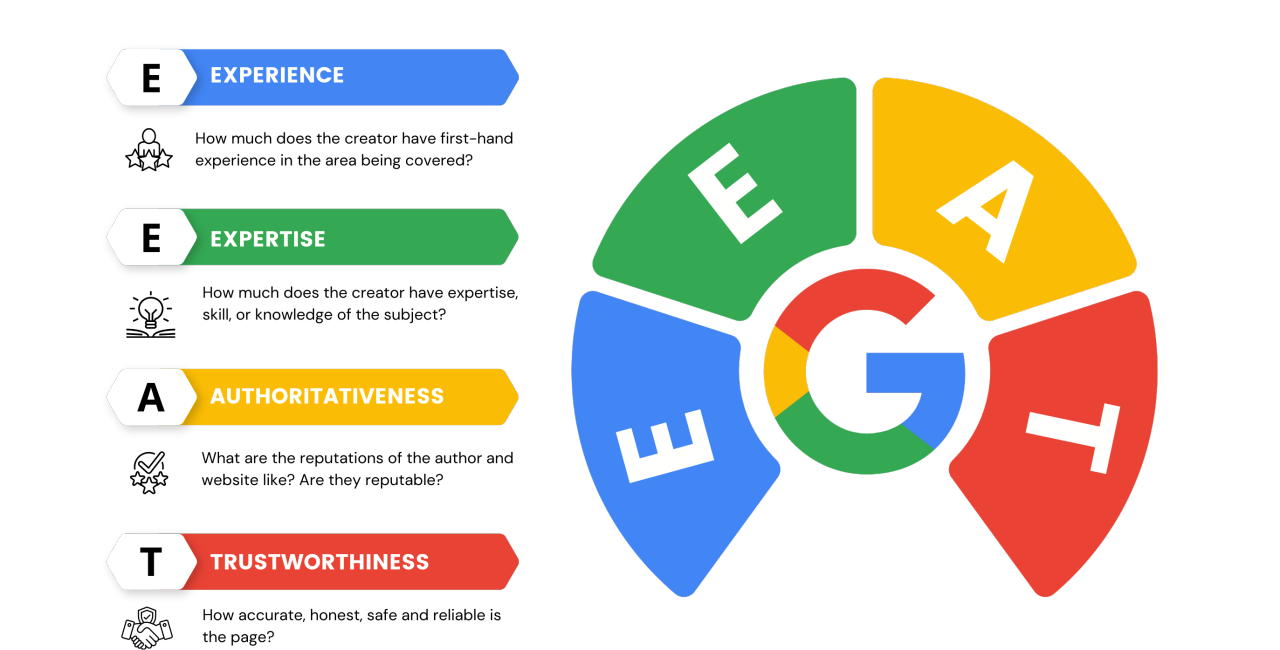
E-E-A-T stands for Experience, Expertise, Authoritativeness, and Trustworthiness. E-E-A-T’s four pillars that now shape Google’s E-E-A-T SEO focus and determine quality rater evaluations.
Table of Contents
Why Does E-E-A-T Matter for Modern SEO & AI Search?
Google’s E-E-A-T guidelines are its way of saying, “Hey, we want to show users content that’s not just stuffed with keywords, but actually helpful, reliable, and people-first content.”
E-E-A-T is a core ranking factor for YMYL (Your Money, Your Life) sites, but it’s equally as important across all verticals, especially as Google shifts to AI-powered search optimization AI Mode and people-first content updates.
We’re no longer talking solely about website content and its creation by subject matter experts. If you’ve ever felt like you’re doing all the right things in SEO but still not seeing results, it’s time to revisit the E-E-A-T ranking factors and check your site’s optimization checklist.
We’ll explain what E-E-A-T SEO means for modern digital agencies like yours, why it’s important for AI search optimization, how you can show Google you are an expert, and share tips to improve it.
What is Google E-E-A-T in SEO?
At its core, Google E-E-A-T (or “Double-E-A-T”) — is Google’s framework for assessing the quality and credibility of both website content and its creators.
Think of it as a set of content quality signals.
Is E-E-A-T a Direct Ranking Factor?
A common question among agency owners and SEOs is: “Is E-E-A-T a direct ranking factor?”
E-E-A-T itself is not a single, direct ranking factor in Google’s algorithm. Instead, it refers to a collection of trust signals and content quality indicators that influence everything from Google’s core updates to how your website is evaluated in generative and AI-driven search experiences, especially for YMYL (Your Money, Your Life) topics and content that requires genuine subject matter expertise.
How Google Evaluates E-E-A-T
In simple terms, Google’s E-E-A-T guidelines challenge every page with these core questions:
- Does this content come from someone with first-hand experience?
- Is it produced by a recognized subject matter expert?
- Does the publisher have a reputation for authoritativeness?
- Can users trust the information provided, and are trust signals clearly visible?
As a marketing agency owner, this means you need to move away from more keyword optimization and focus on creating value that resonates with your clients’ target audiences.
Bottom line: E-E-A-T is a guiding philosophy for agencies, shaping how you should approach content creation and client strategy. By elevating experience, expertise, authority, and trust, you help Google deliver the most helpful, reliable, and people-first content to users.
E-E-A-T Evolution
How Is E-E-A-T Different from E-A-T?
In 2014, Google introduced the concept of E-A-T—Expertise, Authoritativeness, and Trustworthiness, as part of its campaign to combat low-quality content and help searchers find credible, reliable information. It was part of Google’s push against low-quality content.
Fast forward to December 2022, Google officially added an extra ‘E’ for Experience, highlighting the need for first-hand knowledge and experience content. Google added that extra “E” for Experience, turning it into E-E-A-T.
Particularly at a time when AI-generated content from tools like ChatGPT, Perplexity, and Gemini is flooding the web.
Why Did Google Add ‘Experience’ to E-A-T?
The shift from E-A-T to E-E-A-T is Google’s answer to the AI content boom.
Although Artificial Intelligence (AI) can mimic expertise, it can’t fake real-world know-how. Google’s E-E-A-T SEO guidelines now place a higher value on content that demonstrates real human insight, unique case studies, and personal stories, critical signals for trustworthiness and content authenticity.
This evolution reflects Google’s response to the AI content boom, emphasizing authenticity in a world where anyone can generate text with a prompt.
It’s Google’s way of saying, “We value human stories over robotic regurgitation.”
For SEO agencies and agency owners, this means auditing clients’ website content for a personal touch. Remember the Helpful Content Update? It hammered sites with generic, AI-spun articles. The Helpful Content Update penalized many sites with generic, machine-generated content emphasizing the need for E-E-A-T optimization checklists focused on authenticity, author bio optimization, and unique insights.
We’ll dive deeper into each of the four pillars of E-E-A-T and how to showcase them for your agency and clients in the next section.
E-E-A-T vs. YMYL: When Expertise Counts Most
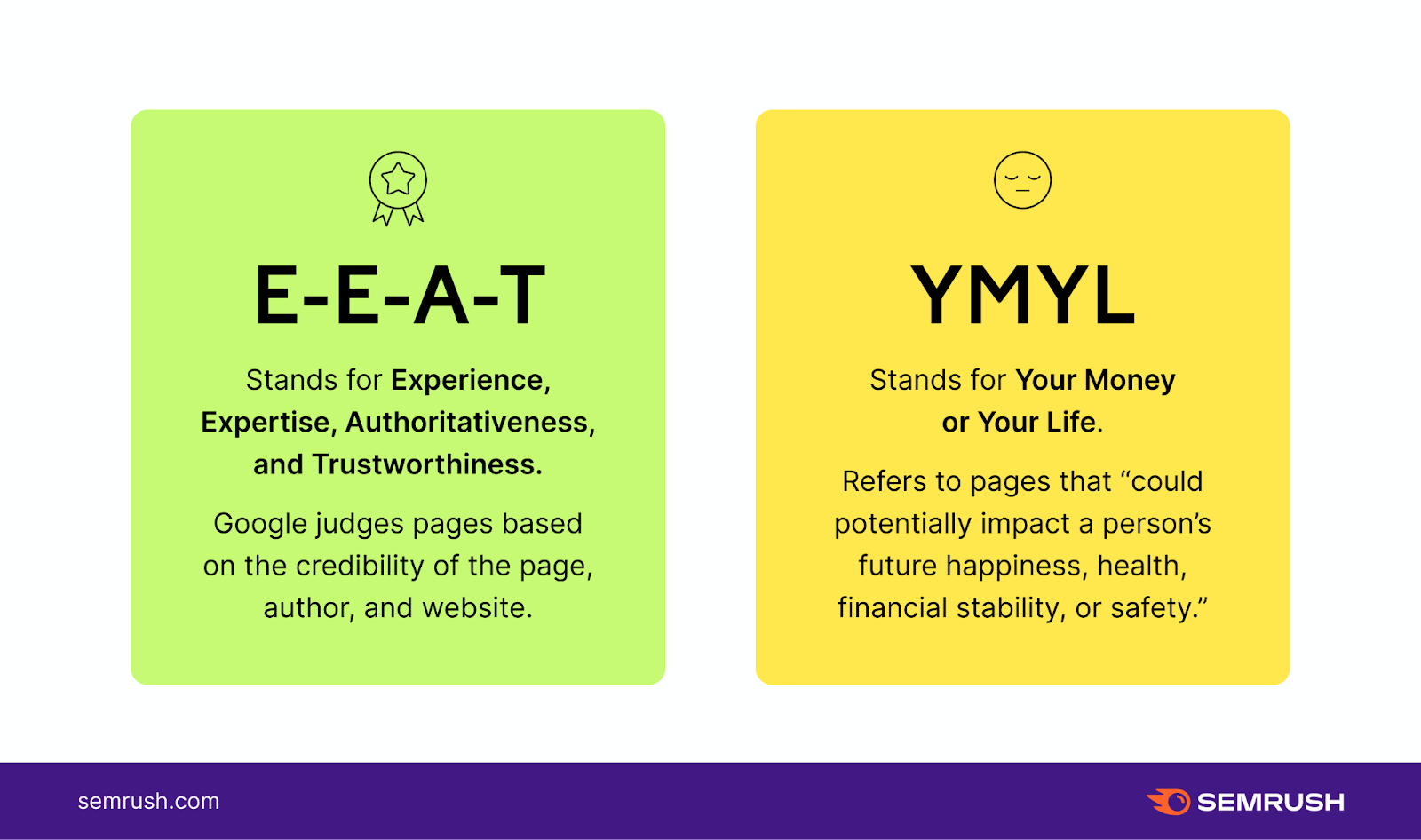
E-E-A-T matters for all types of content, but it’s particularly important for Your Money or Your Life (YMYL) topics. So, it’s a core focus area in Google’s quality rater guidelines and E-E-A-T SEO strategy.
What Are YMYL Topics?
YMYL topics are those that could potentially affect a person’s health, financial security, safety, or well-being. Common examples are:
- Medical advice and healthcare content
- Financial planning, investing, or tax guidance
- Legal information or consumer rights
- Online shopping or transactional pages
Why E-E-A-T Matters More for YMYL Content
For YMYL content, Google demands clear and compelling evidence of all four E-E-A-T components. This means that Google holds sites to a much stricter E-E-A-T standard because delivering inaccurate information here could have serious even life-changing consequences.
For topics classified as YMYL, Google expects medical advice from real doctors, financial tips from certified advisors, and health claims backed by recognized sources. If a page cannot provide these types of credentials, it risks de-ranking or even penalties.
For non-YMYL content, like entertainment or hobbies, E-E-A-T matters too, but the level of scrutiny is more forgiving.
YMYL vs Non-YMYL: A Side-by-Side Comparison
Here is a quick side-by-side comparison that’ll make it clear why E-E-A-T in YMYL vs. Non-YMYL Content matters.
| Aspect | E-E-A-T Focus | YMYL Example | Non-YMYL Example | Why It Matters More in YMYL |
|---|---|---|---|---|
| Experience | First-hand, real insights | Doctor’s story treating patients | Hobbyist’s gadget review | Prevents misinformation |
| Expertise | Proven credentials, subject matter | Certified financial advisor | Blogger sharing cooking tips | Ensures accuracy in high-stakes advice |
| Authoritativeness | Recognition, authoritative links | Legal site cited by the government | Fashion blog with social mentions | Builds credibility |
| Trustworthiness | Transparency & security | Health site with verified reviews | Entertainment blog with comments | Protects users from harmful errors |
Actionable tip:
Audit your client’s website, and start with an AI Search audit. Our AI Search audit uncovers signals, trust indicators, and optimization opportunities specifically catered to the new era of AI and generative search.
The Four Pillars of E-E-A-T
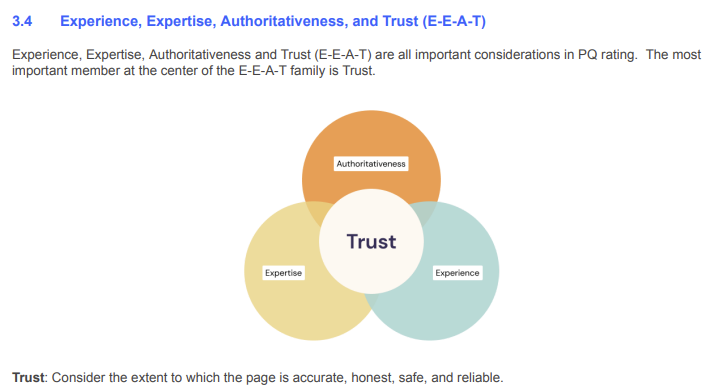
Google’s search quality rater guidelines outline four essential elements — Experience, Expertise, Authoritativeness, and Trustworthiness used to assess E-E-A-T as a potential ranking factor.
Truly competitive SEO strategies now require agency owners and website creators to understand and optimize each of these pillars to improve rankings and deliver people-first content in the world of AI-driven search.
Let’s break down each element, starting with the newest and increasingly decisive pillar: Experience.
1. Experience: Draw On Your Real-Life Insights
EXPERIENCE is the newest addition to the E-A-T SEO framework, and it refers to the first-hand knowledge or direct life experience you have on the topic you are discussing.
It’s all about proving you’ve “been there, done that.”
Experience is about demonstrating that you’ve actually done, used, or been through what you are writing about. This goes beyond theoretical knowledge and explores the practical, lived reality of the subject.
Why Does Experience Matter for Google E-E-A-T?
AI tools like ChatGPT have given individuals and brands the ability to flood the web with generic content, which lacks that personal touch. Google Experience helps first-hand experience content stand out from the crowd, and allows those looking for authentic, relatable, and practical information to find it quickly.
For example, someone who has personally battled cancer can provide a unique and invaluable perspective on managing symptoms, sourcing healthcare, and coping with the emotional toll, even if they aren’t a healthcare professional.
Experience counts on this personal touch to build a deeper connection with the audience and creates a sense of trust.
Real-World Examples of Experience in Content
Product Reviews
A true user review of a smartphone, written after six months of daily use, that covers battery life, camera tests in various conditions, app reliability, and daily-use hacks. This far outweighs AI summaries or specs-based rundowns, especially for e-commerce SEO.
Travel Blogs
Another example is a travel blogger sharing their personal itinerary, challenges faced (like using public transport in a foreign city), and hidden, off-the-beaten-path gems discovered during a trip overseas. This first-hand account offers practical advice that guidebooks might miss.
DIY or Technical Guides
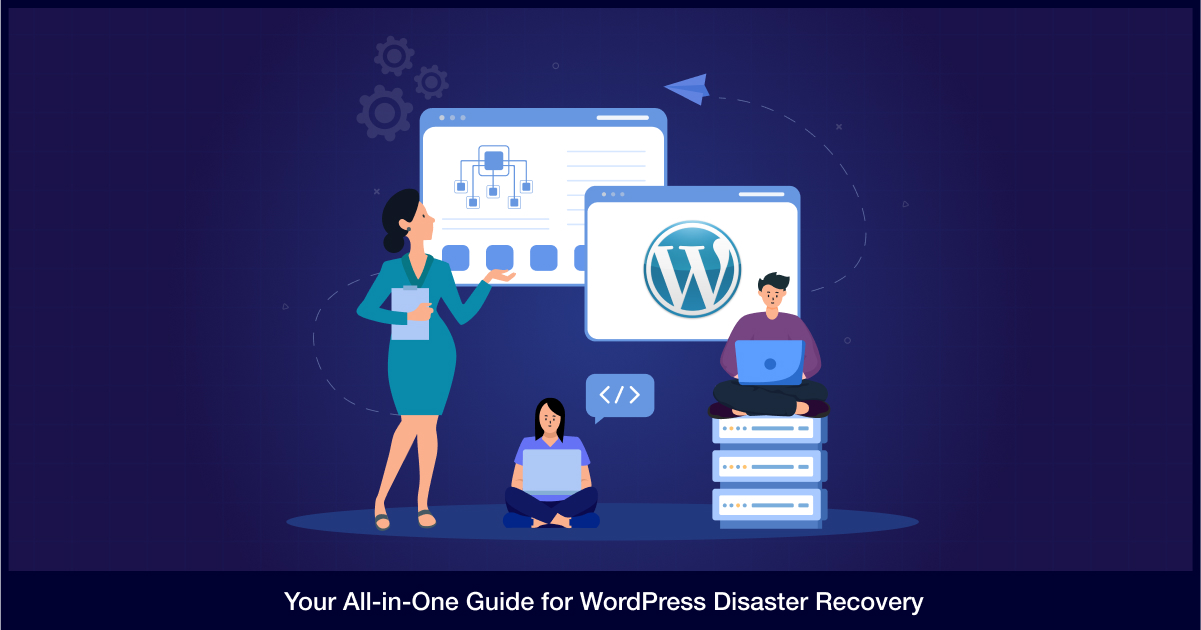
A step-by-step guide on bathroom renovation by a professional contractor, or a detailed recovery tutorial explaining Your All-in-One Guide for WordPress Disaster Recovery by an E2M White Label WordPress team, makes more impact than AI-generated or run-of-the-mill content. This content offers more practical and real-life tips.
How to Check For and Demonstrate Experience
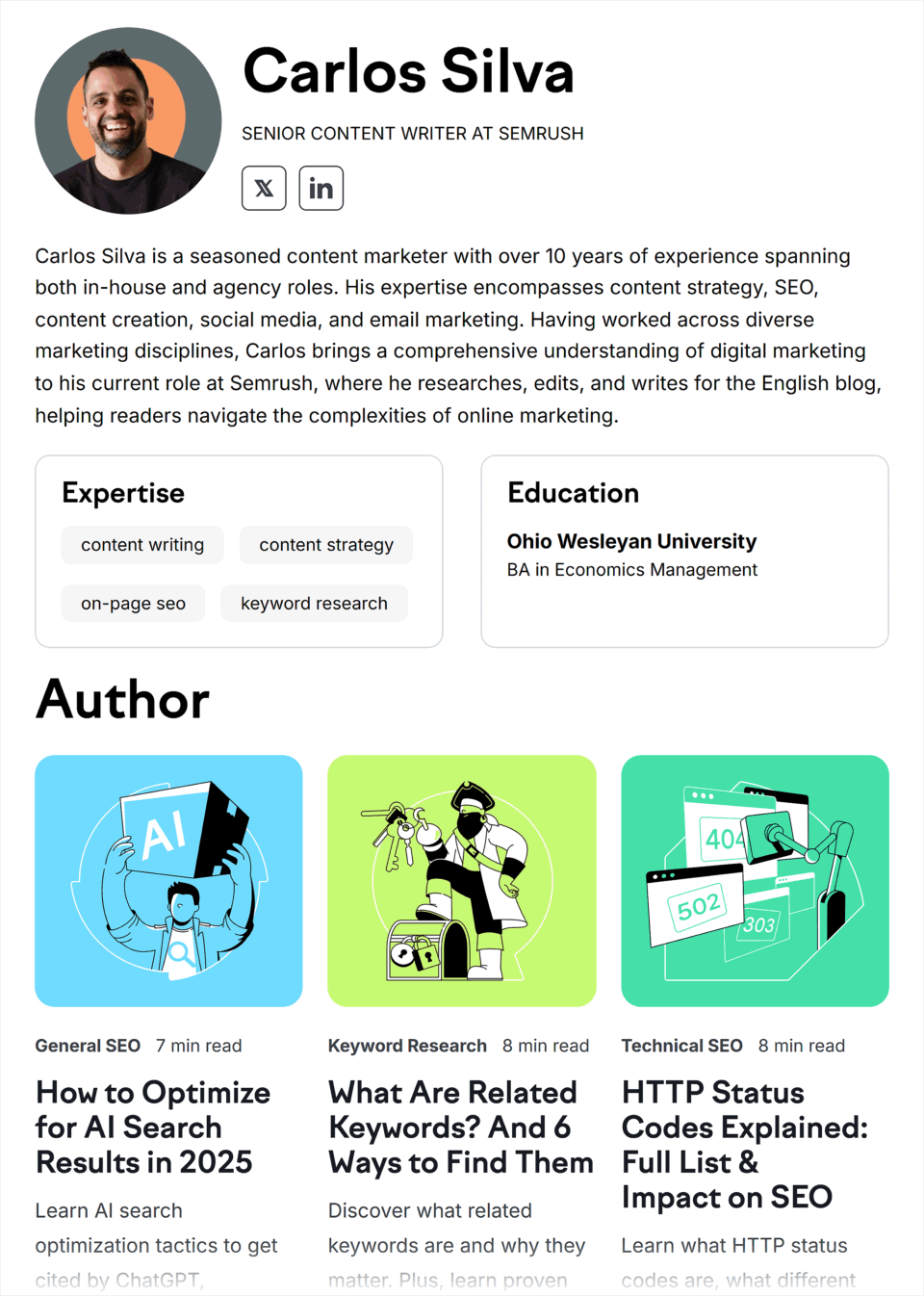
Author Bios: Look for explicit mentions of personal involvement or hands-on projects related to the topic in author biographies.
Content Tone and Detail: Does the content sound like it’s written by someone who has genuinely been there and done what they are talking about? Does it include specific, nuanced details that only someone with direct experience would know?
Visuals and Media: Are there original photos, videos, or screenshots that document the author’s experience? For example, a cooking blog with photos of the author preparing the dish or a traveler’s blog post with pics and videos from their visit.
What Are the Best Ways to Demonstrate First-Hand Experience?
Involve Experts with Real-Life Experience
Collaborate with individuals who have hands-on experience in your niche. Interview them, feature their stories, or have them co-author content. We use this simple and effective strategy to create the content on our website.
Show, Don’t Just Tell
Use original images, explainer videos, and case studies to demonstrate your experience. When reviewing a product, show yourself actually using it. To teach a skill, create an engaging video tutorial. And for process explanations, include photos or screenshots of each step in the post
Encourage User-Generated Content
Feature reviews, testimonials, Q&As, and stories from your customers or their audience. User-generated content not only showcases their experience but also builds a community around your brand.
Action Item for Agencies: Put processes in place to audit all client content for genuine, first-person insights. Use hands-on stories, original media, and relevant case studies to build experience signals for every YMYL or competitive topic.
2. Expertise: Prove Your Professional Credentials and Knowledge
Expertise is the cornerstone of credible content in Google E-E-A-T SEO strategy. It refers to the formal knowledge, skills, certifications, and proven qualifications that you or your clients bring to the table as content creators within a specific field.
In short, Expertise isn’t just about making claims; it’s about demonstrating deep subject matter knowledge, backed by formal credentials and a proven track record. It’s not just claiming you are smart, it’s proving it.
Why Does Expertise Matter for Google E-E-A-T and YMYL Content?
For critical topics, especially those in the YMYL (Your Money or Your Life) category, your readers need to trust that the information provided is accurate and comes from a true expert. Subject matter expertise is a direct trust signal for both end users and Google’s quality rater guidelines.
When a health website features articles written by board-certified doctors or a financial planning blog is written by accredited financial planners, it signals to both users and Google that the information is authoritative, accurate, and reliable to trust.
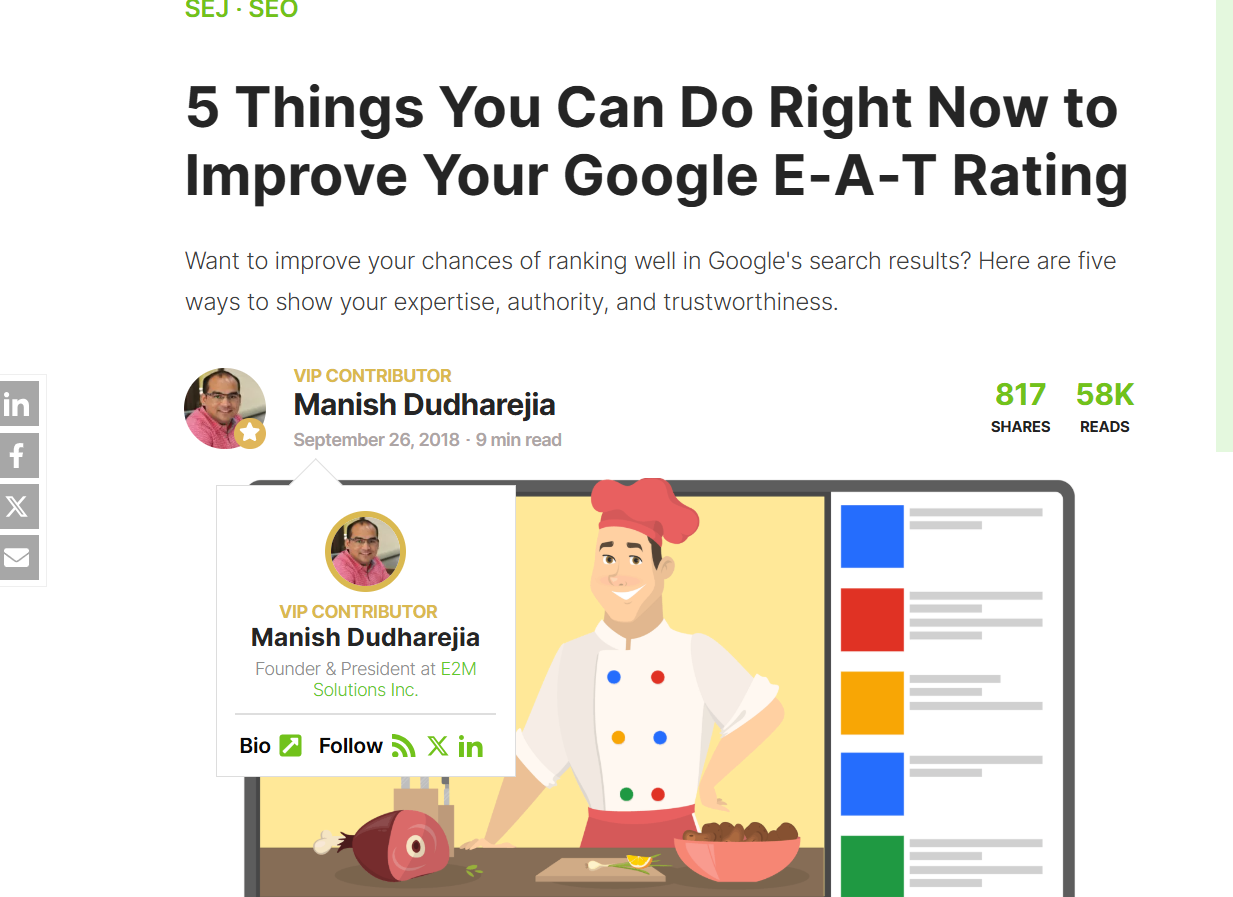
Check out E2M Solutions’ Founder Manish Dudharejia as a VIP Author Contributor on Search Engine Journal for practical steps every agency and website can follow.
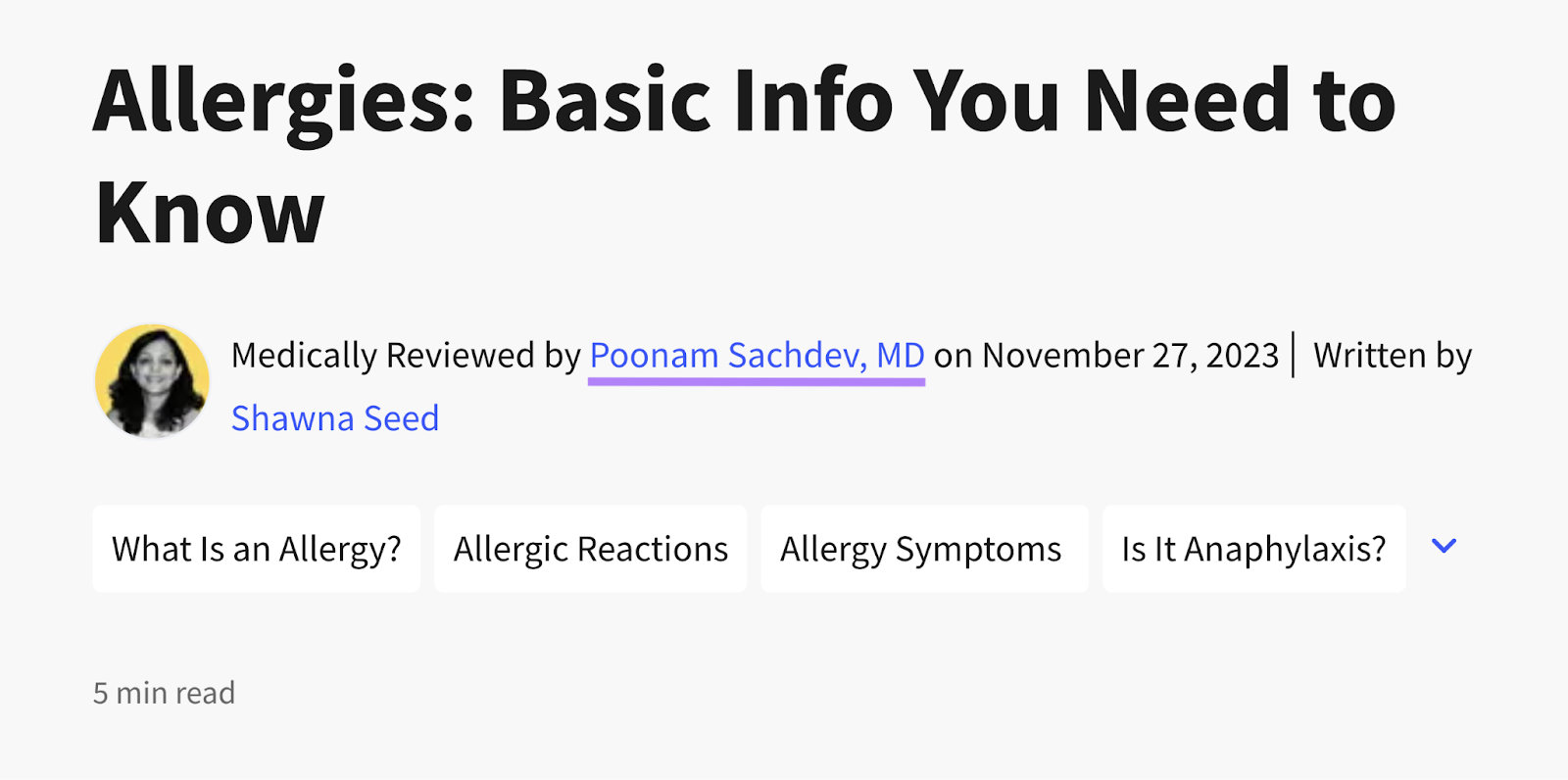

Expertise in Action: Examples by Vertical
Medical Information
An in-depth article about Alzheimer’s disease symptoms and treatments, written or reviewed by a licensed neurologist or board-certified physician specializing in memory care.
Legal Advice
A blog post explaining the legal implications of a personal injury lawsuit in Utah, authored by a practicing lawyer in the same state with expertise in that area of law.
Technical Tutorials
A comprehensive guide to WordPress disaster recovery and mitigation, crafted by a recognized WordPress developer with real experience implementing those solutions.
How to Check for Expertise on Your Website
Author Credentials
High-quality author bios should clearly state the creator’s relevant degrees, certifications, specialties, years of experience, and notable achievements.
Industry Recognition
Are authors or organizations cited by reputable industry sources? Are they invited to conferences, published in respected journals, or recipients of professional awards?
Content Accuracy and Depth
Does the content thoroughly cover its topic, cite credible sources, and provide in-depth analysis that only a true expert could offer?
How Can You Improve and Highlight Expertise?
Showcase Professional Credentials
Always create detailed author bios that spotlight degrees, certifications, work history, publications, and other credentials. Consider adding LinkedIn or professional profile links for added credibility.
Invest in Education and Training
Encourage clients to highlight certifications, ongoing education, and professional development. Feature these on team pages, in bios, and within content to boost E-E-A-T signals.
Collaborate with Recognized Experts
If your clients don’t have in-house expertise on a particular topic, ask them to partner with recognized experts to create or review the content. Even a brief review or quote can add instant authority to a page.
Action Step for Agencies: Audit your client websites to make sure every author’s expertise is clearly presented, both on content pages and bios. Invest in sourcing or partnering with subject matter experts when tackling high-stakes YMYL topics—this investment pays off in stronger rankings and greater user trust.
3. Authoritativeness: Build Recognition in Your Niche
Authoritativeness — a core pillar in Google E-E-A-T SEO — means being recognized as a trusted, respected, and reliable source of information within your niche or industry.
For both Google and your users, industry recognition, quality citations, and authoritative backlinks are key website credibility factors that signal authority.
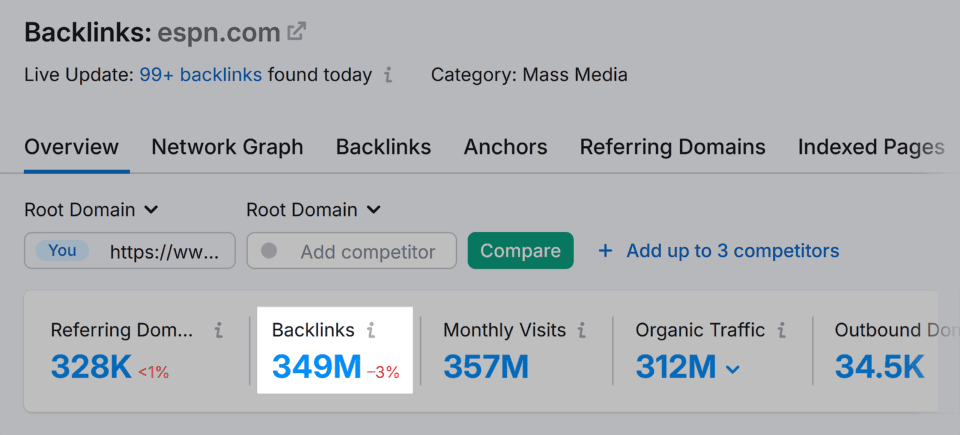
Backlink Analytics data shows it has backlinks from more than 616K domains. Including reputable sites like apple.com and espn.com:
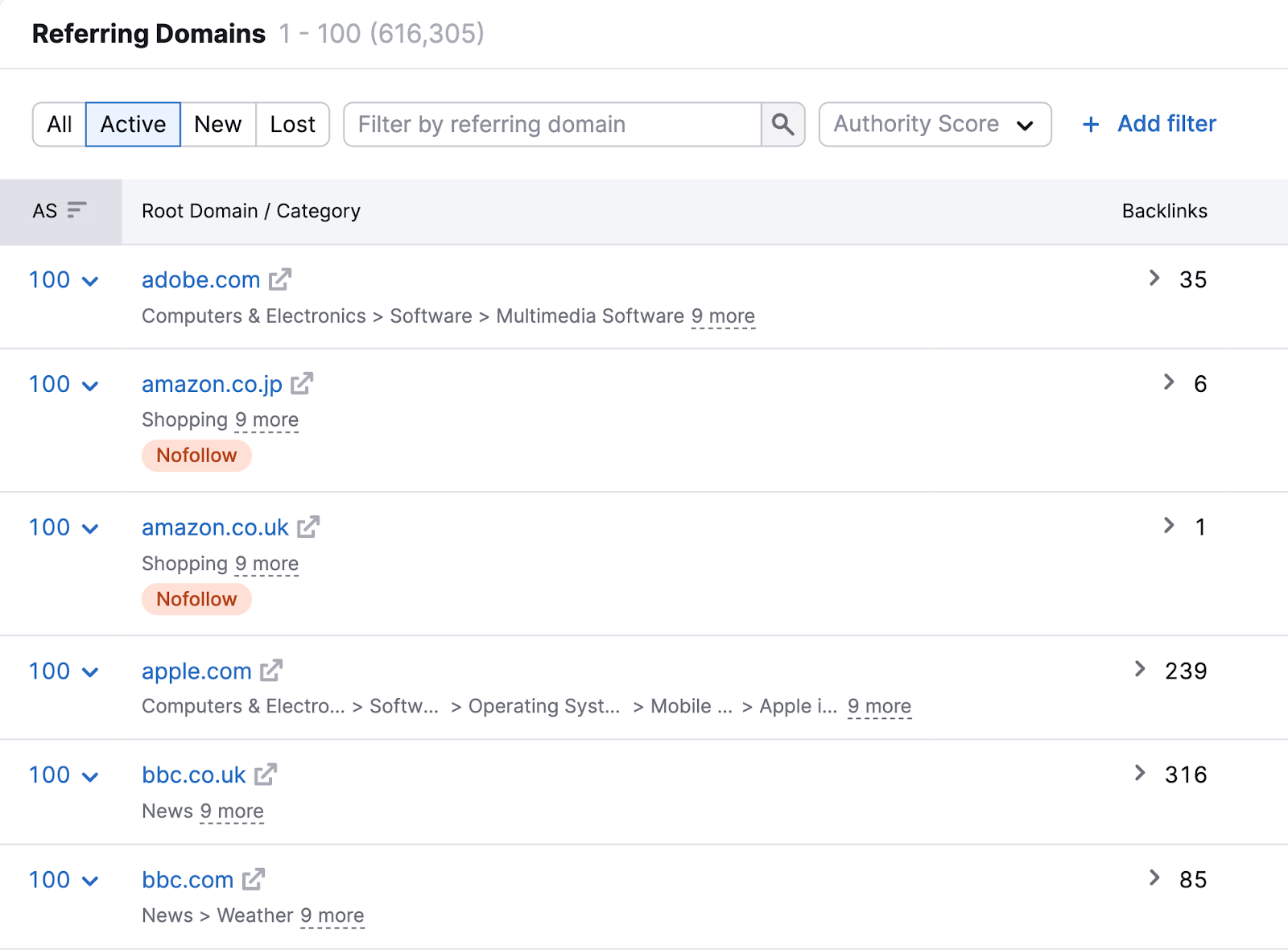
When other authoritative figures, websites, and organizations in their field link to your clients’ content, cite their work, and mention their brand, it signals to Google that they are a go-to source.
“Authoritativeness is about being seen as the go-to source, and it’s earned through mentions, links, and industry nods.”
Why Does Authoritativeness Matter in SEO and AI SEO?
Authority is a powerful signal of trust and credibility, which are the heart of Google E-E-A-T. When users see that your clients’ brand is recognized and respected by others in their industry, they are more likely to trust the content shared under the clients’ name.
For Google, this external validation is one of the key website credibility factors. A website that is frequently cited by other authoritative sources is likely to be a valuable resource for users.
Examples of Authoritativeness in Action
Backlinks from Reputable Sources: A university website links to your client’s research paper or resource page.
Media Mentions: A well-known news outlet quoted one of your clients in an article about industry trends.
Guest Posts on Authoritative Sites: Publishing thought leadership content on established authority sites to expand your client’s reputation and reach.
How to Check for Authoritativeness
Backlink Profile Analysis
Use SEO tools like SEMrush, Ahrefs to analyze your clients’ backlink profiles. Are they getting links from high-quality, relevant websites in their niche?
Brand Mentions
Search for your clients’ brand name online to see who is talking about them and in what context. Are they being mentioned by other authoritative sources?
Social Media Presence
Is your client active and recognized on platforms like LinkedIn, X (Twitter), or relevant industry forums? Are their posts shared by thought leaders and peer experts?
How to Improve Authoritativeness?
Build High-Quality Backlinks
Create valuable, link-worthy content and promote it to relevant websites and publications in your clients’ industry. This could include original research, in-depth guides, and free tools.
Engage in Digital PR
Actively seek out opportunities for media mentions, interviews, and guest posting on authoritative websites. Position your clients as thought leaders in their niches.
Build a Strong Social Media Presence
Share insights, case studies, and expertise on the platforms where your clients’ audience spends time. Actively engage with influencers, participate in industry discussions, and foster relationships with content creators and journalists.
Action Step for Agencies: Regularly audit your clients’ backlink profiles, brand mentions, and PR footprint. Encourage the creation and promotion of content that attracts attention from leading voices in their space.
Over time, consistent visibility, engagement, and citation by authoritative sources will elevate their site’s E-E-A-T and drive stronger, more sustained SEO results.
Explore AI Search Optimization 2026 plan, A Technical AI SEO Blueprint for Agencies
4. Trustworthiness: Earn the Confidence of Users and Google
Trustworthiness is the most critical component of Google E-E-A-T.
The search engine giant explicitly states that the other three pillars (Experience, Expertise, and Authoritativeness) contribute to trust. It refers to the reliability, honesty, and safety of your client’s website and its content.
Trustworthiness ties it all together. It’s about being reliable, transparent, and secure.
A trustworthy website is one that users and search engines feel safe interacting with, knowing that the information is accurate, their data is secure, and the site operates ethically.
Why Does Trustworthiness Matter?
Google’s #1 goal is delivering high-quality, reliable search results. Otherwise, people wouldn’t use it. If a website is perceived as untrustworthy, it undermines Google’s E-E-A-T guidelines and can lead to a poor user experience.
For YMYL topics, especially, trustworthiness is non-negotiable. Google wants to make sure that users are not misled or harmed by the information they find. For agencies, making sure every client’s site demonstrates strong, visible trust signals is essential for both brand reputation and long-term SEO success.
Real-World Examples of Trustworthiness
Secure Website (HTTPS)
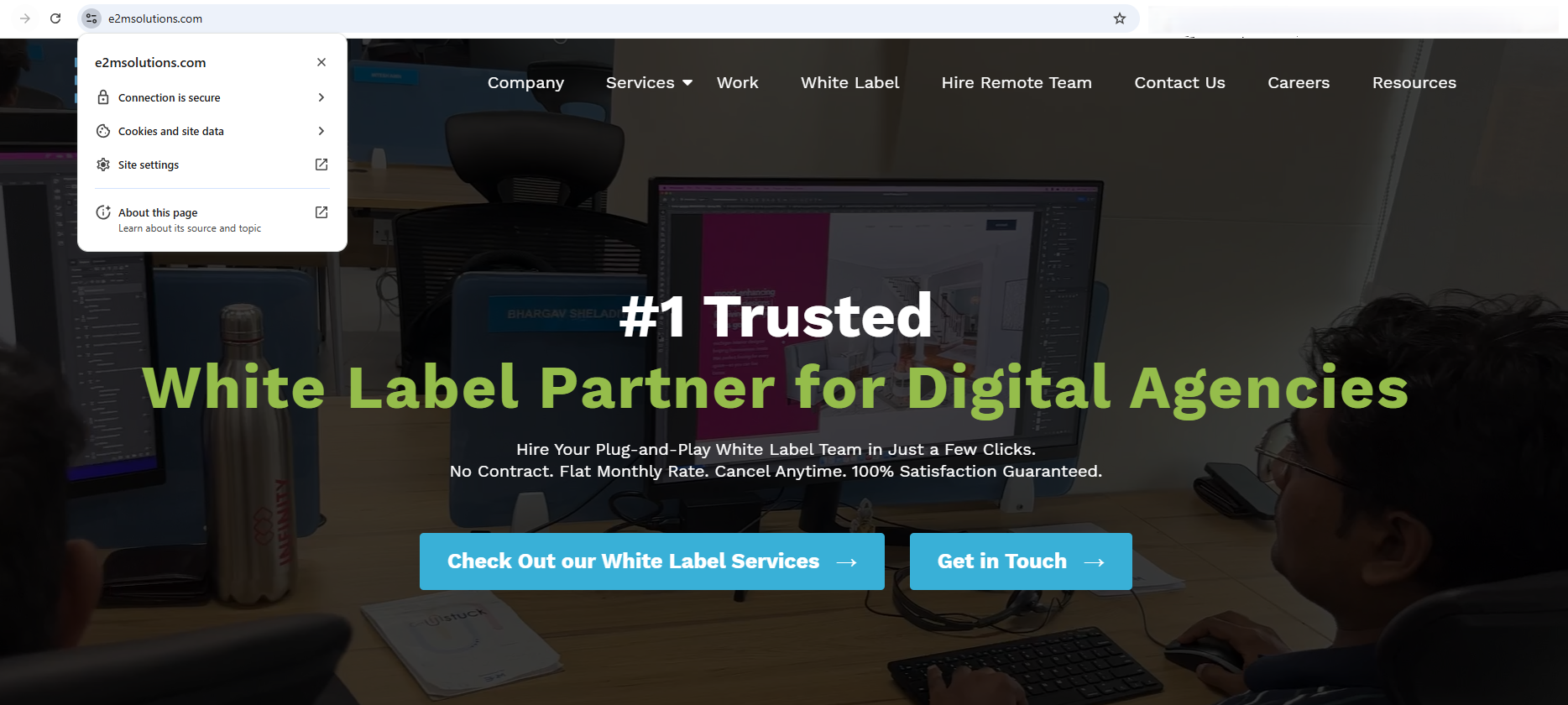
A website using HTTPS encryption, indicated by a padlock icon in the browser, signals that data exchanged between the user and the site is secure. This is a fundamental trust signal for websites.
Clear Privacy Policy and Terms of Service
Make privacy policies and terms of service easy to find and read, so users know exactly how their data is collected, stored, and used.
Positive Customer Testimonials and Online Reviews
Gather and showcase authentic testimonials and third-party reviews (Google My Business, Yelp, industry review sites) to highlight customer satisfaction and reliability.
Accurate & Regularly Updated Information
Content that is regularly reviewed and updated to reflect the latest facts, research, and best practices, showing a commitment to accuracy.
Transparent Contact Information
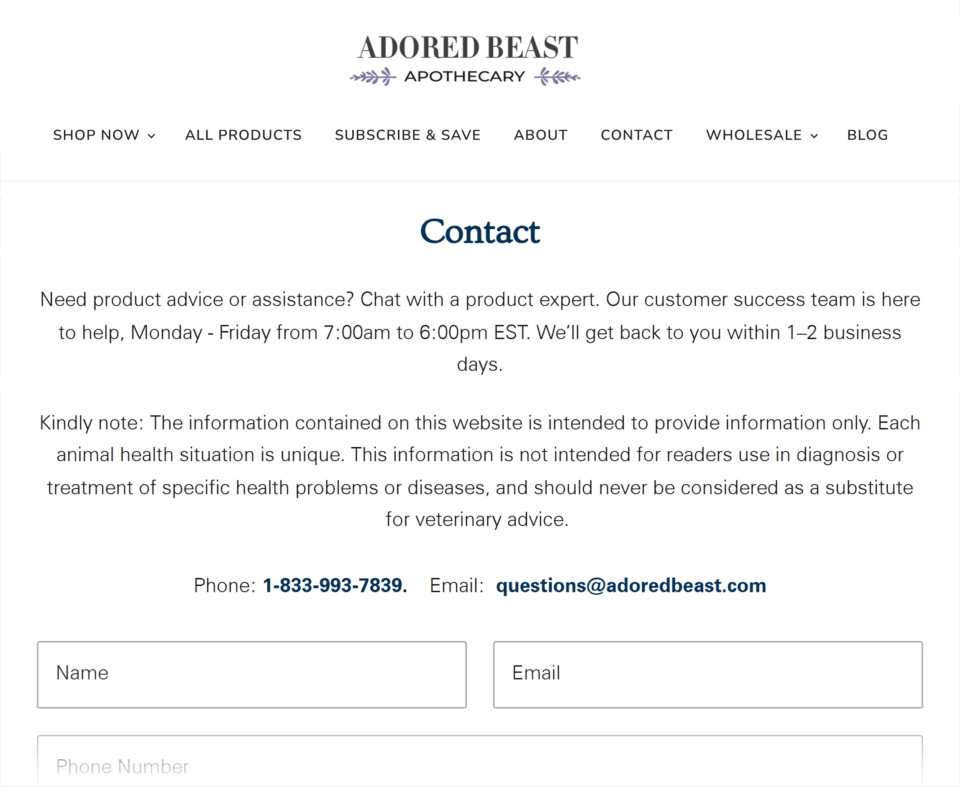
Display clear, up-to-date contact details (physical address, phone, email) and an informative About page. This gives users confidence that there’s a genuine business behind the website.
How to Check for Trustworthiness
Website Security
Confirm every client site uses HTTPS/SSL. Run regular checks for security warnings or vulnerabilities.
Online Reviews and Reputation
Search for reviews of clients’ businesses or websites on third-party platforms. Look for consistent positive customer testimonials and how your clients respond to negative reviews.
Transparency
Make sure there is clarity around your client’s company mission, leadership, and policies. Can visitors easily find privacy information and contact details?
User Experience (UX)
Is the website free of intrusive ads, broken links, or other elements that detract from the user experience and might signal a lack of care or professionalism?
How to Improve Website Trustworthiness for Better Rankings?
Implement HTTPS
Make sure your clients’ websites are secured with an SSL certificate. This is a basic but crucial website trust signal.
Focus on Transparency
Clearly display “About Us,” contact info, privacy policy, and terms of service. Consider including team photos and credentials for extra credibility.
Encourage and Manage Reviews
Consistently ask satisfied customers for feedback and respond professionally to every review. Prompt engagement shows commitment to customer care.
Regularly Update Content
Set a routine schedule for auditing and refreshing articles to keep information accurate and relevant protecting against lost trust due to outdated advice.
Prioritize User Experience (UX)
Modify the site for fast load times, intuitive navigation, and minimal intrusive elements (ads/pop-ups). Regularly, SEO audits for broken links, errors, and technical issues.
Avoid Errors
Proofread and fact-check all content. Even small mistakes can cause users and Google to doubt your credibility.
Action Step for Agencies: Add a dedicated trustworthiness assessment to your E-E-A-T optimization checklist. Regularly review your client websites for these essential trust signals. Demonstrate to Google and your users that your clients are credible, transparent, and worthy of their confidence.
Key Takeaways on Using E-E-A-T for SEO
As an agency, you want to use E-E-A-T to boost SEO for your clients, and this involves:
- Study: Watch SERP changes across at least five industries. What happens in one will eventually affect others.
- Test: Keep testing and retesting. Every failure is just a step toward learning.
- Plan: Think long-term. Optimize not just for today but for where Google E-E-A-T and AI will be in 12–18 months.
- Anticipate: Stay ahead by predicting changes and positioning the content for the future of search.
- Competitive Analysis: Remember, Google’s SERP features compete with your clients’ content. Study them closely across industries to adapt and integrate effectively.
Ready to future-proof your clients’ SEO with expert-driven, trust-building content? Contact E2M Solutions today and discover how our white-label SEO Service and AI search optimization services can help you stay ahead in search.
Next Steps
- Connect with our AI Search Audit to identify E-E-A-T gaps in your website and client content.
- Get E2M’s white-label SEO and content writing solutions to scale your agency’s offerings efficiently.
- Learn more about selling AI-driven SEO services by reading our guide: The Agency Owner’s Guide to Selling AI Search Optimization.
- Monitor performance and continuously adapt to AI-driven search trends.



Vishal studied at Federation University Australia and has managed multi-million-dollar campaigns and actively participates in global industry events, including BrightonSEO and MavCon Live. His expertise spans technical SEO, content marketing, PPC optimization, and agency partnership development.
Outside of work, he enjoys traveling, playing cricket, and exploring new trends.