


There’s something you should know: Partnering with a white-label digital marketing agency can expand your service offerings instantly.
Just because you’re a small agency, that doesn’t mean that growth is out of your reach.
As you’re about to learn, white-label digital marketing services can open doors to new markets, give you the much-needed capacity to take on new clients, and provide a solid foundation for scaling, all with the potential to deliver better cost efficiency than in-house hiring.
Below, we deep dive into the upsides of white-label outsourcing and why your small agency should at least be considering it if you’re serious about competing at a higher level.
What Does White-Label Mean in Digital Marketing?
In this context, white-label refers to an arrangement whereby one digital agency outsources client work to another agency that completes that work on their behalf.
For example, say a client requests SEO, Local SEO, eCommerce SEO, PPC, Content Marketing or AI Search Optimization (AISO) services work but you don’t have the time or resources to do it in-house. Instead of turning it down, you outsource the project to a white-label Digital Marketing agency with specialized expertise in White label SEO, AI SEO Services, or PPC that completes it as if they were working directly for you as an employee.
That means reports and invoices come with your company branding.
It means that the white-label company completes all tasks according to your quality and branding guidelines.
Ultimately, it means that clients get results that look as if they were generated in-house by your agency. Assuming those results are positive, that means a boost to your reputation and all the benefits that come with it.
For a deeper understanding of the various types of white-label digital services available and when agencies should consider using them, read our comprehensive guide:
“What Are White-label Digital Services: and When to Use Them?”
Speaking of benefits, let’s look at a couple of scenarios that perfectly illustrate the value white-label digital marketing services can add to your business.
How Small Digital Agencies Can Benefit from White-Label Digital Marketing Services
1. Take on More Clients and Bigger Projects
Have you ever taken on more work than you could realistically handle, just because you didn’t want to lose that all-important client?
Don’t worry, you’re not the only one. Over-selling their capacity is one of the most common mistakes agency owners make. Fortunately, it’s also a mistake that can be easily ____ by enlisting white-label support.
When you outsource digital marketing tasks, you’re essentially getting extra hands for those all-hands-on-deck situations when your current workload exceeds the capacity of your in-house team. This agency capacity expansion approach helps avoid the common digital marketing agency bottlenecks that limit growth.
Still, that doesn’t mean white-labeling should only be a reactionary measure for agency capacity planning.
A good white-label digital agency can also serve as a well-placed strategic partner that helps you scale your business operations by taking on more work without stretching your internal resources beyond their limits.
By outsourcing work to a third-party, you’re able to do more and expand agency services quickly.
You can take on more clients, finally go after those big projects that were previously beyond what you could deliver, and compete against larger agencies even if you don’t have their level of resources. This levels the playing field, allowing boutique agencies to offer enterprise-level service delivery.
2. Expand Your Service Offer
The extra support you get from a white-label agency doesn’t just allow you to do more of what you already do, it also puts you in a strong position to extend your service menu and do even more for clients.
For example, let’s say you’re a content marketing agency but you’ve identified a gap in the market for web development or email marketing. Rather than investing in new hires, training, or tools, you can partner with a white-label provider who offers these services,
By doing so, you not only have the opportunity to reach new clients looking for those specific services, it also transforms your agency into a one-stop digital marketing shop for your existing clients.
No longer do your content marketing clients have to go to another agency for additional services. They can get everything they need from you, meaning increased customer loyalty without the huge overheads needed to build an internal department from scratch.
Customer retention is vital for the 61% of small businesses that say over half their revenue comes from repeat customers (BIA Advisory Services)
3. Branch Out into New Markets
Targeting a specific niche industry can be an effective way to stand out in the competitive world of digital marketing, but this approach also comes with limitations.
For example, let’s say that you’ve carved out a reputation as the go-to digital agency for finance brands. That gives you a competitive advantage, but at the same time, there are only so many finance brands to go around. As time goes on, you may find that you’ve exhausted that market, with the pool of potential new clients growing shallower by the day.
So, what do you do?
Stick to what you know and admit that your agency’s growth has plateaued.
Or look for opportunities to branch out into related industries such as business consultancies, real estate, or Software as a Service (SaaS)?
Naturally, you pick the latter option if you want to keep growing.
However, making inroads into each new niche often requires unique specialist knowledge or a specific skill set. If there’s nobody on your payroll with that in-depth expertise, you may have a tough time even getting your foot in the door of this new target market.
Enter a white-label partner.
Look around, and you’ll find a number of top white-label agencies with proven experience in a range of different industries. Employ their services, and you equip your business with the industry-specific know-how it currently lacks, allowing you to expand into new markets with confidence.
4. Increase Profits
Whether you hire a white-label digital agency to offer new services, attract new clients, or handle bigger projects, the end result is the same:
Bigger profits for your small agency.
Every time your partner agency completes a project, you add your markup to the final invoice sent to a client. That allows you to cover the costs and still net a tidy profit while someone else does all the work.
How you use those extra profits depends on your goals.
Maybe you reinvest them in your business, paying for vital resources or hiring new talent to help you grow.
If you eventually plan on selling your digital agency, a higher profit margin will naturally make you a more attractive option for potential buyers.
Either way, an increase in profits provides a stronger foundation upon which to build towards bigger and better things, no matter what those things may be.
5. Focus on Growth
Are you spending more time completing projects for clients than you are on bringing in new business?
Don’t worry, we’ve all been there at some point.
In smaller agencies in particular, this hands-on approach can sometimes seem like the only option. There’s work to be done and not enough hands to do it, so if you don’t complete that project, who will?
A white-label agency, that’s who.
Outsource those client tasks that eat up most of your day, and you’ll find yourself with a lot more time on your hands, time that could be better invested on actually growing your business.
You could use that time to work on new profit-generating strategies, to plan the perfect pitch for a big new potential client, or give your existing clients more of your attention in an effort to build long-term, loyal relationships.
Whatever it is you need to do to scale your agency, white-labeling gives you the time to do it while still ensuring that client’s projects are delivered on time and on-budget.
Is White-Label the Best Fit for Your Agency?
Sure, white-label services offer a lot of benefits, but they’re not the only path to profitability.
After all, if you wanted to take on more work, couldn’t you just hire an internal employee to do it?
Or perhaps build a network of freelancers specializing in areas outside your usual remit in order to reach new audiences.
Sure, you could, and in some cases, those may be better routes depending on your goals and priorities. In other cases, however, white-labeling will offer the biggest upside.
With that in mind, let’s weigh up the pros and cons of white-label agencies compared to internal hires and freelancers.
White-Label Agency vs. Internal Hire
Even if you’re reading this article with a healthy dose of skepticism, there’s no denying the fact that outsourcing digital marketing to a white-label agency is more cost-effective than hiring an employee.
First, there’s the salary to consider.
Let’s say you need an experienced web developer to help you handle an increasing workload.
Source: ZipRecruiter
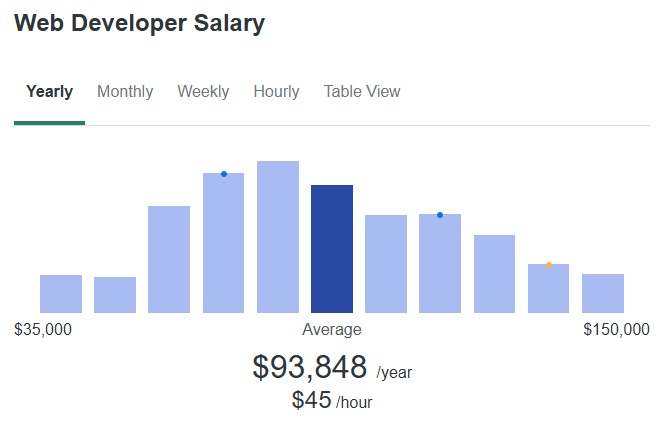
ZipRecruiter puts the national average salary for a web developer at $93,848, though this can increase dramatically depending not only on the developer’s experience but where you’re located.
Source: ZipRecuiter
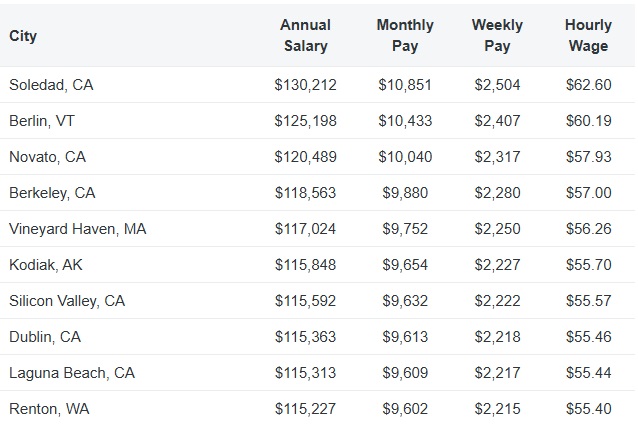
In California in particular, you’re looking at anywhere from $115,000 – $130,000 before you even start to think about recruitment costs.
The Society for Human Resource Management (SHRM) notes that while the average cost to recruit a new employee is under $5,000, many employers say it can be at least three times that amount.
When you think about it, that makes sense.
- You have to pay to post the job ads.
- You lose valuable hours going through the interview and vetting process when you could have been working on profit-generating tasks.
- There’s the attractive package of health insurance, paid time off, and other benefits that you’ll need to attract and keep the best talent.
- And what about the hardware? Will you need to go buy a new desk, chair, and computer to accommodate the new recruit?
All those costs add up.
Hiring vs. White-Labeling: A Cost Comparison
Now, based on the figures above, let’s say that you strike it lucky and land a top developer well below the national average at $80,000 per year.
In this best-case scenario, your recruitment and onboarding costs are around $5,000.
So, in the first year, you’re paying $85,000 a year for a web developer who comes with the added pressure of finding enough work for them to justify the cost.
Source: E2M Solutions
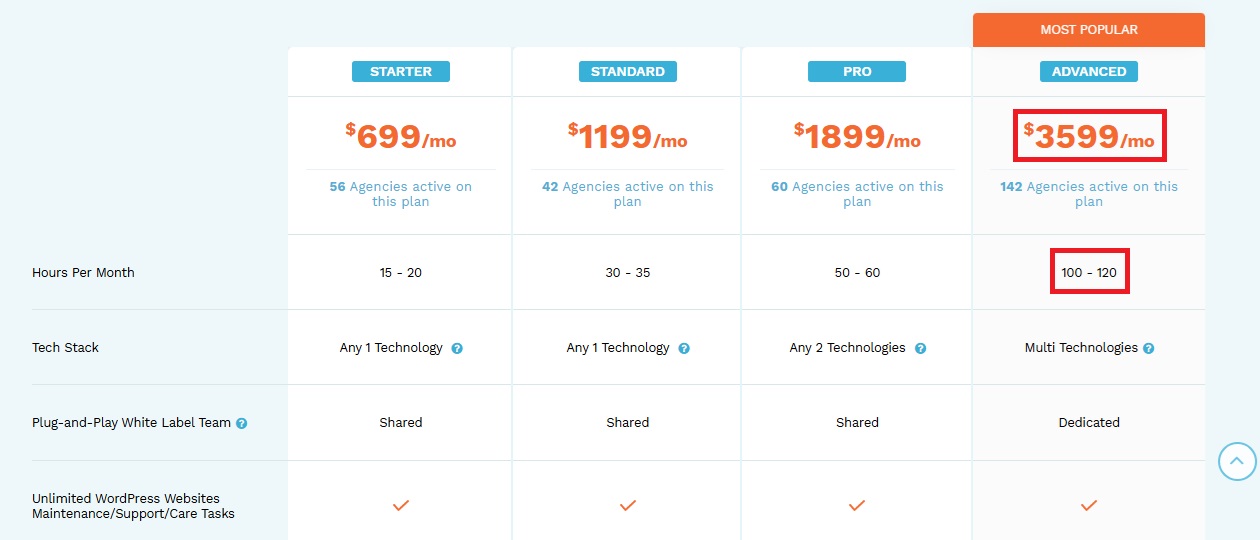
Let’s compare that to the most expensive development plan offered by E2M Solutions. That’s $3,599 per month for up to 120 hours of development support a month.
So, even if you stuck with that plan every single month for a full year, you’re paying $43,188.
Let’s do the math on that:
$85,000 (cost to hire an employee in the first year)
–
$43,188 (cost to outsource for the same year)
=
Total saving of $41,812.
In the interest of fairness, it should be made clear that this is just one example in one specific scenario.
To determine if white-labeling is the way forward for you, it pays to do a cost analysis of your own.
Think about the specific type of services you need and look at the numbers to determine whether hiring or outsourcing will save you the most.
White-Label Agency vs. Freelancer
There’s no denying that freelancers can be a blessing sometimes.
When you’re in a crunch and need someone to step in at the 11th hour to help you cross the finish line or you need short-term cover for a temporary leave of absence, a good freelancer can be worth their weight in gold and then some.
That said, they may not be the answer to all your scalability prayers.
For one thing, the very nature of freelancing means that trusted talent you’ve got a good relationship with isn’t always around when you need them. They may have taken another client while waiting on more work from you and now can’t commit to helping out, forcing you to go back to the drawing board and spend time finding a Plan B.
Besides, if you’re serious about growing, will one freelancer be enough even if they’re the most reliable one in town with unwavering loyalty to your agency?
Probably not.
As your client base grows and your expanding service menu gains traction, you’ll likely find yourself building up a network of independent contractors, each with a unique skill set that matches the versatile needs of your client base.
Here’s the problem with that:
More freelancers means more complications when coordinating project timelines, maintaining communication, and ensuring quality standards are consistent right across the board.
Go with a white-label agency instead, and you have a single point of contact responsible for managing the whole project in direct accordance with your standards and branding.
Working with WordPress? Take a look at the pros and cons of freelance WordPress developers versus white-label agencies for help deciding which option is best for you.
Why Your Small Agency Should Consider White-Label Digital Marketing Services: Key Takeaways
To sum up, white-label digital marketing services may not be the right route for every small agency out there, but they should at the very least be given serious consideration if you’re an agency owner facing any of the following three challenges:
- Not enough time to grow your agency – If you’re spending more time working in your business rather than on it, a white-label digital agency can take that work off your hands, freeing up your schedule to focus on growth.
- Scaling at cost – Whether you want to offer new services or target new audiences, white-label offers an opportunity to do that at a fraction of the cost of hiring in-house employees.
- Meeting the immediate needs of your clients – Up against a tight deadline that your in-house team will struggle to meet? Enlisting a white-label partner is essentially like expanding that team on a temporary basis so that you can get the job done, keeping clients happy and increasing loyalty.
Are you ready to learn more about the benefits of white-label digital marketing to your agency? Book a call today and let’s explore what we can do to help you grow.



Under his leadership, E2M has partnered with over 350 agencies globally, mentoring teams, driving growth, and implementing AI-powered automation and workflow integration to streamline operations and enhance efficiency.
Manish is a recognized industry writer, contributing to Search Engine Land, Search Engine Journal, and Econsultancy, and has shared insights in multiple podcast interviews. Outside work, he enjoys mentoring, exploring emerging technologies, and connecting with agency leaders worldwide.