Most website builder comparisons focus on business owners launching a single website. Digital agencies face a different challenge: choosing a platform they can use across multiple client projects, hand off confidently, and maintain profitably as their client base grows.
The right website builder should do more than make website creation easy. It should fit your team’s workflow, give clients the right level of control, support their SEO and growth goals, and help you deliver projects without adding unnecessary maintenance or overhead.
To compare these platforms, we evaluated their suitability for agency workflows, client handoff, ecommerce capabilities, SEO controls, AI-assisted features, scalability, and platform lock-in. The goal is to identify which website builder works best for different project types, not to declare one platform the winner for every business.
At E2M, we work with web & digital agencies on website development with white label fulfillment. That experience informs our perspective on platform selection, project delivery, and long-term maintenance. Where platform capabilities or limitations vary by plan, we distinguish those web differences so agencies can make informed decisions.
TL;DR: The 7 Best Website Builders for 2027
- WordPress: Best for content-driven websites, SEO-focused projects, and highly customized client sites.
- Webflow: Best for design-led B2B, SaaS, and marketing websites that need strong visual control.
- Shopify: Best for ecommerce businesses that need dedicated storefront, product, order, and sales management features.
- Wix Studio: Best for agencies building visually flexible websites for small and midsize businesses that want to manage routine updates themselves.
- Duda: Best for agencies managing multiple client websites with centralized workflows and white label capabilities.
- Framer: Best for visually polished startup websites, interactive landing pages, and rapid design iteration.
- GoHighLevel: Best for agencies building lead-generation websites and funnels for local-service businesses using CRM and marketing automation tools.
Need white label website development support without expanding your in-house team? E2M provides white label website development services that let agencies deliver projects under their own brand. Explore our white label website builder development services and book a Growth Call to discuss your project requirements.
Top 7 Website Builders Compared: The Agency View
| Platform | Best for | Agency / white label model | Client editing | SEO flexibility | Ecommerce fit | Portability |
|---|---|---|---|---|---|---|
| WordPress | Custom, content-led sites | Self-managed stack; agency-controlled implementation | High, depending on editor setup | Very high | High with WooCommerce | High, implementation-dependent |
| Webflow | B2B and SaaS marketing sites | Agency workspace, client billing, and site transfer | High, with appropriate access | High | Moderate to high, use-case-dependent | Moderate |
| Shopify | Online stores | Partner ecosystem; not equivalent to full white label resale | High for routine store management | High for core ecommerce SEO | Very high | Moderate |
| Wix Studio | SMB websites | Partner program, eligible revenue share, and agency workflows | High | Moderate to high | Moderate to high | Moderate to low |
| Duda | High-volume SMB sites | Dedicated white label capabilities on eligible plans | High, with permissions | Moderate to high | Moderate | Moderate to low |
| Framer | Startup sites and landing pages | Agency delivery; assess native resale separately | High for supported content editing | Moderate to high | Limited compared with dedicated ecommerce platforms | Moderate to low |
| GoHighLevel | Local-service lead generation | white label SaaS resale on eligible plans | Moderate to high, workflow-dependent | Moderate | Limited for complex standalone stores | Low to moderate |
Methodology: These comparisons reflect E2M’s editorial assessment of each website builder platform’s suitability for agency workflows, client handoff, SEO flexibility, eCommerce capabilities, white label web design and development options, and content and data portability.
How We Evaluated These Website Builders for Agencies
At E2M, our web team works with digital agencies on website development and white label fulfillment. Based on that delivery experience, we evaluated each platform against six criteria that influence how efficiently agencies deliver websites, manage client relationships, and protect their margins as they grow.
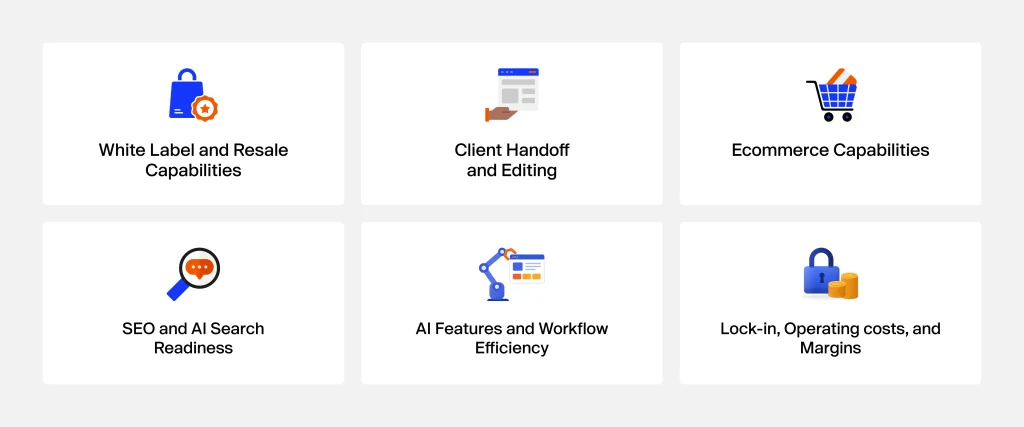
- white label and resale capabilities: Can agencies deliver websites under their own brand, manage client billing, resell subscriptions, or earn revenue share? We distinguish native white label features from partner programs and third-party workarounds. We also consider whether agencies can provide branded monthly reports as part of their client service.
- Client handoff and editing: Can clients update text, images, products, and other routine content without disrupting the design? We also consider user permissions, editor controls, and the agency’s ability to retain control over complex changes.
- Ecommerce capabilities: Does the platform support the client’s current and future needs for product management, payments, inventory, checkout, and integrations? We consider whether it suits a simple online store or a more complex ecommerce operation.
- SEO and AI search readiness: How much control does the platform provide over metadata, URL structures, redirects, structured data, indexability, and performance? We also assess whether agencies can implement the technical and content foundations that support discoverability across traditional search and AI-driven experiences, including ChatGPT, Perplexity, Google AI Overviews, and AI Mode. Platform features alone do not guarantee rankings, citations, or AI-generated brand mentions.
- AI features and workflow efficiency: Which native or integrated AI capabilities help agencies with design, content creation, website building, or routine tasks? We distinguish practical workflow benefits from feature availability and promotional claims.
- Lock-in, operating costs, and margins: What does it cost to build, host, maintain, and support client websites as an agency grows? We also consider content and data portability, migration effort, recurring software costs, and the operational impact of managing a growing portfolio of client sites.
For a deeper look at the technical foundations of AI search visibility, explore our guides on how to optimize for Google AI Mode and the technical AI SEO blueprint for agencies.
The 7 Best Website Builders for Agencies in 2027
1. WordPress: Best for SEO-Focused, Content-Driven, and Custom Websites
WordPress is an open-source content management system that gives agencies extensive flexibility over website design, functionality, hosting, and content management. For agencies, its biggest advantage is control: you can choose the hosting environment, customize the code, extend functionality with plugins, and build a website around each client’s requirements.
Unlike closed website-building platforms, WordPress gives agencies more options for managing the underlying technology stack and migrating websites. However, portability still depends on the themes, plugins, hosting services, and proprietary tools used in each project.
Is WordPress good for SEO? Yes. WordPress offers extensive control over website content, URLs, metadata, structured data, and technical customization through its core features, themes, and plugins. Actual SEO performance depends on how you build, configure, maintain, and optimize the site.
What’s new: WordPress 7.0 “Armstrong”
Released on May 20, 2026, WordPress 7.0 introduced an AI foundation in Core, alongside dashboard and development improvements. These updates create new opportunities for agencies building AI-enabled websites and workflows.
- AI Client and Abilities API: A common foundation that lets developers connect WordPress functionality with generative AI models and build AI-powered workflows.
- Connectors: A central interface for managing configured external service connections, including supported AI providers.
- Optional AI plugin: Enables supported AI-assisted tasks such as generating images, creating titles and excerpts, and suggesting alt text.
- Command Palette: Provides a keyboard-accessible way to find and launch dashboard tools, helping streamline administrative workflows.
- Dashboard and editing improvements: Updates to the admin experience and developer tools provide additional flexibility for website management and customization.
These features do not automatically turn every WordPress site into an AI-powered website. AI functionality depends on the integrations, plugins, provider connections, and permissions configured for each implementation.
WordPress Pros
- Open-source foundation with extensive control over code, content, hosting, and implementation
- Extensive SEO plugins and technical customization options
- WooCommerce for ecommerce, plus a broad plugin ecosystem for additional functionality
- Opportunities to generate recurring agency revenue through maintenance, security, optimization, and website care plans
WordPress Cons
- Agencies must plan for hosting, updates, security, backups, and ongoing maintenance
- Poorly selected or excessive plugins can introduce performance, compatibility, and security issues
- Major WordPress releases require compatibility testing across themes, plugins, and custom functionality before deployment
Who it’s for: Agencies serving content-heavy brands, SEO-focused businesses, multi-location companies, and clients who need custom functionality or greater control over their website infrastructure.
How agencies deliver it: E2M’s white label WordPress development team helps agencies deliver WordPress projects under their own brand. Depending on the project requirements, the team can work Page Builders with Elementor, Gutenberg, Oxygen, Beaver Builder, and WooCommerce.
2. Webflow: Best for Design-Led B2B, SaaS, and Marketing Websites
Webflow is a visual web development platform that gives designers substantial control over layouts, styling, responsive behavior, and interactions without requiring code for every task. Its CMS supports structured content, while managed hosting simplifies deployment and site maintenance.
For agencies, Webflow’s Agency Workspace adds collaboration and client handoff capabilities, including client payments, unlimited staging sites, three free client seats per site, and site-level roles and publishing permissions. These features help agencies manage multiple projects while retaining control over what clients and team members can change.
What’s new: Webflow AEO content agents
At Webflow Conf on September 2, 2026, Webflow pushed hard into AI agents and AI search:
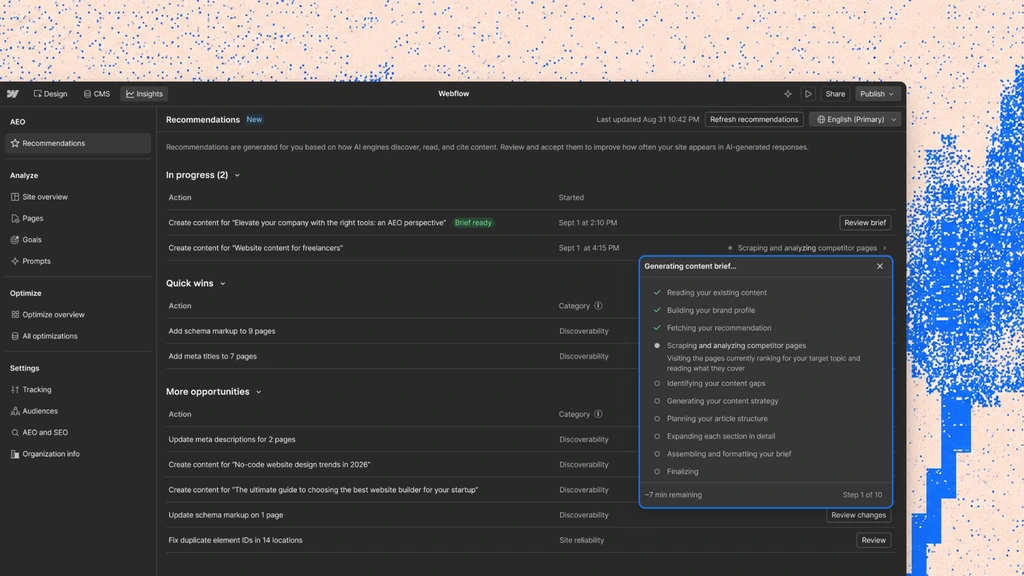
- AEO content agents: find topics where competitors get cited in AI answers, and you don’t, then draft briefs and content in your CMS. Enterprise customers get them by default.
- Campaigns: turns a brief into landing pages, audience and keyword variants, and ad creative, then pushes them to Google Ads. It connects to HubSpot or Salesforce. Beta at Conf, with purchase announced for October.
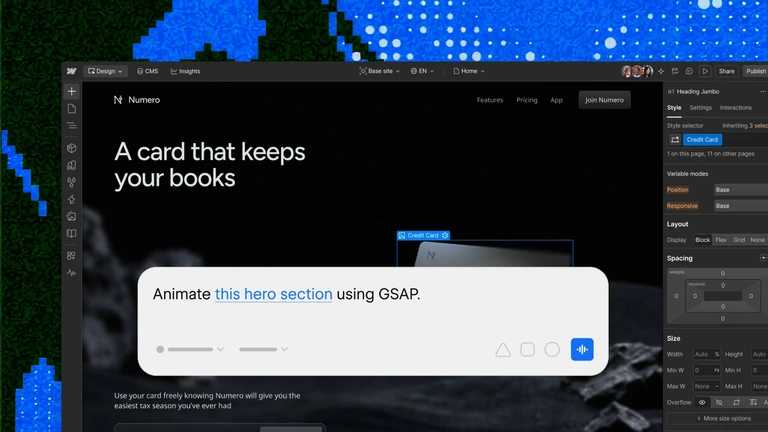
- MCP 2.1: lets AI agents build GSAP animations, run richer CMS queries, and fix Webflow Cloud deploy errors.
- Releases: branch an entire site (pages, CMS content, components, locales) to stage big launches. Beta later in 2026.
- Agent Instructions and Agent Presence: auto-generate brand and design-system files for AI agents, and see where an agent is editing on the canvas.
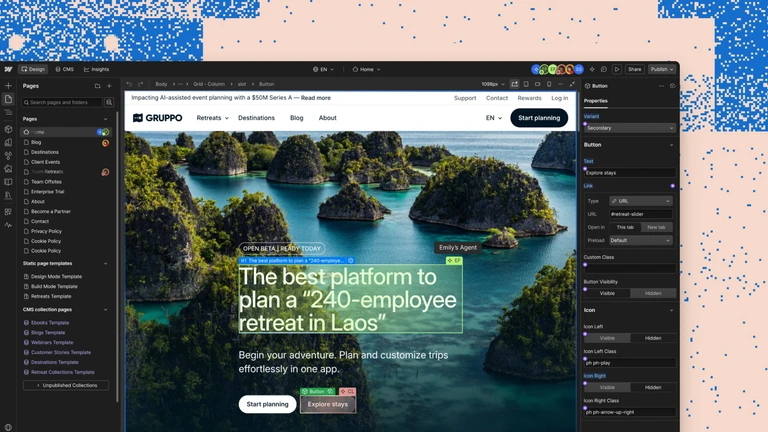
- Source by Webflow: a limited research preview that connects your codebase and marketing stack in one workspace.
Webflow Pricing
Webflow’s published annual-billing prices list the Basic Site plan at $15/month and the Premium Site plan at $25/month. Its Freelancer Workspace costs $16/month, while the Agency Workspace costs $35/month, also billed annually.
Agency owners should account for both site and workspace costs where applicable, along with additional seats, add-ons, and any client-specific requirements. The total cost of operating multiple client sites can differ significantly from the headline price of an individual plan.
Webflow Pros
- Detailed visual design control and responsive layout capabilities
- Integrated AI-assisted website-building and search optimization features
- Agency-focused collaboration, staging, client billing, and publishing permissions
- Structured CMS capabilities for content-driven marketing websites
Webflow Cons
- Clients may need onboarding to edit content confidently without changing the intended design
- Workspace seats, site plans, and add-ons can increase costs as an agency grows
- Platform-specific architecture and CMS constraints may limit portability or complex custom functionality
- New AI features may have plan restrictions or remain in beta or preview stages
Who it’s for: Agencies building design-led websites for B2B companies, SaaS businesses, and funded startups where brand presentation, structured content, and marketing performance are important.
How agencies deliver it: E2M’s white label Webflow development team supports agencies with Webflow implementation, including Figma-to-Webflow builds and CMS setup, enabling agencies to deliver projects under their own brand.
3. Shopify: Best for Ecommerce Businesses and Growing Online Stores
Shopify is a leading ecommerce platform for businesses selling online and in person. For agencies, its biggest advantage is the integrated commerce ecosystem: product management, checkout, payments, inventory, sales channels, and an extensive app ecosystem in one platform.
Shopify is also expanding into AI-powered shopping. Since March 2026, eligible merchants have been able to reach shoppers through AI channels including ChatGPT, Microsoft Copilot, Google AI Mode, and the Gemini app through Shopify’s Agentic Storefronts initiative. Availability and checkout experiences vary by channel and merchant eligibility. Read Shopify’s announcement.
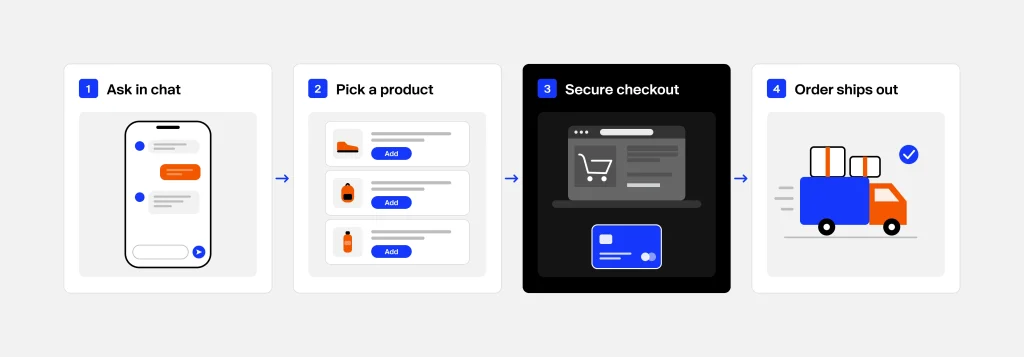
What’s new: Shopify’s move into agentic commerce
Agentic commerce refers to shopping experiences in which AI agents help people discover, compare, and purchase products. Shopify is developing tools that connect merchant catalogs and checkout workflows with these emerging shopping experiences.
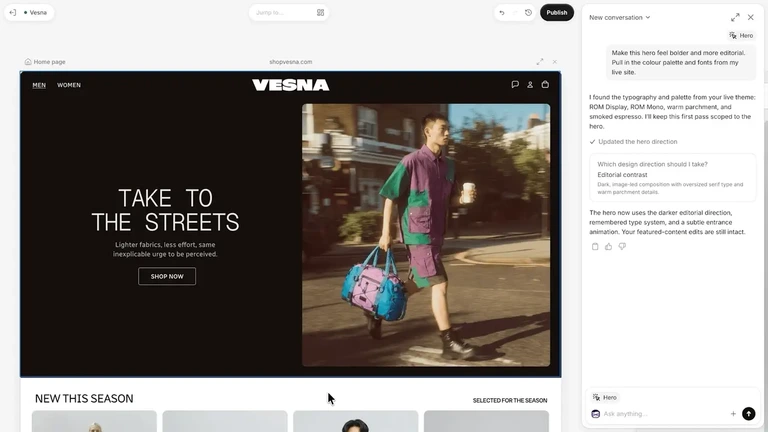
- Canvas (October 2026): A new visual workspace where merchants can work with Sidekick, Shopify’s AI assistant, to design and edit their online stores. Merchants can select elements, request changes through chat, and preview updates against the working theme. Canvas is rolling out gradually and has limitations on supported themes and features.
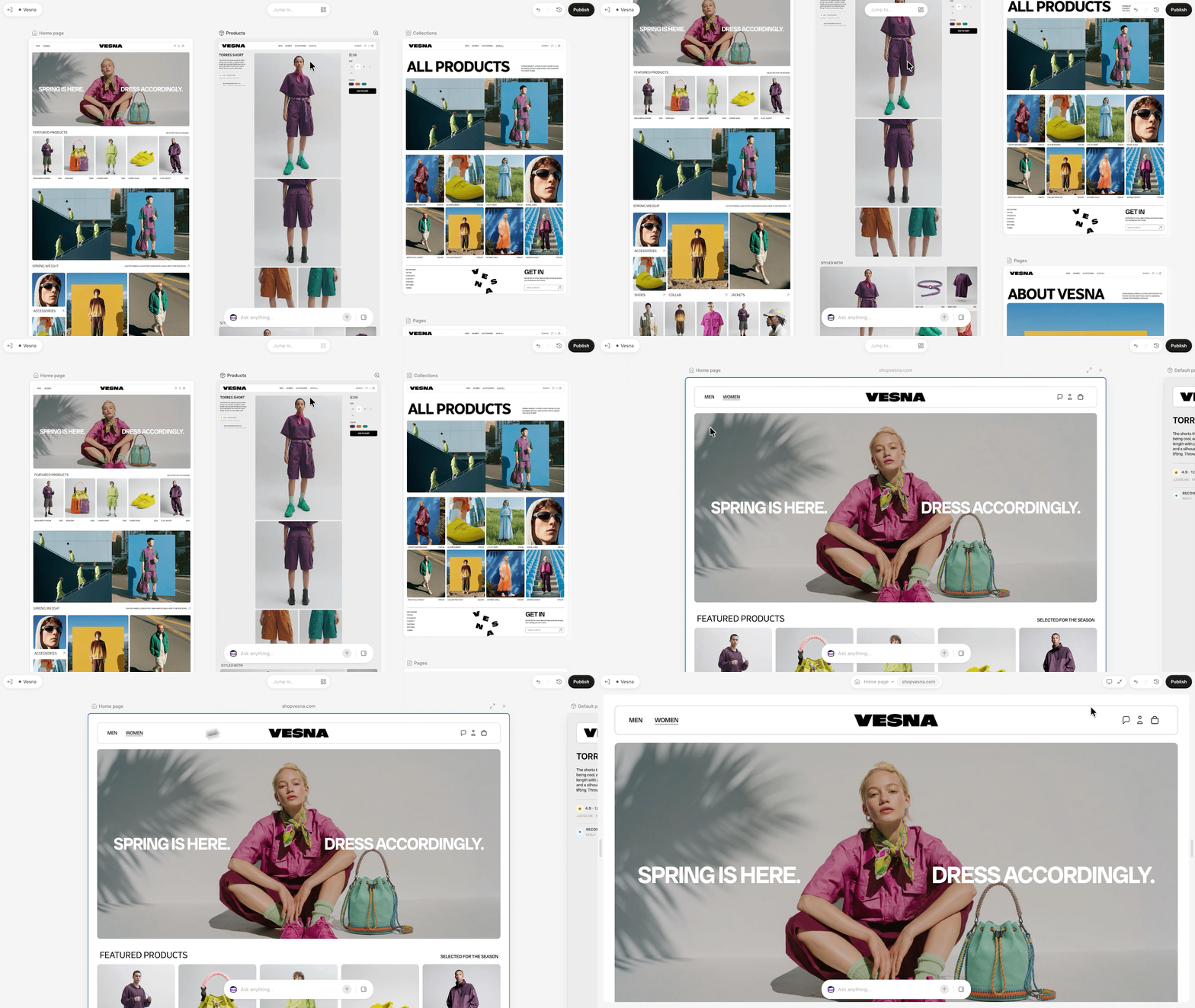
- Agentic Storefronts: Helps merchants manage supported AI shopping channels through Shopify Admin, distribute product information, and track attribution from AI-driven sales. Channel availability and checkout functionality vary.
- Universal Commerce Protocol (UCP): An open commerce standard co-developed by Shopify and Google to help AI agents and commerce systems communicate across shopping and checkout workflows. Its purpose is to make agentic transactions more interoperable, rather than guarantee that every agent can transact with every merchant.
- Sidekick: Shopify’s AI assistant helps merchants work with store settings, theme code, custom apps, and workflow automation using natural-language instructions. The available actions depend on the task and supported integrations. Shopify Winter ’26 Edition.
For agencies, these developments create opportunities to help ecommerce clients prepare product catalogs, improve product information, implement ecommerce SEO, and measure performance across emerging shopping channels. AI shopping features do not guarantee product visibility or sales; product relevance, accurate data, channel eligibility, and customer demand still matter.
Shopify Pricing
Shopify’s published US pricing, billed annually, lists Basic at $29/month, Grow at $79/month, and Advanced at $299/month. Shopify Plus starts at $2,300/month under the listed pricing terms. Online card rates on Basic start at 2.9% + 30¢ USD.
When comparing costs, agencies should account for the subscription plan, payment processing, third-party transaction fees where applicable, paid apps, themes, and any additional implementation or maintenance work. The total cost of ownership can be more important than the headline subscription price.
Shopify Pros
- Integrated ecommerce capabilities for checkout, payments, product management, inventory, and point-of-sale workflows
- Expanding access to AI shopping channels through Shopify’s agentic commerce initiatives
- Extensive app and theme ecosystem, plus a Shopify Partner ecosystem for agencies
- Suitable for businesses that need to scale product catalogs, sales channels, and ecommerce operations
Shopify Cons
- Paid apps, themes, and integrations can increase recurring costs
- Some URL structures and platform-specific constraints offer less implementation flexibility than a self-hosted WordPress setup
- Third-party payment provider fees may apply when merchants do not use Shopify Payments, depending on the plan and market
- Advanced customization and complex integrations may require specialist development support
Who it’s for: Direct-to-consumer brands, retailers, and businesses whose primary website goal is selling products online or across multiple sales channels.
How agencies deliver it: E2M’s white label Shopify development team helps agencies deliver Shopify projects under their own brand. For ongoing growth, agencies can pair development with white label ecommerce SEO services to improve technical foundations, product and category pages, and organic search visibility.
Read more: How white label Shopify works: A guide for agencies
4. Wix Studio: Best for Agencies Serving SMBs That Want to Manage Their Own Websites
Wix Studio is a website creation platform designed for agencies and freelancers building and managing client websites. Its visual editor, responsive design tools, and client editing controls make it a practical option for agencies serving small and midsize businesses that want to handle routine website updates themselves.
For agencies, Wix Studio also offers a Partner Program with revenue-sharing opportunities on eligible plans and client transactions. Partners can earn 20% revenue share on qualifying annual or longer Wix Studio plans, while eligible Legend-level partners can earn 30%. Revenue share from client sales processed through Wix Payments follows separate eligibility and calculation rules.

What’s new: Wix Harmony brings AI-assisted website creation to the Wix ecosystem
On January 21, 2026, Wix announced Wix Harmony, an AI-powered website editor that combines natural-language creation with visual editing. Harmony is a separate editing experience from Wix Studio, so its features should not be assumed to be available in Studio.
Key capabilities include:
- Aria AI agent: Understands a site’s context and helps users make changes through natural-language instructions, from adjusting colors to redesigning pages or adding commerce functionality.

- Prompt-based creation and visual refinement: Users can generate websites, pages, or sections with AI and then refine the results using visual editing tools.
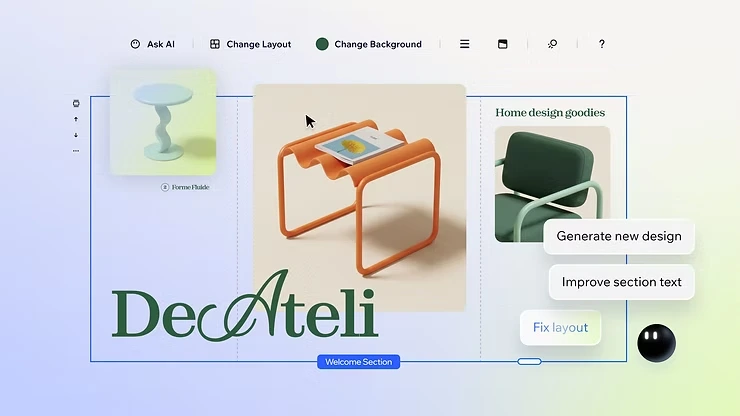
- Custom elements through chat: Users can generate custom elements with logic and code using prompts, then edit them alongside other design elements.
- Integrated business and optimization tools: Wix Harmony includes commerce, scheduling, payments, accessibility monitoring, and SEO and GEO capabilities within its website-building experience.
For agencies, these developments illustrate how AI-assisted website creation is evolving. However, Harmony should be evaluated separately from Wix Studio when comparing agency workflows, client permissions, and implementation capabilities.
Wix Pricing
Wix Studio’s published pricing includes Basic, Standard, Plus, and Elite plans, with prices varying by plan and billing terms. see the official Wix Studio plans page for current prices, annual-billing terms, and included features before selecting a plan.
Agencies should also account for client site subscriptions, workspace requirements, and any additional services or integrations when estimating total delivery costs.
Wix Pros
- Visual editing tools and client content controls that support straightforward website handoff
- Partner revenue-share opportunities on eligible plans and client transactions
- Integrated hosting, security, and business features such as bookings and online stores
- A visual editing environment suited to SMB websites that need regular content updates
Wix Cons
- Website portability is more limited than with an open-source, self-hosted platform such as WordPress
- Less direct control over the underlying hosting environment and server configuration
- Advanced customization and platform-specific dependencies may complicate migrations
- Agencies should verify which AI features are available in Wix Studio rather than assuming all Harmony capabilities carry over
Who it’s for: Agencies serving local businesses, professional service providers, and SMBs that need visually polished websites and want to manage routine content updates in-house.
How agencies deliver it: E2M’s white label Wix website development team helps agencies deliver Wix projects under their own brand, including Wix Studio builds, redesigns, and migrations where supported.
Read more: Planning the handoff to a self-editing client? Start with E2M’s client onboarding checklist for agencies.
5. Duda: Best for Agencies Building Websites at Scale
Duda is a website-building platform designed for agencies, SaaS providers, and web professionals managing multiple client websites. More than 22,000 organizations have used its platform to build over 1 million active websites. For agencies, its main advantage is the combination of white label capabilities, client permissions, reusable components, and centralized project management.
Its White Label plan allows agencies to customize the client-facing platform experience under their own branding and domain. Agencies can also control client permissions, helping clients manage routine website updates while the agency retains control over more complex functionality.
What’s new: Duda expands its AI toolkit for agencies
On July 15, 2026, Duda announced an expanded AI suite designed to help agencies create websites, add functionality, and develop web applications more efficiently.
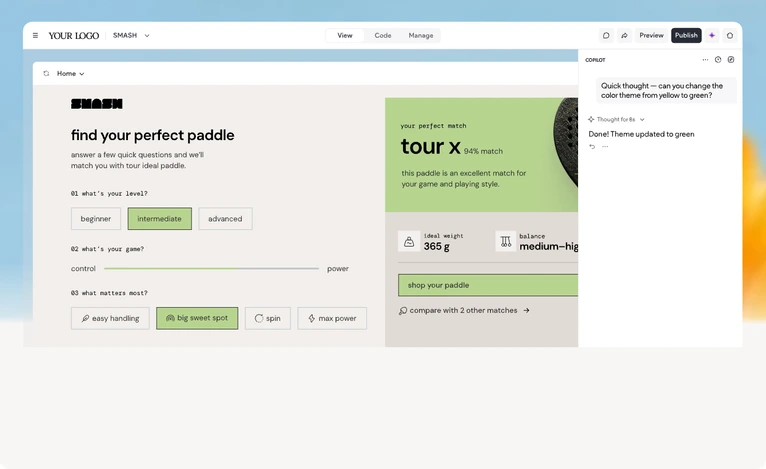
- AI-powered, multimodal site generation: Agencies can provide prompts alongside client briefs, images, and call transcripts to generate website drafts with built-in SEO and AEO capabilities. The result can then be refined in Duda’s visual editor.
- AI-powered Custom Widget generation: Agencies can generate custom functionality within the editor, then refine and reuse widgets across projects or expose supported elements to clients through drag-and-drop editing.
- Duda Vibe: A conversational development environment for building web applications and business tools. It brings projects into Duda’s agency workflow and supports white labeling, permissioned client access, and REST APIs.
- Expanded AI stack: Existing capabilities include alt text generation, SEO title and meta description generation, page and section creation, blog content generation, and AI-agent integrations through the Model Context Protocol (MCP).
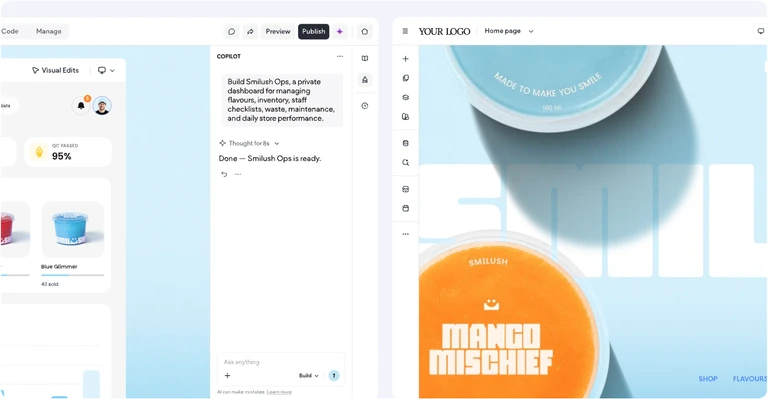
For agencies, these features can reduce repetitive production work and make it easier to standardize website delivery across multiple client accounts. Generated content, custom widgets, and AI-built applications still require human review, testing, and quality assurance before launch.
Duda Pricing
Duda’s published account pricing lists Basic at $19/month, Team at $29/month, Agency at $52/month, and White Label at $149/month when billed annually. Monthly billing costs $25, $39, $69, and $199, respectively. The Agency and White Label plans include four published website subscriptions, subject to the current plan terms.
For agencies comparing costs, the distinction between Agency and White Label matters: full platform white labeling is included in the White Label plan, while the Agency plan provides a different feature set. Additional site subscriptions, ecommerce or booking requirements, and other services may add to the total cost.
Duda Pros
- white label client-facing experiences on the eligible plan
- Role-based permissions and client editing controls
- Reusable templates and widgets for repeatable website production
- AI-assisted site generation and functionality development
- Centralized workflows for managing multiple client websites
Duda Cons
- Full white label functionality requires the higher-priced White Label plan
- Additional published sites can increase the total subscription cost
- Agencies may encounter a smaller third-party template and app ecosystem than some larger website platforms
- AI-generated websites and widgets still need implementation checks, accessibility review, and SEO quality assurance
Who it’s for: Agencies productizing website services for SMBs, franchises, multi-location businesses, and specific industry verticals that benefit from repeatable templates and centralized client management.
How agencies deliver it: E2M’s white label Duda development team supports agencies with Duda website development, custom templates, and widget builds, helping them deliver projects under their own brand.
Read more: How to profitably sell white label web development
6. Framer: Best for Fast, Interactive Startup and Landing-Page Websites
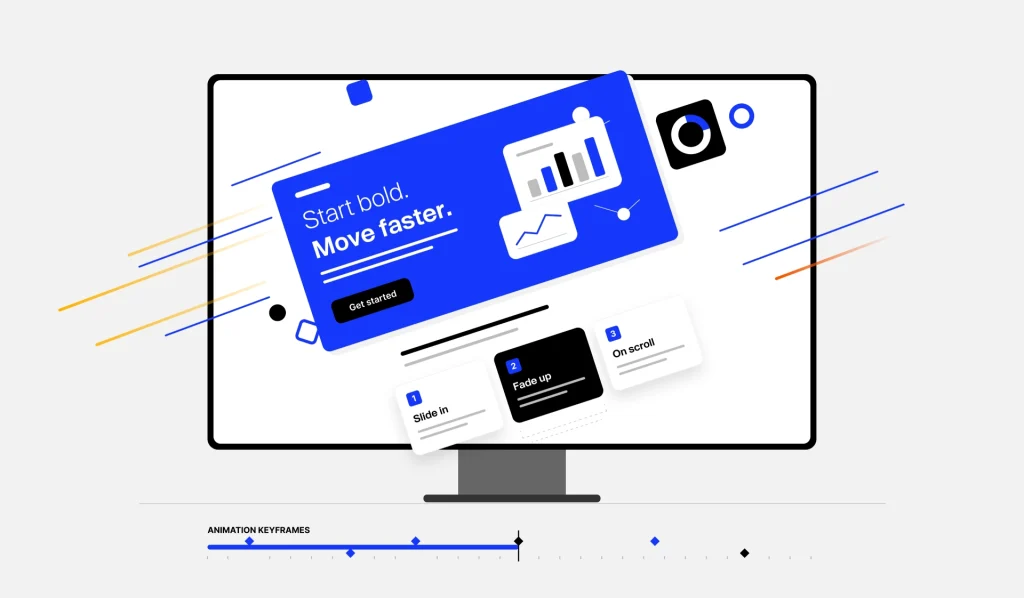
Framer is a strong choice for agencies building visually distinctive startup websites, SaaS marketing pages, portfolios, and campaign microsites. Its visual editor, native animation capabilities, and CMS help teams move from design to launch without building every interaction from scratch.
What’s new: Framer’s AI agent and hosting updates
Framer has continued expanding its AI-assisted design and development features. Recent updates include:
- Reusable Agent Skills (September 2026): Save instructions for design systems, writing styles, and CMS workflows. The agent can reference existing pages, components, and styles to produce more consistent results.
- CMS List field (September 2026): Organize repeating content, such as FAQs, product features, and tutorial steps, in a single list instead of maintaining multiple separate fields.
- Firewall (October 2026): Create rules to redirect or block visitors based on their country or requested URL path, or direct visitors to a specific locale. This feature requires the Advanced Hosting add-on or an Enterprise plan.
- Wireframer and Workshop: Use AI-assisted tools to generate page layouts and build interactive components, then refine the results in the editor.
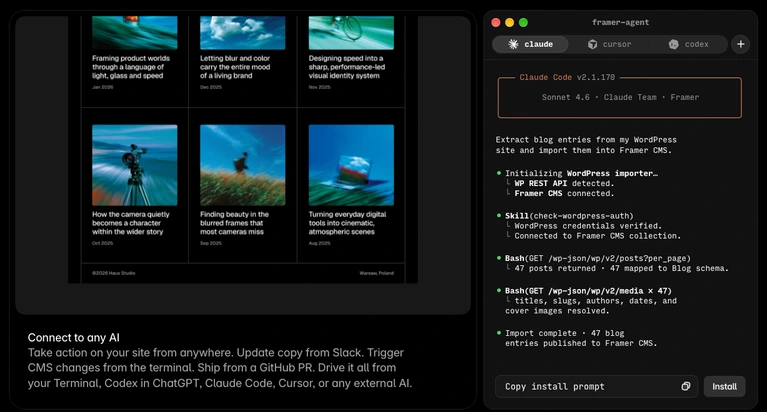
These features can speed up design and production, but agencies should still review generated layouts, content, interactions, accessibility, and responsive behavior before launch. Explore Framer’s official updates.
Framer Pricing
Framer’s published annual-billing prices include:
| Plan | Price per site | Key limits |
| Basic | $10/month | 30 pages, 2 CMS collections, 50 GB bandwidth |
| Pro | $30/month | 150 pages, 10 CMS collections, 100 GB bandwidth |
Additional editors cost $20/month per seat, while content editors cost $10/month per seat. Higher limits and features such as advanced hosting and A/B testing may require add-ons or an Enterprise plan. Check Framer’s pricing page for current plan details.
Framer Pros
- Strong native animation and interaction-design capabilities.
- Fast production for launch pages, startup sites, and marketing campaigns.
- Visual editing and reusable components that support rapid design iteration.
- A built-in CMS for blogs, portfolios, and other structured content.
Framer Cons
- The Basic plan’s page and CMS limits may constrain larger websites.
- No dedicated, full white label agency platform comparable to Duda’s White Label offering.
- Ecommerce and complex business workflows may require integrations or another platform.
- Agencies still need to plan for client editing permissions, maintenance, and platform-specific dependencies.
Who it’s for: Startups, SaaS companies, design-led brands, portfolios, and agencies producing campaign landing pages or visually rich marketing websites.
How agencies deliver it: Agencies that need additional Framer design and development capacity can work with E2M’s white label Framer design and development team. Support includes Figma-to-Framer builds, CMS setup, custom interactions, responsive implementation, and ongoing site maintenance.
Read more: Fast builds still need thorough testing. See why early website testing matters for a successful launch.
7. GoHighLevel: Best for Local-Service Businesses and Lead-Generation Agencies
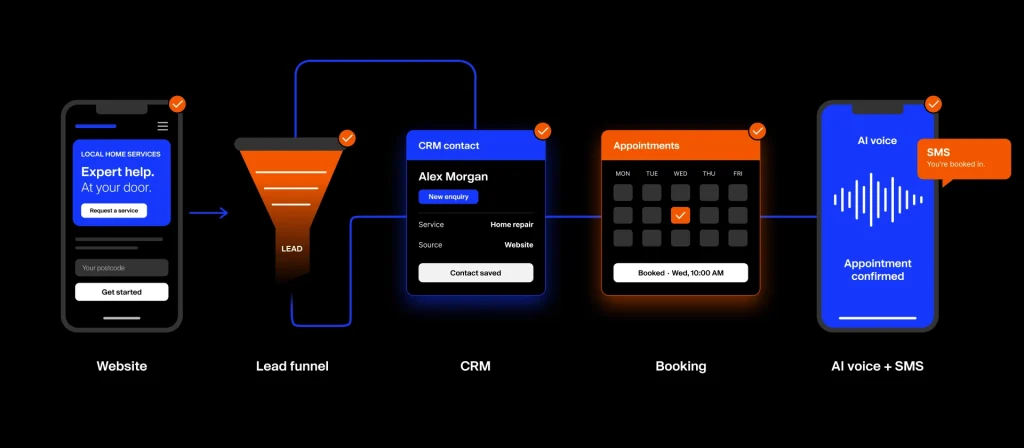
GoHighLevel (also called HighLevel) is more than a website builder. It combines websites and sales funnels with a CRM, appointment booking, email and SMS marketing, reputation management, and workflow automation. For agencies serving local businesses, this creates an opportunity to bundle website development with lead management and ongoing marketing services.
What’s new: AI-powered website building and AI Employee
HighLevel continues to expand its AI capabilities, helping agencies create web pages, manage conversations, and automate routine marketing tasks.
- Funnel & Website AI: Generate website and funnel pages from prompts, guided inputs, URLs, or image references. You can refine layouts, copy, and individual sections through conversational editing.
- Conversation AI: Automate supported customer conversations, qualify leads, and help with appointment booking.
- Voice AI: Deploy AI voice agents for supported inbound and outbound calling workflows. Phone and usage charges may apply.
- Content AI and Reviews AI: Assist with creating marketing content and managing review responses.
- AI Studio: Build websites, landing pages, and interactive experiences through natural-language prompts. Availability may depend on Labs access and account configuration.
These tools serve different purposes and may have separate access and billing requirements. AI-generated pages and responses should be reviewed for accuracy, brand consistency, accessibility, and SEO before they go live.
HighLevel Pricing
HighLevel’s main agency plans are priced as follows:
| Plan | Price | Best suited for |
| Starter | $97/month | Smaller agencies managing up to 3 sub-accounts |
| Unlimited | $297/month | Agencies managing unlimited sub-accounts |
| Agency Pro | $497/month | Agencies reselling software through SaaS Mode and using advanced rebilling features |
Prices are in USD. Annual billing options are also available.
The AI Employee add-on is separate from the core agency subscription:
- AI Employee Growth: $50/month per enabled sub-account, with defined usage allowances.
- AI Employee Unlimited: $97/month per enabled sub-account, with broader included AI usage subject to fair-use terms.
Phone charges and certain usage-based costs may still apply. HighLevel’s Agency Pro plan supports SaaS Mode and rebilling with markup for eligible services. The Unlimited plan includes a branded desktop app, while mobile-app options and other add-ons may have separate fees. Check HighLevel’s current pricing before budgeting or reselling the platform.
HighLevel Pros
- Websites, funnels, CRM, booking, and automation in one platform.
- white label desktop experience for agencies on eligible plans.
- SaaS Mode enables agencies to package and resell software subscriptions.
- Well suited to lead capture, appointment booking, and follow-up automation.
HighLevel Cons
- Design flexibility and content-management workflows may not suit every complex, content-heavy website.
- Agencies should assess URL management, metadata, redirects, structured data, and other technical SEO requirements before choosing it for an SEO-led project.
- AI, messaging, and phone usage can add costs that need to be factored into client pricing.
- Clients may become dependent on the agency’s configured platform and workflows, so account ownership and handoff arrangements should be agreed upon early.
Who it’s for: Home services, dental practices, med spas, law firms, real estate businesses, and other local-service companies where lead capture, appointment booking, and follow-up are central to growth.
How agencies deliver it: Agencies that need implementation support can partner with E2M’s white label GoHighLevel development team for websites, funnels, snapshots, and automations.
Read more: Explore the GoHighLevel templates guide for niche agencies to see how reusable assets can support more repeatable client delivery.
Which Website Builder Fits Which Client?
Most agencies don’t need one website builder for every project. They need a clear default for each client type, with room to choose another platform when the project’s requirements call for it.
| If your client is… | Start with | Why |
|---|---|---|
| A content-driven brand focused on SEO | WordPress | Flexible content management, extensive SEO tools, and broad customization options |
| A B2B or SaaS company | Webflow | Visual design control and structured content capabilities for marketing sites |
| An online store | Shopify | Ecommerce features, product management, and expanding AI-assisted shopping integrations |
| A small business that wants to edit its own site | Wix Studio | Visual editing tools and client-friendly handoff options |
| An agency managing many similar SMB websites | Duda | Agency workflows, reusable components, and white label capabilities on eligible plans |
| A startup launching a product or campaign | Framer | Fast visual production, animation, and interactive landing pages |
| A local-service business focused on leads | GoHighLevel | Websites and funnels integrated with CRM, booking, and follow-up automation |
These are starting points, not hard rules. Before committing, consider the client’s content needs, integrations, SEO requirements, budget, editing preferences, and long-term ownership expectations.
Other Website Builders Worth Considering
- Squarespace: A good option for creatives, portfolios, personal brands, and smaller businesses that prioritize polished templates and straightforward site management.
- WooCommerce: A strong choice for businesses that want ecommerce functionality within WordPress, with extensive customization options. Explore E2M’s white label WooCommerce development.
- BigCommerce: Worth evaluating for growing ecommerce businesses, including B2B sellers and stores with large or complex product catalogs. See E2M’s white label BigCommerce development.
Build In-House Web Builder or Outsource From White Label Partner? The Agency Math
Supporting multiple website platforms in-house requires a mix of technical skills, quality assurance, project management, and ongoing training. Hiring a specialist for every platform isn’t always practical, especially when project demand fluctuates.
white label fulfillment gives agencies another option: keep strategy, client relationships, and project ownership in-house while a specialist partner supports delivery behind the scenes.
E2M has built 15,000+ websites for 1,100+ agencies, backed by 350+ full-time specialists and 98% client retention. Its white label services include website design and development, ecommerce, SEO, and AI search optimization. Plans start at $1,299/month for 30–35 hours, with platform availability depending on the selected plan. There are no contracts or retainers. Explore E2M’s white label website design and development plans for current pricing and plan details.
Ready to expand your website delivery capacity without hiring for every skill set? Book a Growth Call with E2M to discuss your agency’s platform mix, project volume, and white label fulfillment needs.
FAQs
There is no single best website builder for every agency. WordPress suits content-heavy and SEO-focused websites, Webflow is a strong option for design-led B2B and SaaS sites, Shopify is built for ecommerce, and Duda supports agencies managing multiple client websites with white label workflows. Many agencies standardize on two or three platforms based on their most common client needs.
Shopify is a strong default for businesses that want an integrated ecommerce platform with product management, payments, and sales-channel integrations. Its Agentic Storefronts feature also makes products discoverable through supported AI shopping channels, including ChatGPT, Google AI Mode, Gemini, and Microsoft Copilot, subject to eligibility and channel-specific functionality. WooCommerce is worth considering when a business prefers to build its store on WordPress and wants greater control over its implementation.
WordPress generally offers more flexibility over hosting, code, plugins, and technical implementation, making it a strong choice for content-led businesses and complex SEO requirements. Wix Studio offers managed hosting, visual editing, and client-friendly website management. The better choice depends on the client’s technical needs, budget, preferred editing experience, and long-term maintenance plans.
Webflow is well suited to design-led marketing websites with structured CMS content and more complex publishing needs. Its Webflow AEO tools also offer AI visibility analytics and optimization agents, with availability depending on the plan. Framer is particularly attractive for visually rich startup sites, animated landing pages, and fast campaign launches. Compare CMS limits, SEO requirements, integrations, and client handoff needs before choosing either platform.
Duda’s White Label plan and GoHighLevel’s agency offerings provide substantial white label capabilities, although the included features differ by plan. Webflow supports agency workflows and client billing, while Wix and Shopify offer partner or developer ecosystems with different referral, revenue-share, and service-delivery opportunities. These programs are not equivalent: check whether the platform supports branded client access, subscription resale, client billing, or simply referral earnings.
The best choice depends on the workflow. Shopify is expanding AI-assisted commerce and product discovery across supported shopping channels. Webflow offers AEO analytics and agents for eligible plans, while Wix Harmony and Duda’s AI tools support prompt-assisted website creation. WordPress 7.0 introduced a provider-agnostic AI Client API that developers can use to build AI-powered plugin features. These capabilities serve different purposes, and none guarantees better rankings or citations in AI-generated answers.
Entry-level website plans in this comparison start at around $10 per site per month for Framer Basic, while Shopify Basic starts at around $29 per month with annual billing. Agency-focused plans range from Duda’s Agency plan at around $52 per month with annual billing to GoHighLevel’s Agency Pro plan at $497 per month. These prices are not directly comparable: some are per-site subscriptions, while others cover agency workspaces or multiple client accounts. Add-ons, extra seats, AI usage, payment processing, and hosting can increase the total cost. Check each provider’s current pricing before committing.