Ever closed a month with a full calendar, a busy team, and a thinner margin than you planned?
That’s operational drag. It’s rarely one big problem. It’s hundreds of small, manual tasks: pulling reports, formatting proposals, chasing approvals, cleaning keyword lists.
Each one takes 20 minutes. Together, they pull your best people away from the work clients actually pay for.
And your clients’ own teams are already moving. According to WFA research reported by Marketing Week (September 2026), 96% of brand marketers now use generative or agentic AI, up from 45% in 2023.
The most common way they measure it is efficiency: time saved and cost saved. Clients will expect the same from their agency.
In 2027, the agencies that grow won’t be the ones that hire fastest. They’ll be the ones that hand repeatable work to AI and put their people on strategy, relationships, and quality.
At E2M, we’ve already covered the custom AI agents we built for digital agencies and the AI agent frameworks behind them. But not every task needs a custom agent. Most of the hours you can win back sit inside focused, repeatable workflows that run quietly in the background.
At E2M, our AI team has mapped 100 AI system workflows across 12 agency functions, from lead sourcing to project delivery. Each one runs as a MicroApp, a lightweight AI app built to do one job well. This guide walks you through 20 of them. It covers the problem each AI system solves, how it works, what it delivers, and how many hours it gives back every week.
Let’s break it down.
TL;DR
- What an AI workflow is: a focused automation that handles one repeatable agency task from start to finish, like drafting a proposal or sending a monthly client digest. Each one runs as a MicroApp, a small, purpose-built AI app with one job. Most can be live in days, not months.
- What’s covered: 20 workflows across six stages: winning clients, onboarding, SEO and content delivery, campaigns and creative, reporting and retention, and running the agency.
- The payoff: each workflow saves a team 4–14 hours a week, based on E2M’s MicroApp estimates for a typical agency team.
- Where to start: pick one workflow for revenue, one for retention, and one for delivery. Our picks are the Automated RFP & Proposal Builder (8–14 hrs/week), the Automated Monthly Client Digest (6–10 hrs/week), and the Bulk Meta Tag & Schema Generator (7–12 hrs/week).
What Is an AI Workflow (MicroApp)?
An AI workflow, or MicroApp, is a single-purpose AI automation that takes one repeatable agency task from trigger to finished output. It connects the tools your team already uses, such as your CRM, ad platforms, analytics, and project management, and adds an AI step that reads, writes, or decides. If you’ve used no-code automation before, it works the same way. The difference is that AI now handles the steps that used to need a person.
Every MicroApp follows the same simple pattern:
- Trigger: something happens, like a deal closing, an RFP arriving, or a month ending.
- AI step: the MicroApp gathers the data, analyzes it, and drafts the output.
- Output: a finished draft, alert, report, or update lands where your team works, ready for review.
The 20 AI Workflows at a Glance
| # | Workflow | Agency stage | What it does | Hours saved/week |
|---|---|---|---|---|
| 1 | Automated RFP & Proposal Builder | Find & win clients | Turns RFPs and briefs into a client-ready proposal draft | 8–14 |
| 2 | Multi-Channel Outreach Sequencer | Find & win clients | Runs behavior-based outreach across email and LinkedIn | 8–12 |
| 3 | LinkedIn Recruiter-Style Sourcer | Find & win clients | Builds targeted prospect lists with Boolean-style search | 8–12 |
| 4 | Competitor Customer Mapper | Find & win clients | Maps companies currently served by competitor agencies | 7–10 |
| 5 | Pre-Sales Audit Dashboard | Find & win clients | Audits a prospect’s digital presence before every call | 6–9 |
| 6 | Website Visitor Deanonymizer & Scorer | Find & win clients | Identifies and scores companies visiting your site | 5–7 |
| 7 | Automated Strategy Plan Generator | Onboard clients | Drafts client strategy plans from performance data | 6–10 |
| 8 | Smart Onboarding Orchestrator | Onboard clients | Runs every onboarding step from deal close to kickoff | 4–6 |
| 9 | Long-Form Blog Engine (with SERP context) | Deliver SEO & content | Produces SERP-informed long-form drafts | 8–12 |
| 10 | Bulk Meta Tag & Schema Generator | Deliver SEO & content | Writes meta tags and schema markup at scale | 7–12 |
| 11 | Semantic Keyword Cluster Tool | Deliver SEO & content | Groups keywords into topic clusters and page maps | 6–10 |
| 12 | Tone-of-Voice Enforcer | Deliver SEO & content | Flags copy that breaks a client’s brand voice | 4–6 |
| 13 | Video Subtitle & B-Roll Automator | Run campaigns & creative | Adds subtitles and timed B-roll to videos | 6–10 |
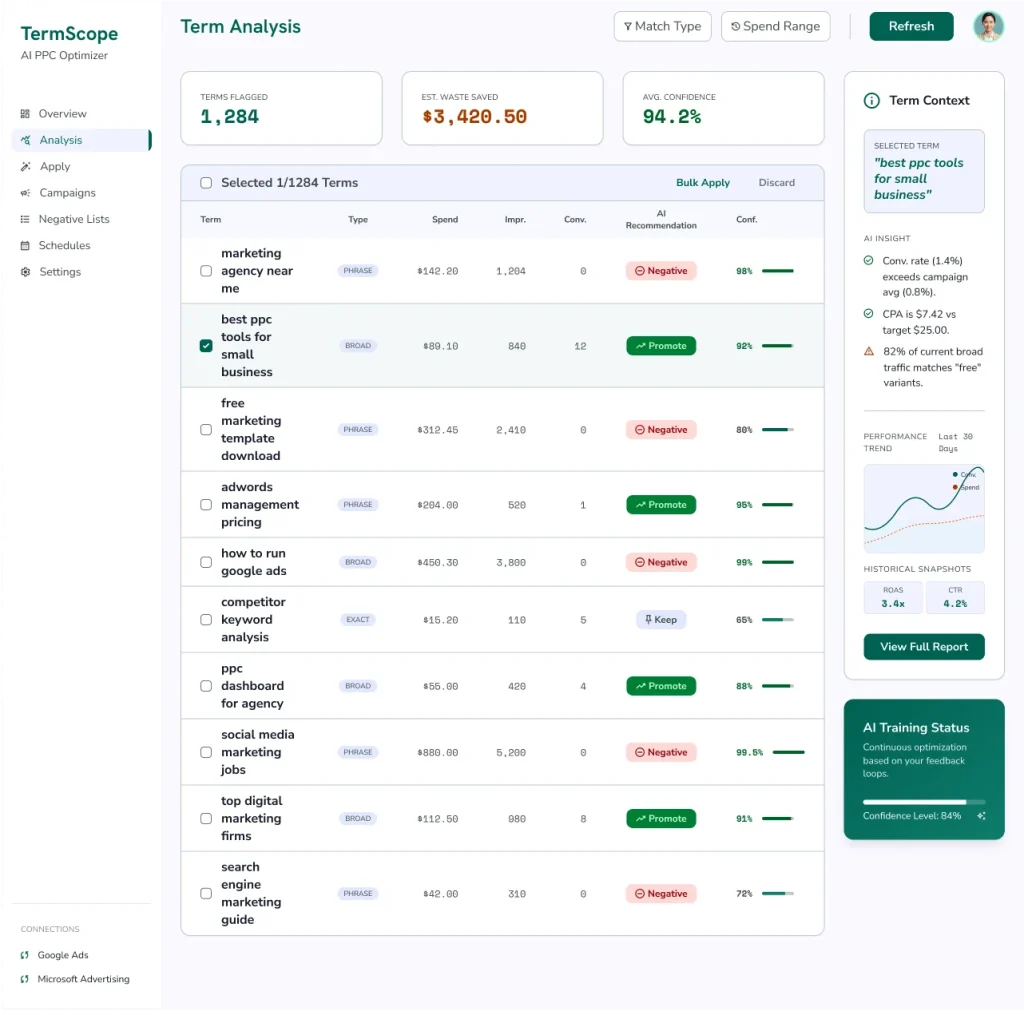
| 14 | Search Term Report Analyzer | Run campaigns & creative | Finds negatives and new exact-match terms weekly | 4–7 |
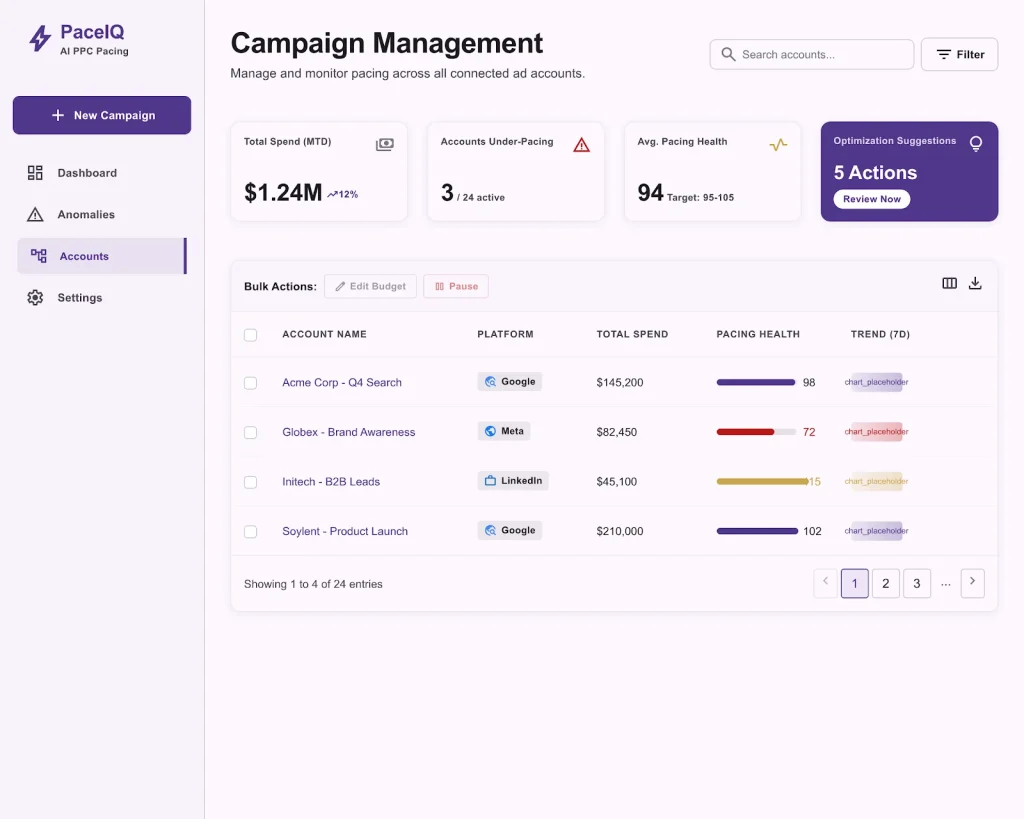
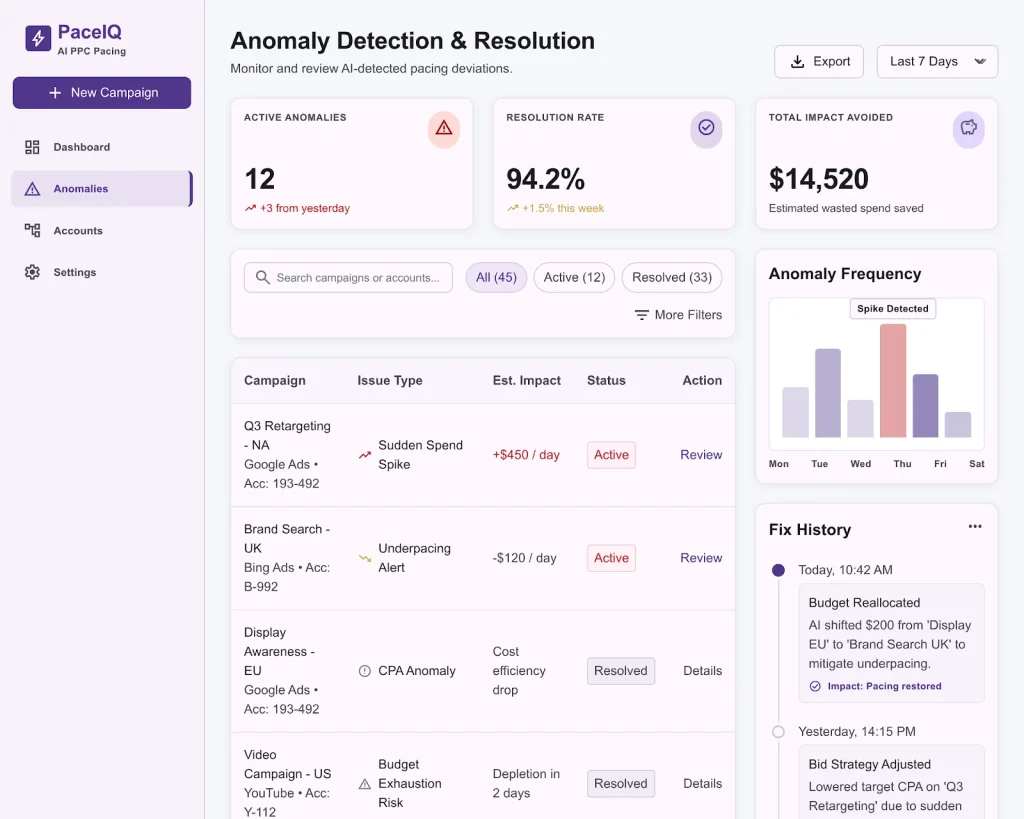
| 15 | Budget Pacing & Anomaly Detector | Run campaigns & creative | Alerts on overspend and underspend in real time | 4–6 |
| 16 | Automated Monthly Client Digest | Report & retain | Sends every client a personalized monthly wins summary | 6–10 |
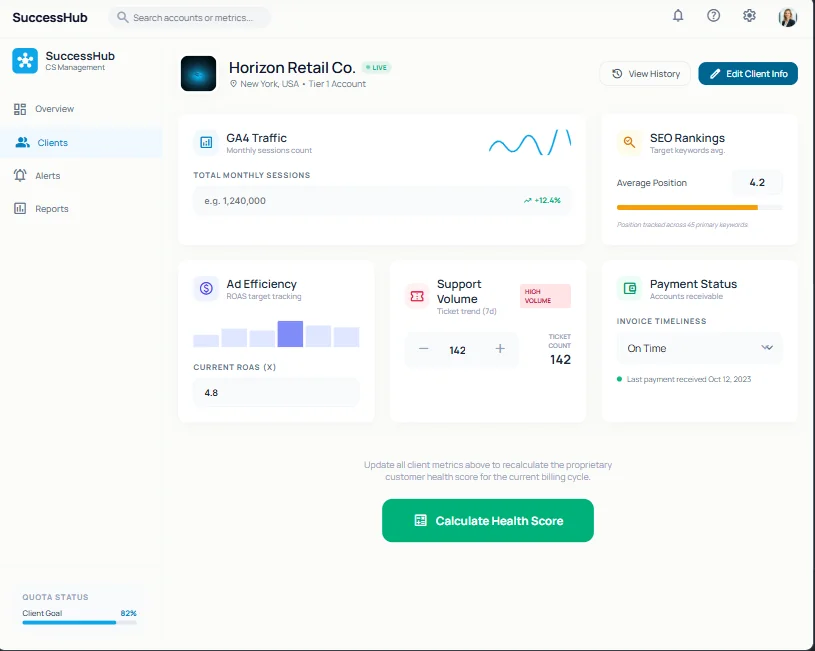
| 17 | Client Health Score Dashboard | Report & retain | Scores accounts and flags churn risk early | 5–8 |
| 18 | SEO Rank Volatility Tracker | Report & retain | Detects ranking drops and classifies the likely cause | 5–8 |
| 19 | Internal Knowledge Base Assistant | Run the agency | Answers team questions from your SOPs and docs | 6–9 |
| 20 | Time-Log to Project Margin Tracker | Run the agency | Tracks live project margin against budgeted hours | 4–6 |
Hours saved are E2M estimates for a typical agency team. Your results will depend on volume and current processes.
Join the Agency AI Growth Hub for frameworks, playbooks, and systems used by scaling agencies.
Stage 1: AI Workflows for Agency Lead Generation & Sales
Sales is where manual work hurts most, because every hour spent on research or formatting is an hour not spent talking to buyers. These six workflows automate prospect discovery, outreach, and proposal prep.
Each one saves a team 5–14 hours a week.
1. Automated RFP & Proposal Builder (AI Proposal Automation)
Category: Sales & Proposal · Type: MicroApp · Saves your team: 8–14 hrs/week
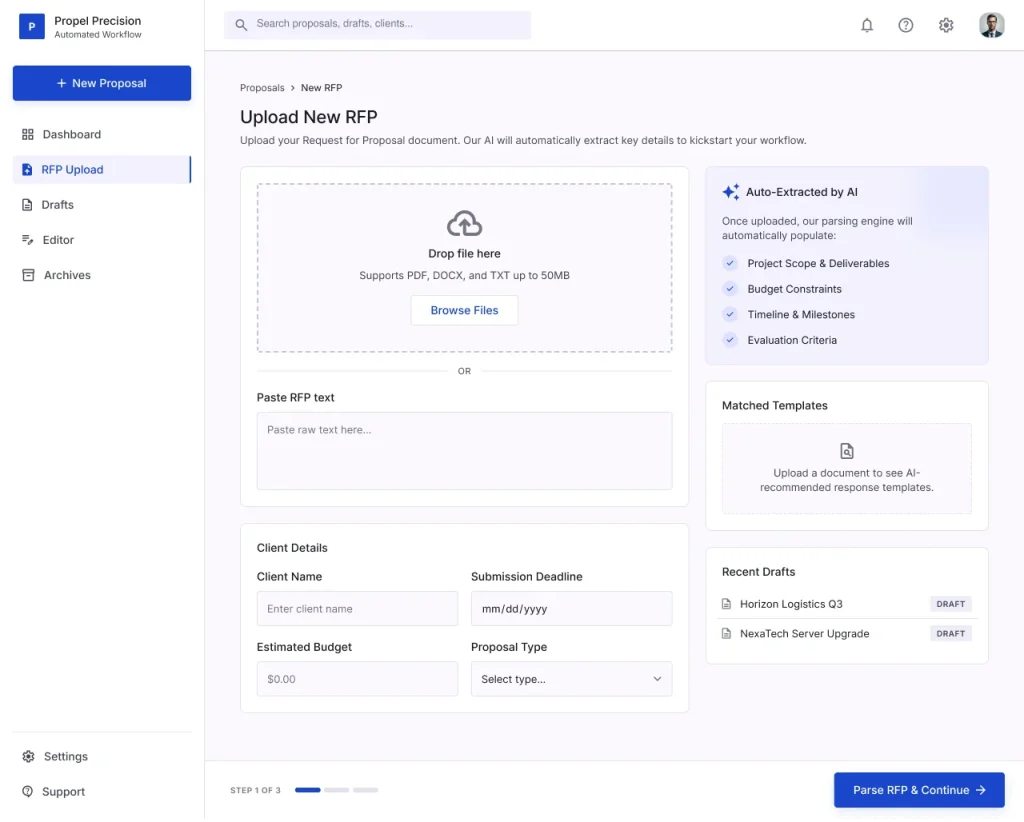
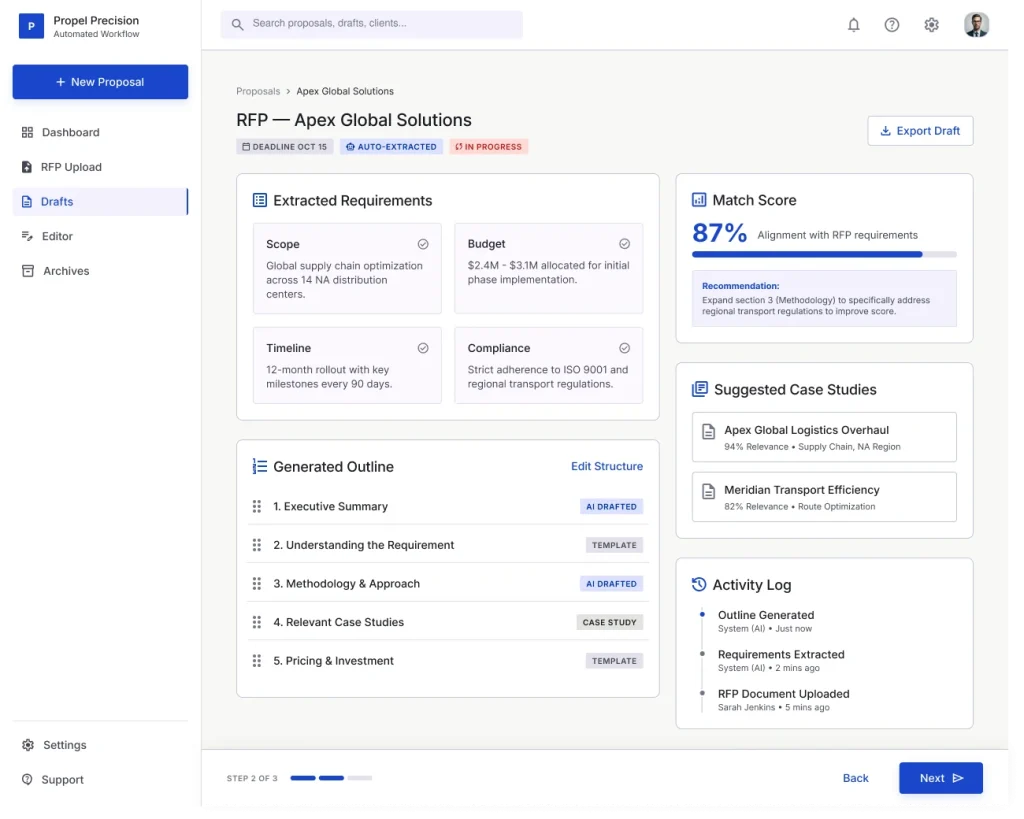
The Automated RFP & Proposal Builder is an AI MicroApp that turns RFPs and client briefs into a client-ready proposal draft in minutes.
Best for: agencies that respond to RFPs or send custom proposals every week.
The challenge we solve: An RFP lands on Friday afternoon. By Monday, someone has spent the weekend copying sections from old proposals, hunting for the right case study, and fixing formatting. Multiply that by every opportunity, and your team quietly stops bidding on deals it could win.
What it does:
- Parses incoming RFPs and client briefs to pull out the key requirements.
- Assembles a structured proposal draft from your templates, past proposals, case studies, service descriptions, and pricing logic.
- Produces a client-ready first draft within minutes, so you can respond to more opportunities without adding headcount.
How it saves time:
- Reads and interprets briefs automatically, removing hours of manual section drafting and template formatting per proposal.
- Selects and inserts relevant case studies based on the brief, so no one is searching folders and copy-pasting.
- Turns multi-hour proposal prep into minutes, with a structured draft ready for review.
Want this AI workflow set up for your agency?
2. Multi-Channel Outreach Sequencer (AI Sales Outreach Automation)
Category: Lead Generation & Nurturing · Type: MicroApp · Saves your team: 8–12 hrs/week
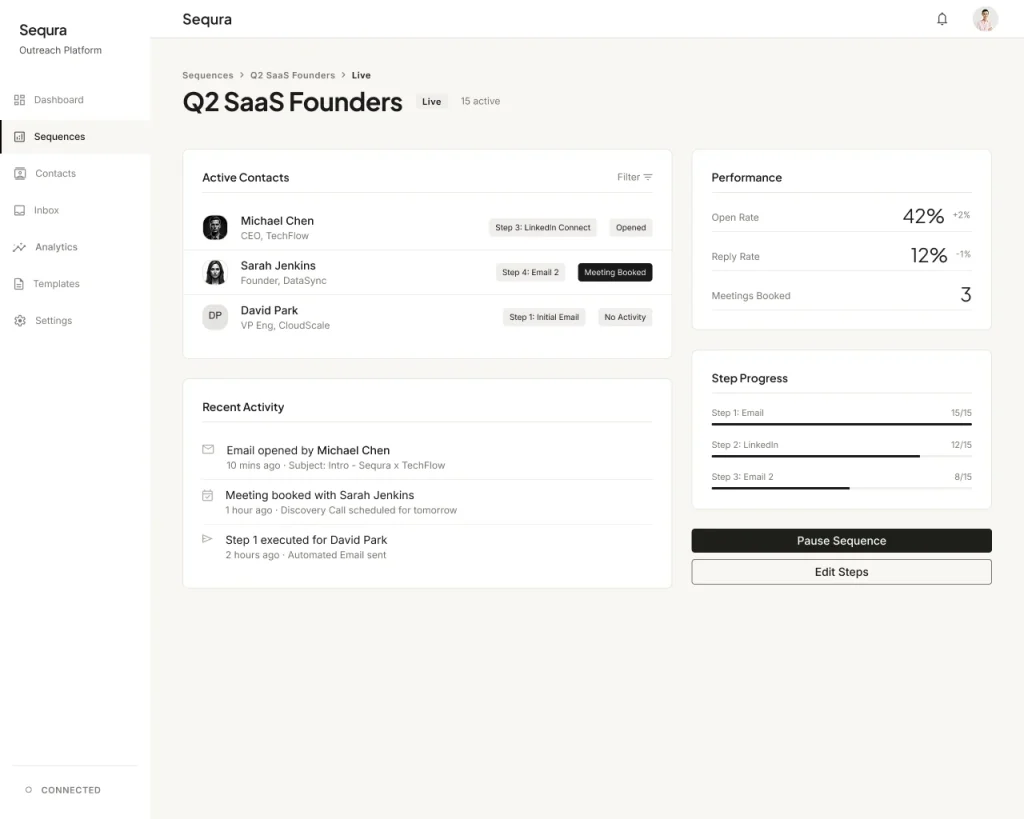
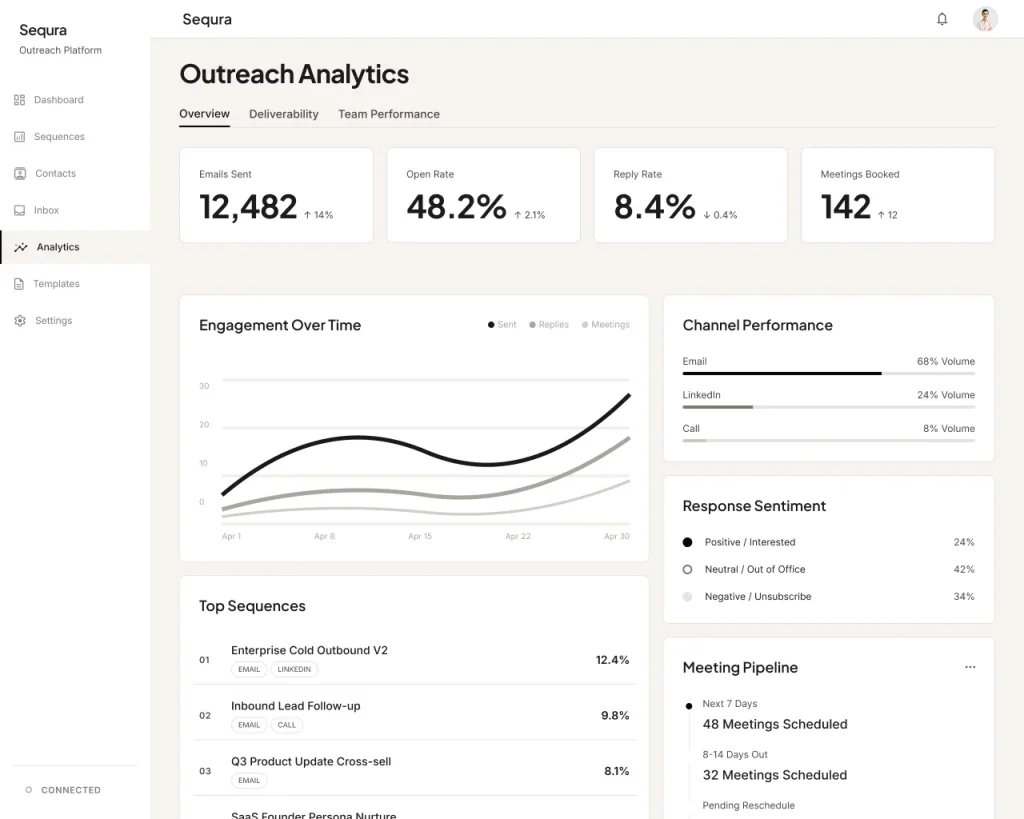
The Multi-Channel Outreach Sequencer is an AI MicroApp that runs behavior-based outreach across email and LinkedIn without manual follow-up.
Best for: agencies running outbound to fill their pipeline.
The challenge we solve: Good prospects slip away because follow-ups depend on someone remembering to send them. Managing timing across email and LinkedIn by hand doesn’t scale past a few dozen leads.
What it does:
- Builds and runs multi-touch outreach sequences across email, LinkedIn, and other channels.
- Times each touchpoint based on prospect behavior signals.
- Adjusts messaging, channel, and frequency as engagement data comes in, so you reach prospects where they actually respond.
How it saves time:
- Runs follow-up sequences automatically, removing manual touchpoint scheduling and tracking.
- Coordinates outreach across channels at once, without a team member managing each step.
- Handles large prospect lists at scale, so time spent on sequence management doesn’t keep piling up.
3. LinkedIn Recruiter-Style Sourcer (AI Lead Sourcing)
Category: Lead Scraping · Type: MicroApp · Saves your team: 8–12 hrs/week
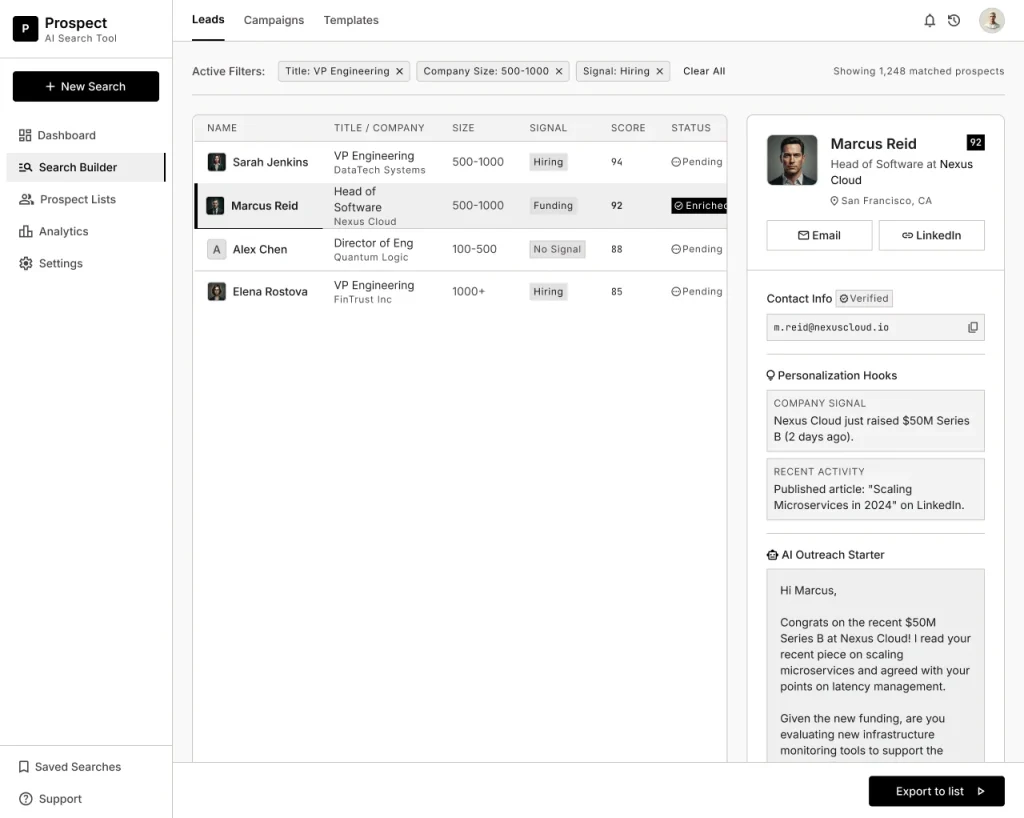
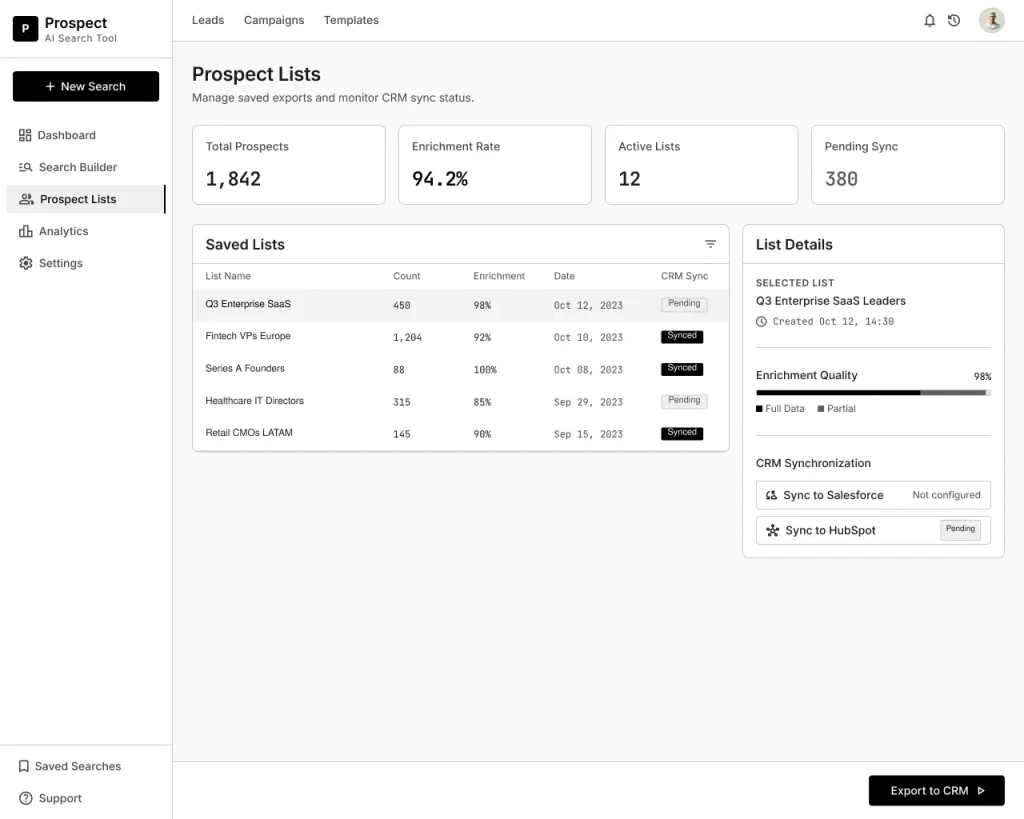
The LinkedIn Recruiter-Style Sourcer is an AI MicroApp that builds targeted, enriched prospect lists using Boolean-style LinkedIn search.
Best for: agencies with a defined ICP and a business development team doing manual list building.
The challenge we solve: Building a prospect list on LinkedIn means tab after tab of profiles, then copying everything into a spreadsheet. It can eat a full day, and the list is out of date by next month.
What it does:
- Uses AI to replicate LinkedIn Recruiter-style Boolean search across job title, industry, company size, seniority, location, and recent activity.
- Exports enriched prospect data with contact information, profile summaries, and personalization context.
- Lets sales and business development teams build highly targeted lists in minutes, ready for relevant outreach right away.
How it saves time:
- Eliminates tab-by-tab LinkedIn browsing and manual profile review.
- Extracts and structures profile data automatically, removing the copy-paste-to-spreadsheet routine.
- Turns a full day of manual sourcing into a fast, repeatable process.
See exactly how this can work inside your agency (and for your clients)
 Book an AI Strategy Call
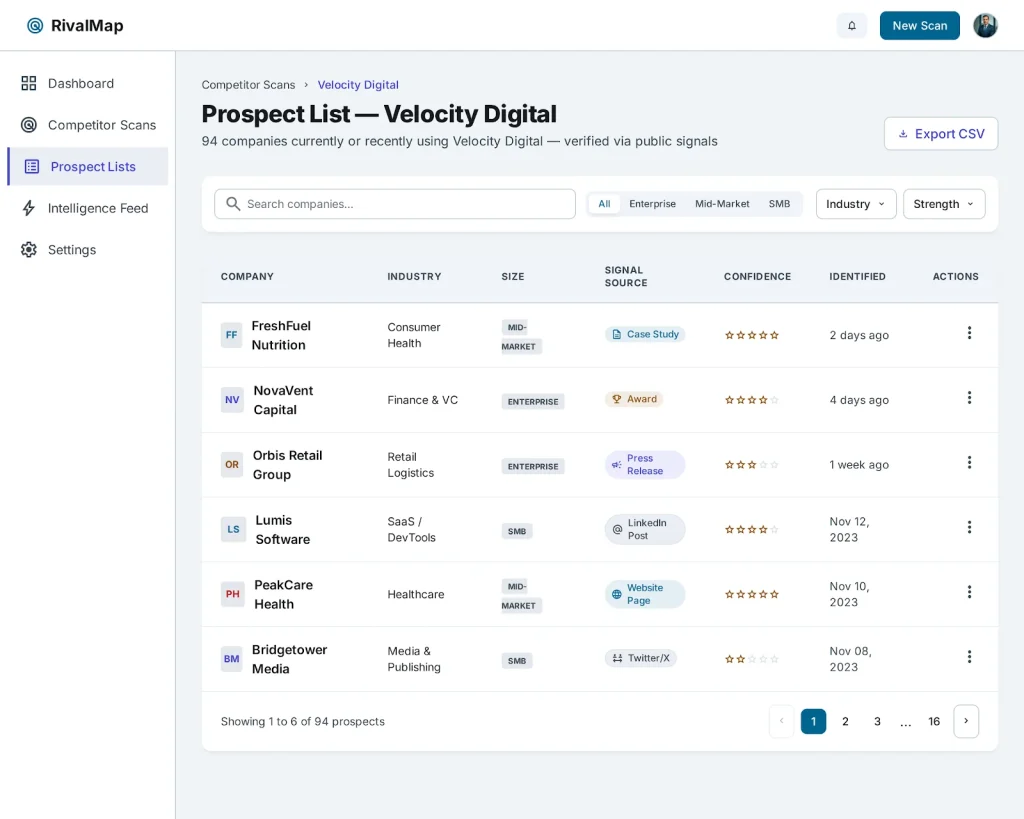
4. Competitor Customer Mapper (Competitive Prospecting)
Category: Lead Scraping · Type: MicroApp · Saves your team: 7–10 hrs/week
The Competitor Customer Mapper is an AI MicroApp that finds companies currently paying competitor agencies, using public signals.
Best for: niche or specialist agencies competing in a clear category.
The challenge we solve with AI: The best-fit buyers already pay an agency. Finding out who they are usually means days of digging through case studies and press releases.
What it does:
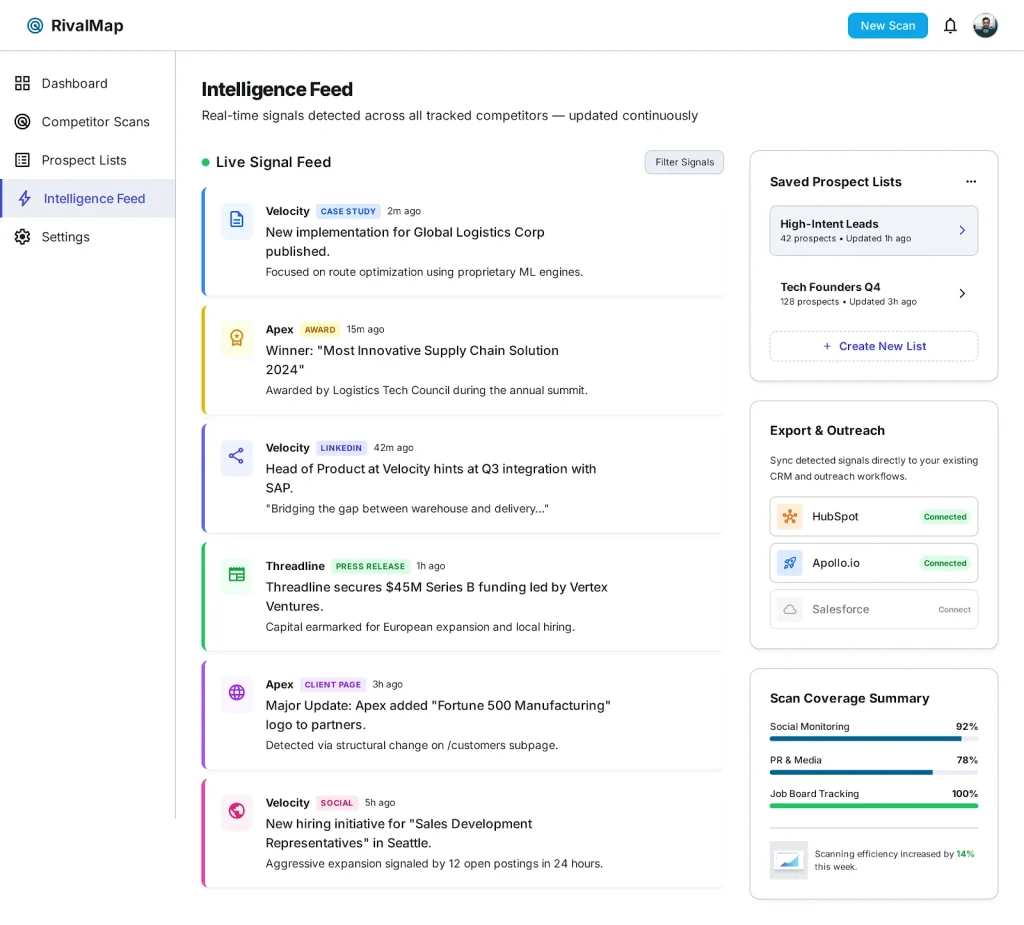
- Identifies companies currently using competitor agencies by analyzing public signals: case studies, client lists, award submissions, press releases, and social mentions.
- Builds a mapped prospect list of companies served by your competitors.
- Gives you proven buyers of digital services who already see the value of outsourcing, so your outreach starts at “why us,” not “why an agency.”
How it saves time:
- Continuously scans competitor case studies and client lists, so no one spends days on manual research.
- Replaces one-off competitive research with a live, always-updated intelligence feed.
- Frees analyst and strategist time by automating how competitor customer data is pulled and structured.
5. Pre-Sales Audit Dashboard (AI Prospect Research)
Category: Sales & Proposal · Type: MicroApp · Saves your team: 6–9 hrs/week
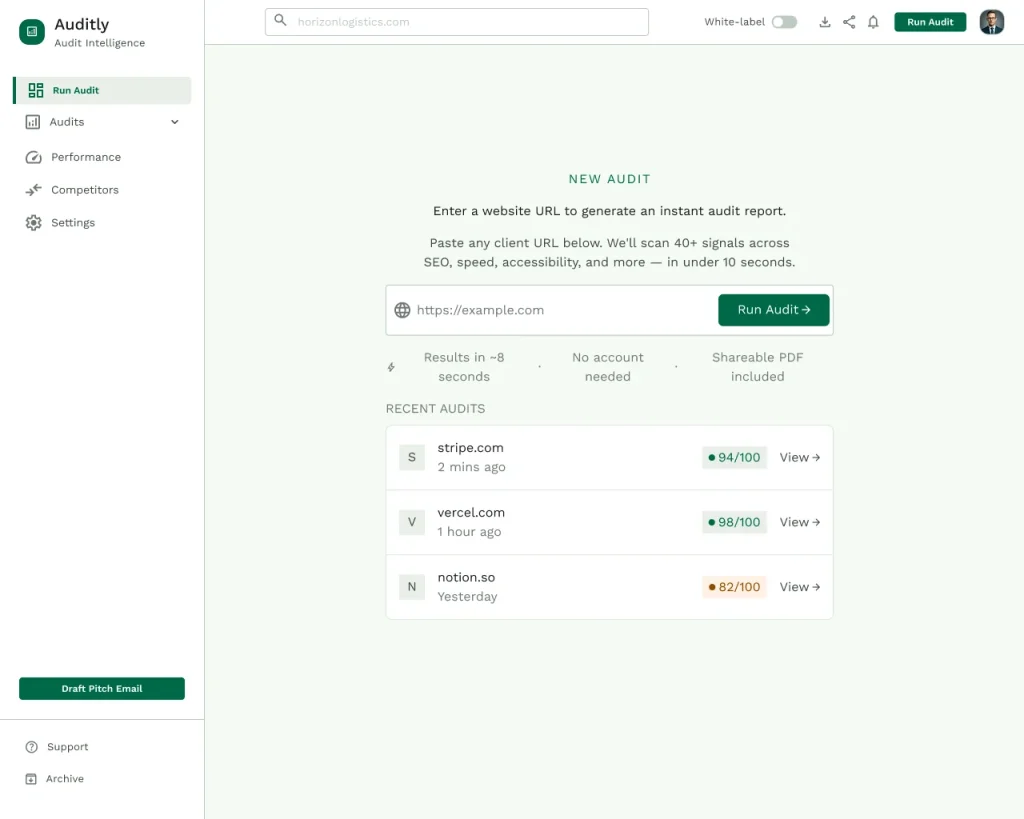
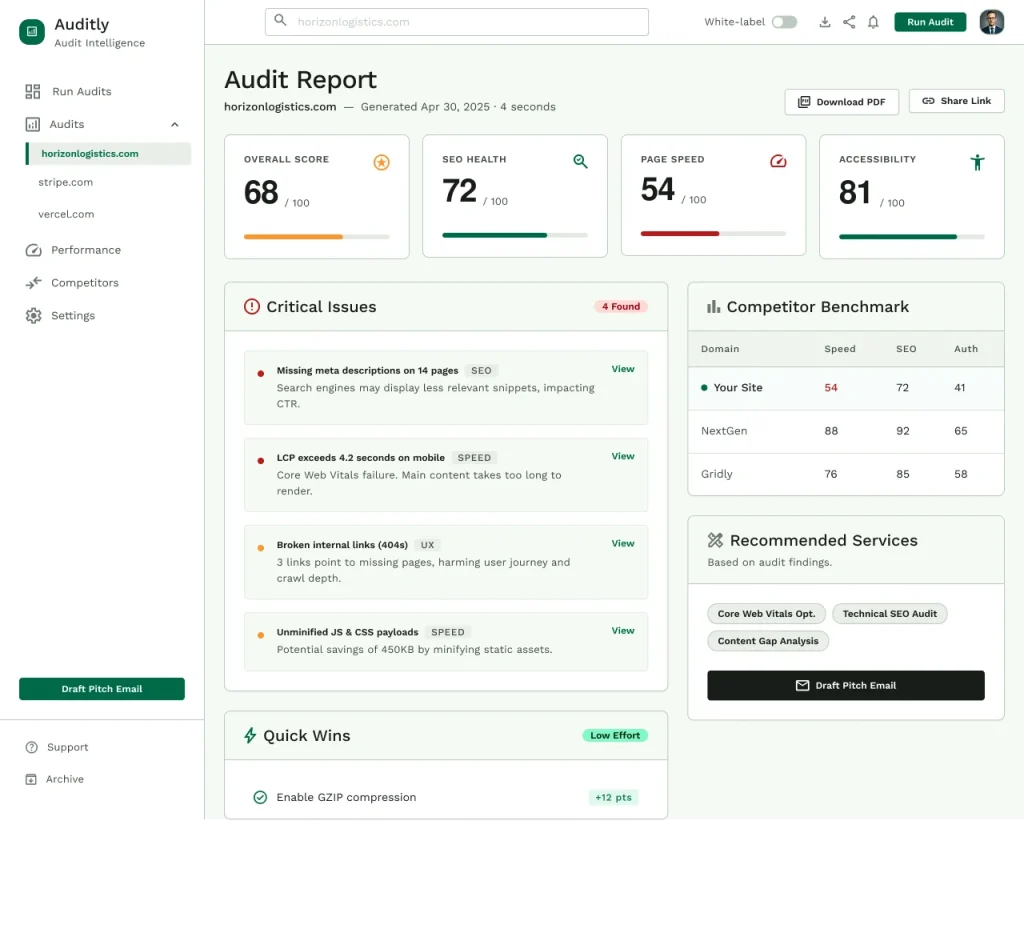
The Pre-Sales Audit Dashboard is an AI MicroApp that audits a prospect’s website, SEO, ads, and social presence before every sales call. Best for: agencies that sell through discovery calls and audit-led pitches.
The challenge we solve: Walking into a discovery call unprepared costs you the deal. Doing it properly takes hours of research across SEO, ad, and social tools for every single prospect.
What it does:
- Audits a prospect’s digital presence before the call: website, SEO metrics, ad presence, social profiles, and content strategy.
- Generates a structured audit report highlighting weaknesses, missed opportunities, and where your agency can add value right away.
- Positions you as a knowledgeable partner from the first conversation, with a pitch grounded in the prospect’s real data.
How it saves time:
- Automates the 2–4 hours of manual prospect research across SEO, ad, and social platforms before each sales call.
- Pulls findings from multiple tools into one dashboard, so no one switches between platforms.
- Delivers a ready-to-use audit ahead of every meeting, so your team walks in fully prepared with no extra effort.
Want this AI workflow set up for your agency?
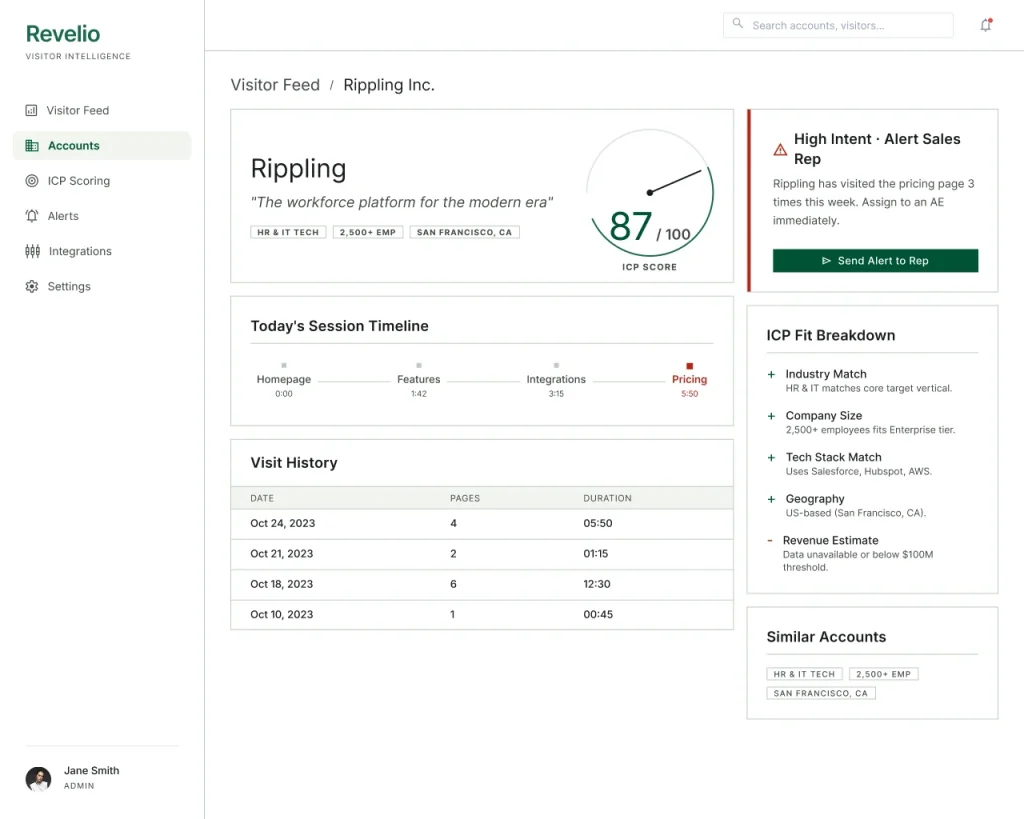
6. Website Visitor Deanonymizer & Scorer (Intent-Based Lead Scoring)
Category: Lead Generation & Nurturing · Type: MicroApp · Saves your team: 5–7 hrs/week
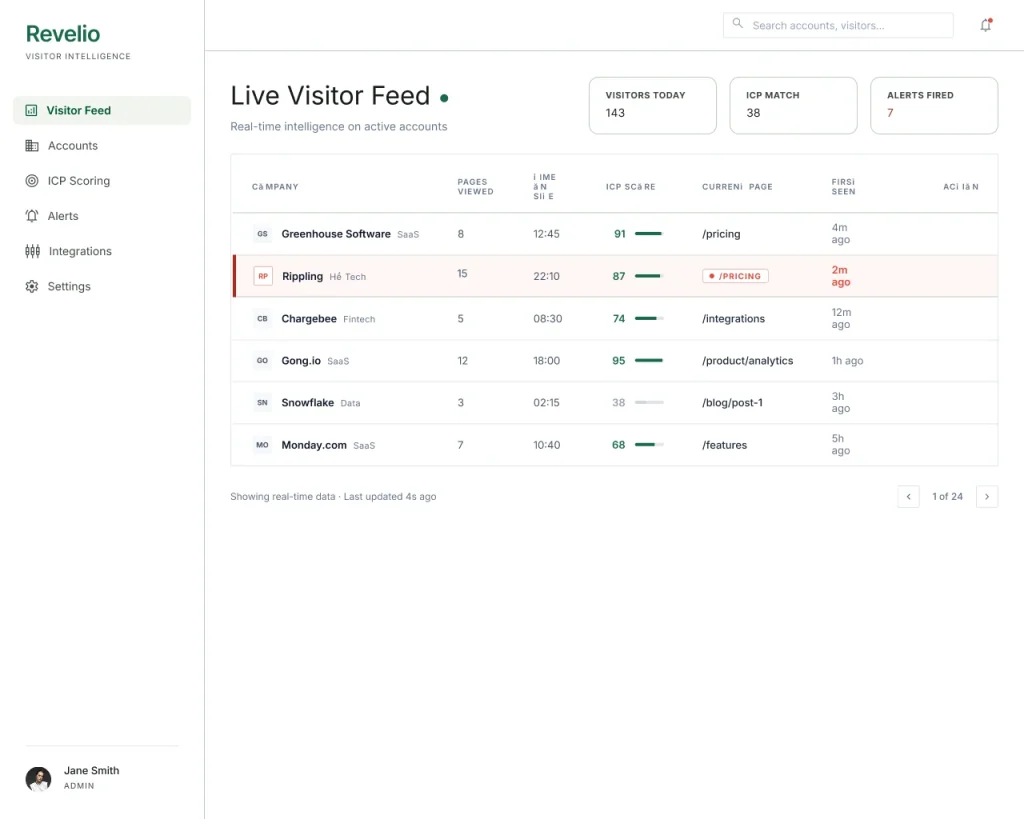
The Website Visitor Deanonymizer & Scorer is an AI MicroApp that identifies companies visiting your website and ranks them by buying intent.
Best for: agencies with steady website traffic but few form fills.
The challenge we solve: Most companies researching your services never fill out a form. They visit your pricing and case study pages, then leave without a trace.
What it does:
- Identifies the companies visiting your website using reverse IP lookup.
- Scores each one on pages visited, time spent, and visit frequency.
- Sends your sales team a daily ranked list of warm accounts, including those that never filled out a form.
How it saves time:
- Identifies and scores anonymous visitors automatically, removing manual analytics work and cross-referencing.
- Produces warm lead reports without SDR or marketing ops time spent compiling data.
- Keeps a continuously refreshed list of high-intent visitors ready for outreach.
Stage 2: AI Workflows for Client Onboarding
The first 30 days decide how a client feels about you for the next 12 months. These two workflows make onboarding consistent and turn strategy planning from a blank page into a review task. Each one saves a team 4–10 hours a week.
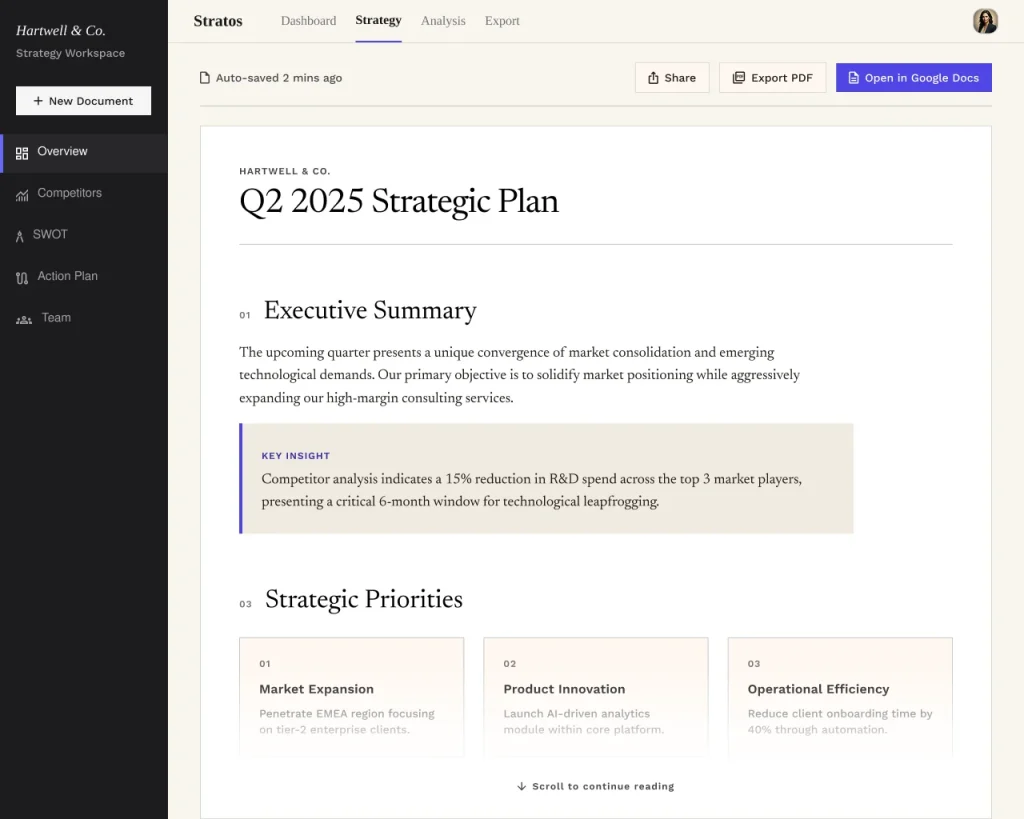
7. Automated Strategy Plan Generator (AI Account Strategy)
Category: Client Onboarding · Type: MicroApp · Saves your team: 6–10 hrs/week
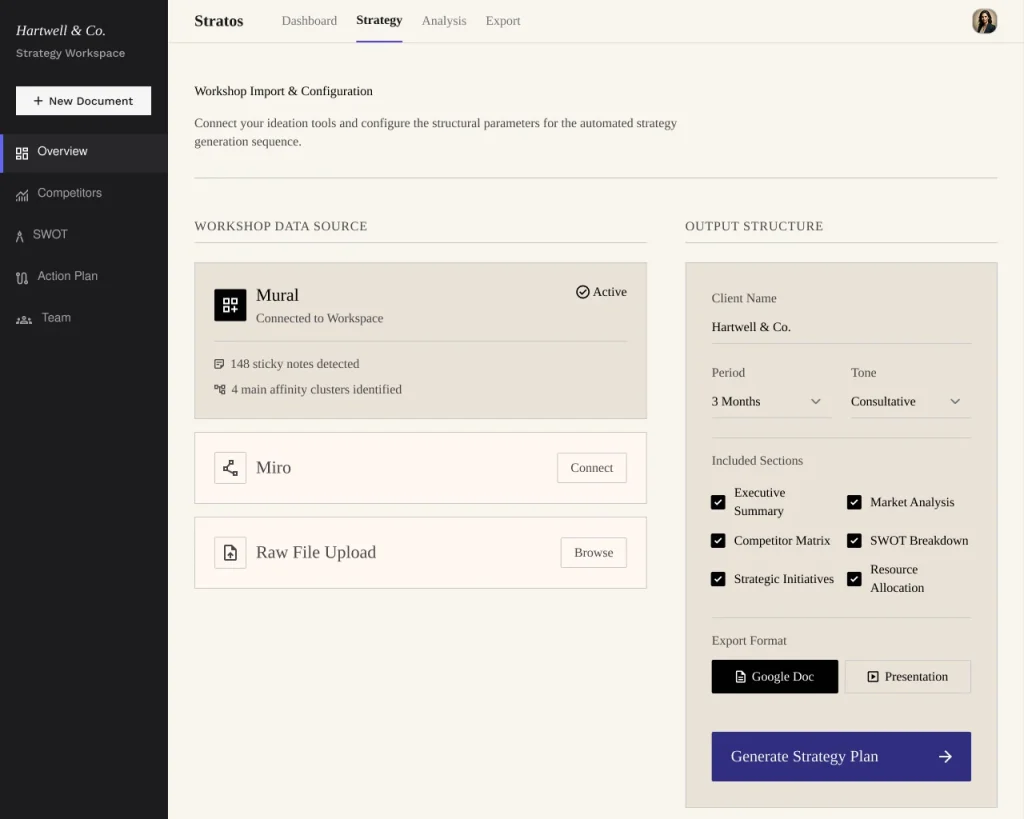
The Automated Strategy Plan Generator is an AI MicroApp that drafts monthly or quarterly client strategy plans from performance data and goals.
Best for: agencies running QBRs or retainer reviews across many accounts.
The challenge we solve: Quarterly reviews are where clients decide whether you’re a vendor or a partner. But building a strategy plan means pulling data, spotting trends, and writing recommendations from scratch for every account, usually the night before the meeting.
What it does:
- Generates monthly or quarterly strategy plan drafts from performance data, campaign history, client goals, and industry benchmarks.
- Produces client-ready plans with objectives, KPIs, channel recommendations, and tactical focus areas.
- Lets account managers present data-driven plans in a fraction of the time, which builds client confidence in your expertise.
See exactly how this can work inside your agency (and for your clients)
How it saves time:
- Pulls and interprets performance data automatically, removing hours of manual analysis before each review.
- Drafts strategic recommendations from live data, so no one starts from a blank page.
- Produces formatted strategy documents ready for client delivery, with no separate layout step.
Want this AI workflow set up for your agency?
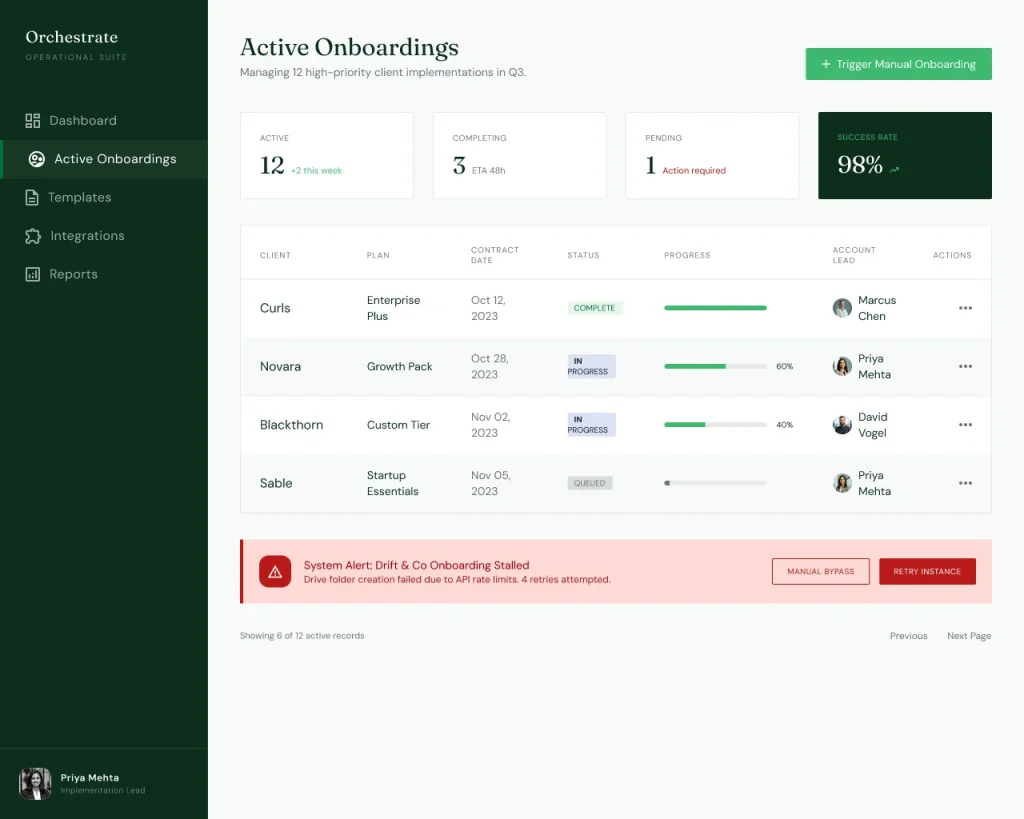
8. Smart Onboarding Orchestrator (Client Onboarding Automation)
Category: Client Onboarding · Type: MicroApp · Saves your team: 4–6 hrs/week
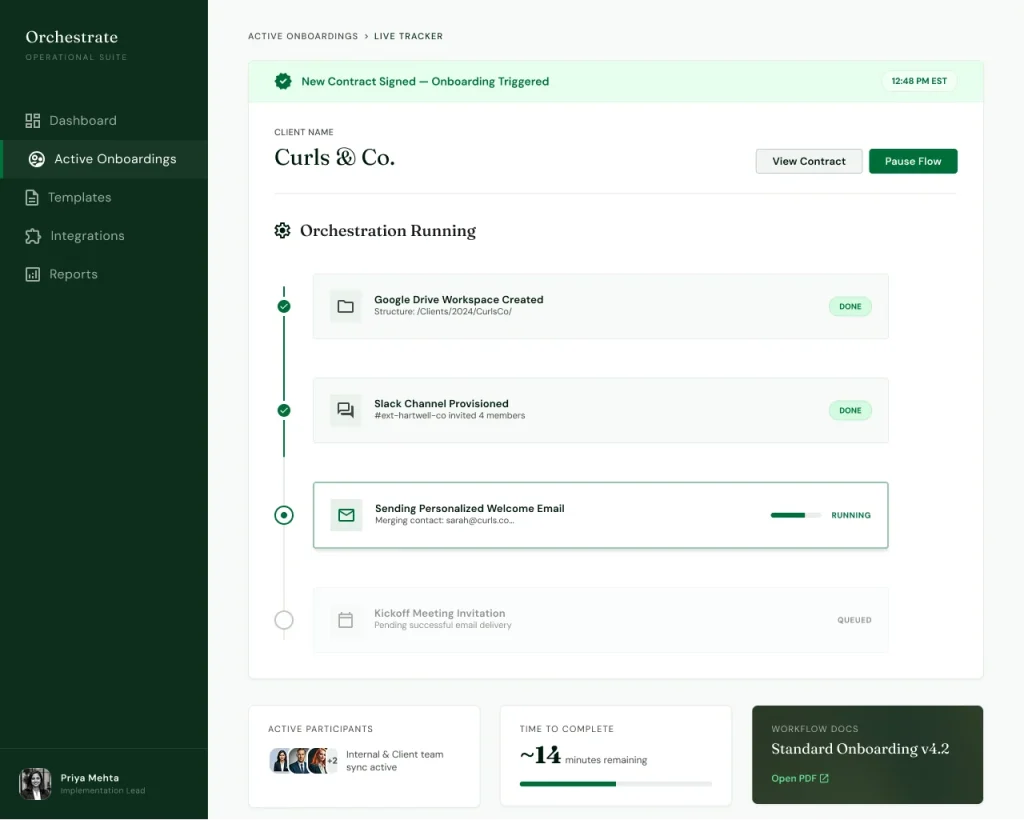
The Smart Onboarding Orchestrator is an AI MicroApp that runs every client onboarding step automatically, from CRM deals close to kickoff.
Best for: agencies signing new clients every month, especially those running on a CRM like GoHighLevel.
The challenge we solve: The deal closes, and then nothing happens for a week. Sales assumes account management has it. Account management is waiting on the contract. The client is waiting on everyone.
What it does:
- Runs the full onboarding sequence the moment a deal closes in your CRM: welcome emails, intake forms, kickoff scheduling, account setup tasks, and internal notifications.
- Gives every new client the same consistent, professional experience.
- Shortens time-to-value by removing the delays between sales, account management, and delivery.
How it saves time:
- Triggers every onboarding task, email, and Slack notification automatically when a client signs.
- Removes the coordination burden from account managers by orchestrating each step.
- Makes sure no step is missed, without relying on memory or checklists.
Stage 3: AI Workflows for SEO & Content Delivery
SEO and content are where most agencies make their margin, and where repetitive work quietly eats it. These four workflows handle research, drafting, metadata, and brand QA, so your strategists and editors spend their time on judgment calls. Each one saves a team 4–12 hours a week.
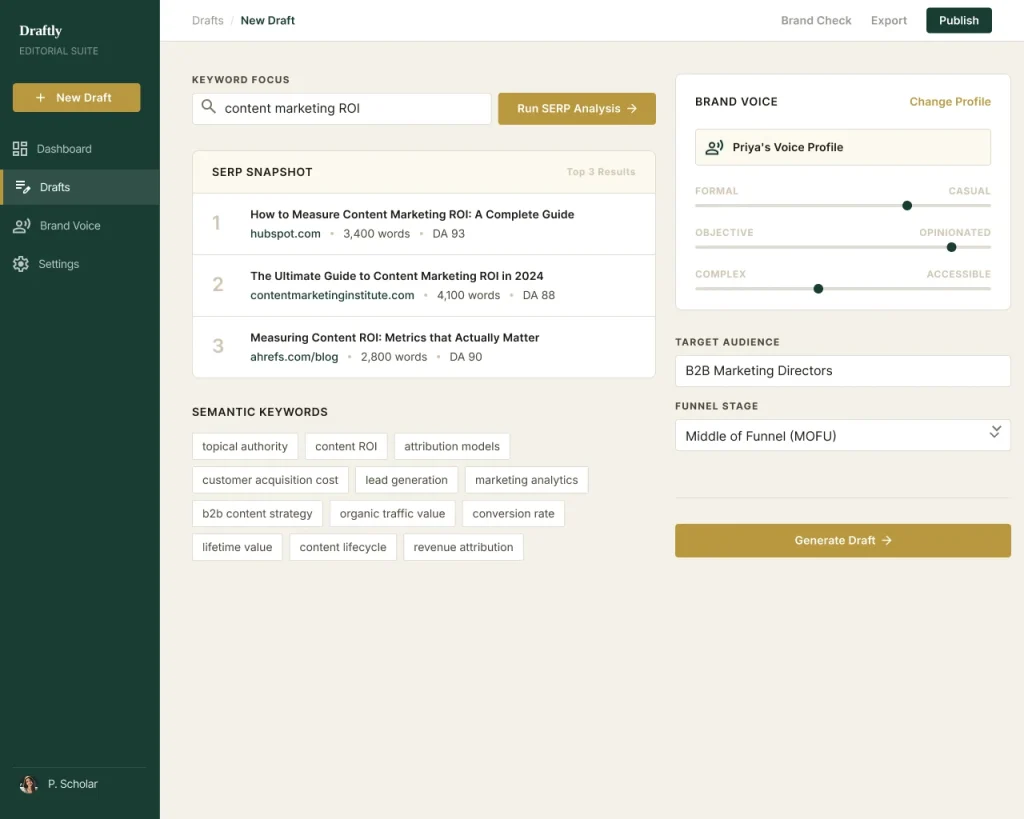
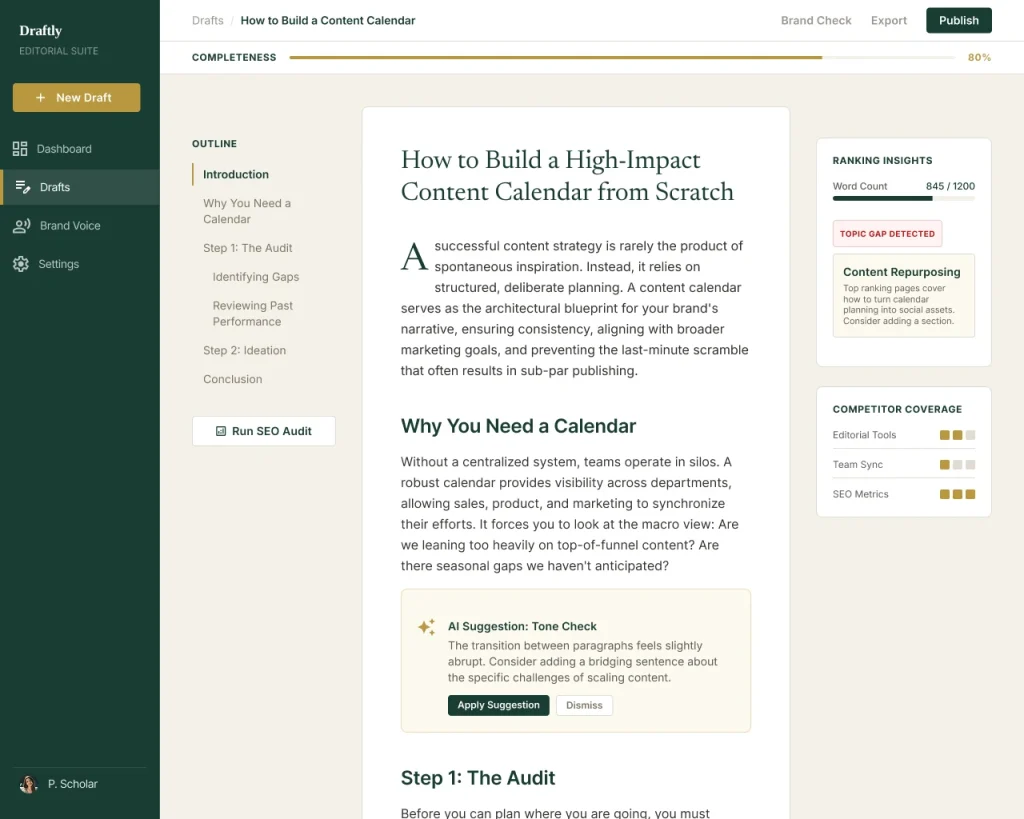
9. Long-Form Blog Engine with SERP Context (AI Content Production)
Category: Content Marketing & Strategy · Type: MicroApp · Saves your team: 8–12 hrs/week
The Long-Form Blog Engine is an AI MicroApp that produces SERP-informed long-form drafts, with competitor structures, PAA questions, and headers built in.
Best for: agencies producing content at volume, in-house or with a white-label content writing partner.
The challenge we solve: Every long-form article starts with the same hours of SERP research: what competitors cover, what people ask, which headers rank. Your writers do that research before they write a single useful sentence.
What it does:
- Generates detailed long-form drafts with SERP analysis built in: competitor article structures, People Also Ask questions, related entities, and suggested headers.
- Produces content shaped for both reader engagement and search performance.
- Lets content teams publish SEO-optimized long-form content at a pace that isn’t sustainable by hand, without losing alignment with search intent.
How it saves time:
- Researches SERPs and builds outlines automatically, removing hours of manual research before writing begins.
- Produces a structured first draft ready for editorial review, so writers skip the blank page.
- Cuts the total time from brief to editor-ready draft compared with a fully manual process.
Want this AI workflow set up for your agency?
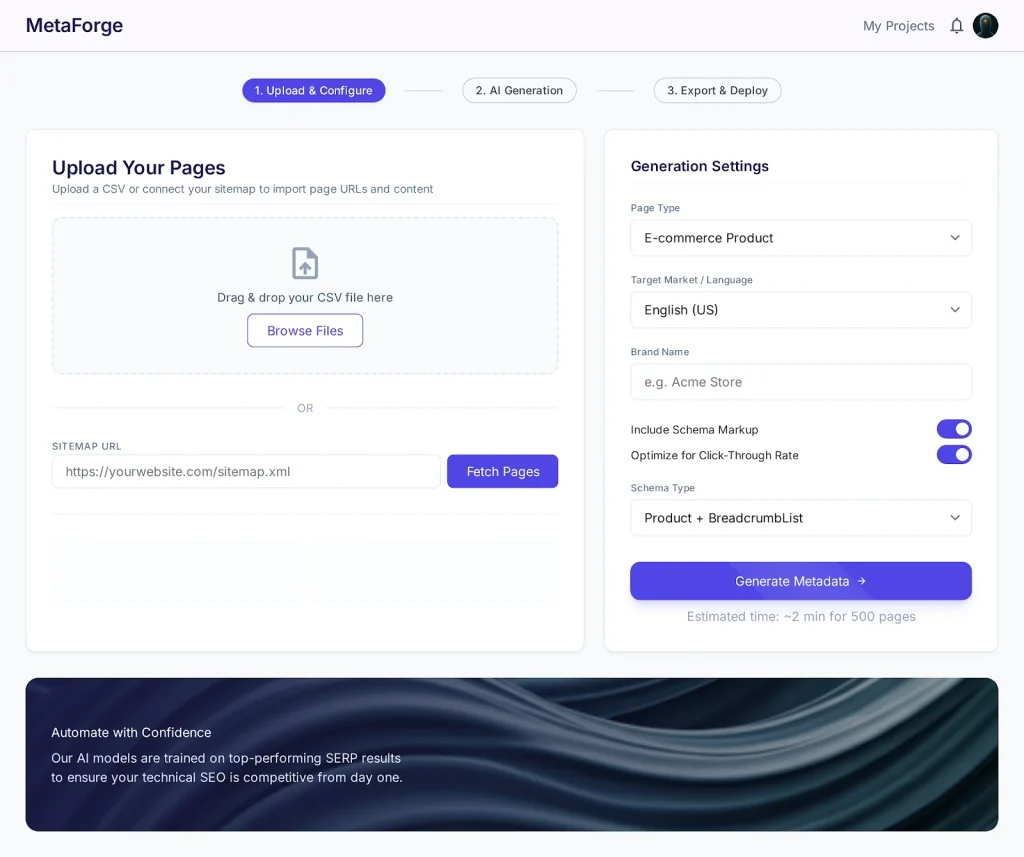
10. Bulk Meta Tag & Schema Generator (SEO Automation at Scale)
Category: SEO · Type: MicroApp · Saves your team: 7–12 hrs/week
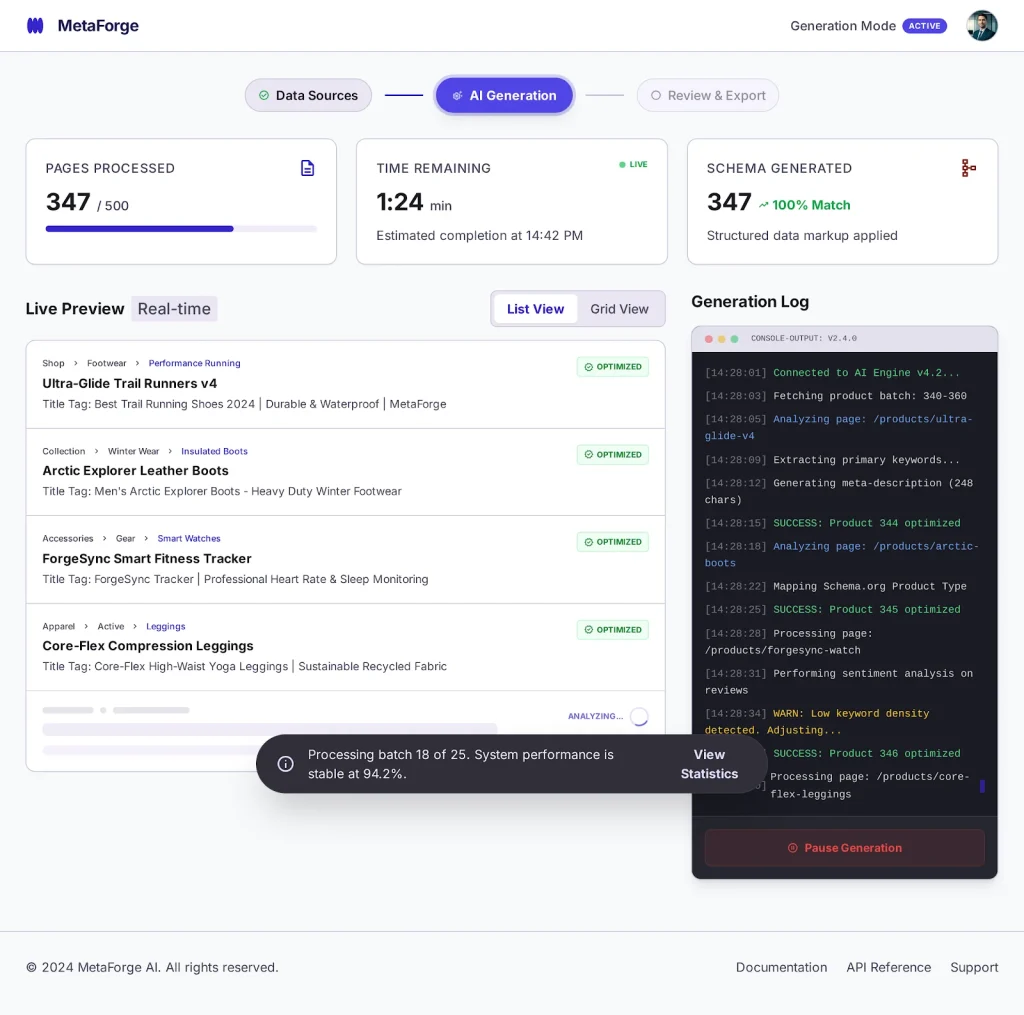
The Bulk Meta Tag & Schema Generator is an AI MicroApp that writes optimized title tags, meta descriptions, and schema markup at scale.
Best for: SEO agency managing eCommerce or content-heavy client sites.
The challenge we solve: A new client has 800 product pages with duplicate titles and no schema. Writing every tag by hand isn’t a strategy. It’s a backlog.
What it does:
- Generates optimized title tags, meta descriptions, and schema markup at scale for large sites or new content batches.
- Tailors each element to the page’s content, target keyword, and search intent.
- Applies structured data that fits the page type, making large metadata projects workable within tight timelines.
How it saves time:
- Produces unique, optimized meta tags for every page automatically, with no repetitive manual writing.
- Generates schema markup in bulk instead of page-by-page configuration.
- Saves the most on eCommerce and content-heavy sites, where manual tag writing is a major bottleneck.
11. Semantic Keyword Cluster Tool (AI Keyword Clustering)
Category: SEO · Type: MicroApp · Saves your team: 6–10 hrs/week
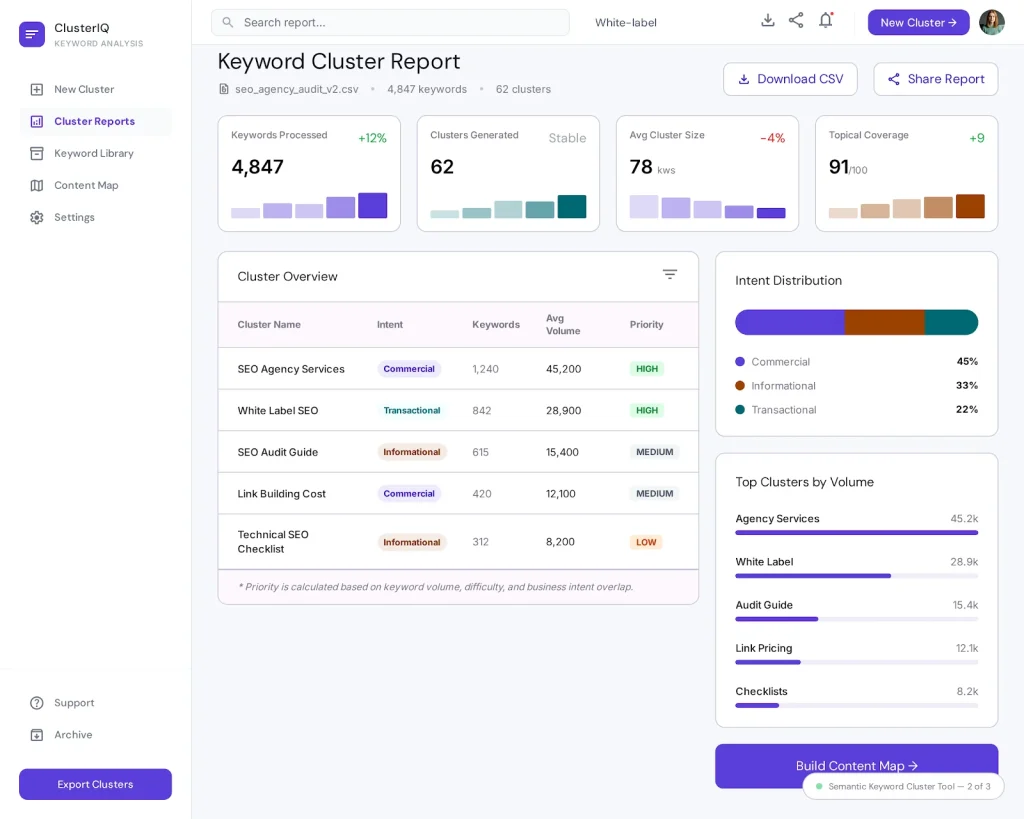
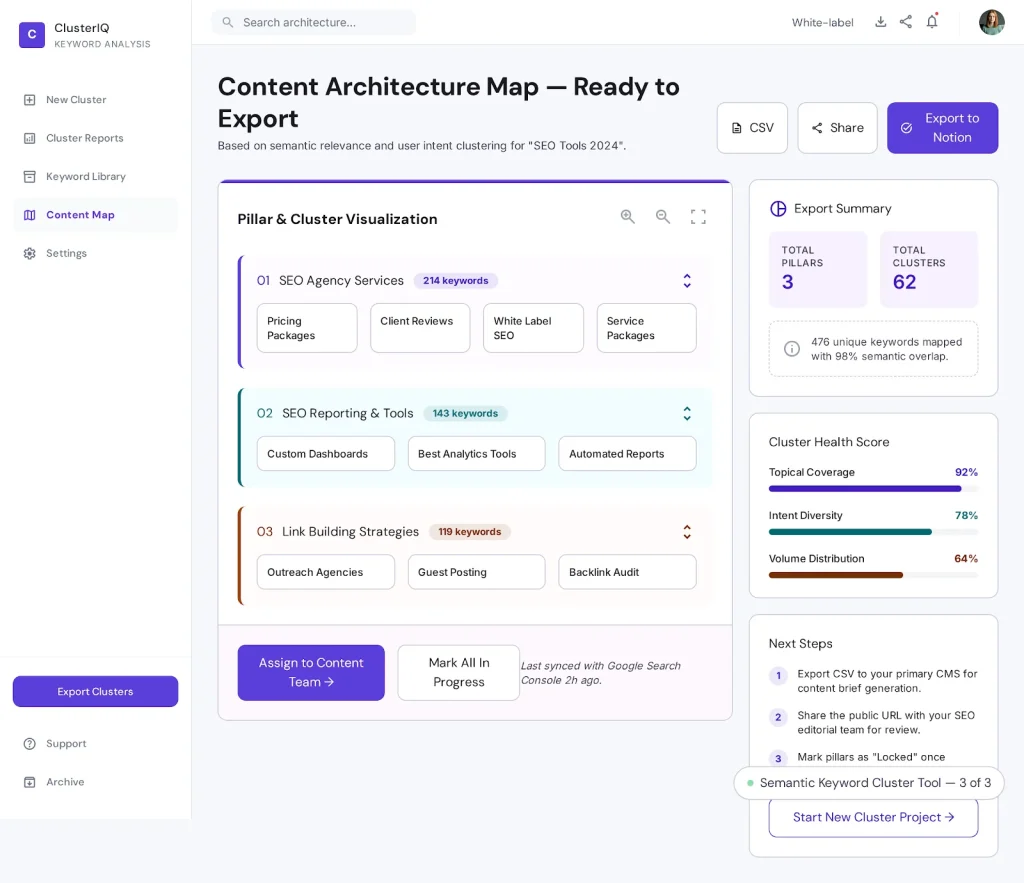
The Semantic Keyword Cluster Tool is an AI MicroApp that groups keyword lists into topic clusters and maps them to pages and content types.
Best for: SEO teams building topical authority and content plans for new clients.
The challenge we solve: A 2,000-row keyword export is not a content strategy. Grouping it by topic and intent by hand can take an analyst days, and the result still depends on who did it.
What it does:
- Takes a seed keyword list and uses AI to group it into semantic topic clusters, with primary, secondary, and supporting keywords for each.
- Maps each cluster to the right content type and page architecture.
- Helps teams build strategy around topical authority, not single keyword rankings, which matches how modern search engines judge relevance.
How it saves time:
- Groups hundreds of keywords by topic and intent automatically, replacing full working days of manual clustering.
- Maps keywords to a content hierarchy without cross-referencing intent data by hand.
- Delivers a strategy-ready keyword structure in a fraction of the time.
See exactly how this can work inside your agency (and for your clients)
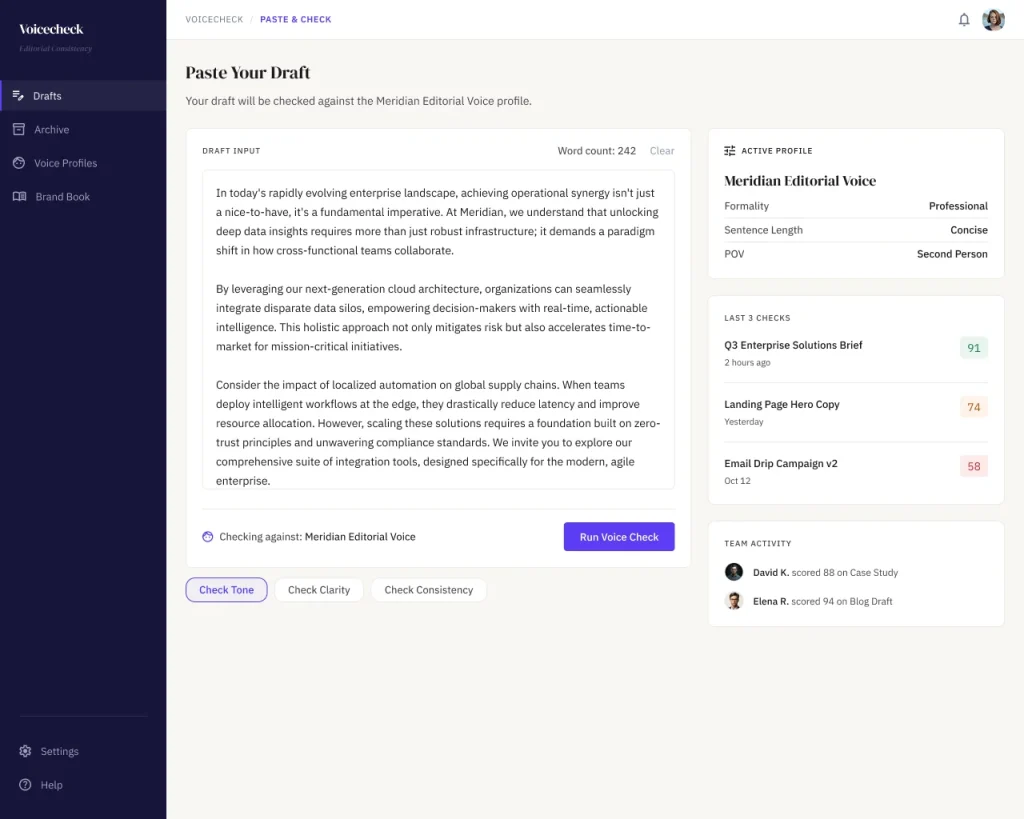
12. Tone-of-Voice Enforcer (AI Brand Voice QA)
Category: Content Marketing & Strategy · Type: MicroApp · Saves your team: 4–6 hrs/week
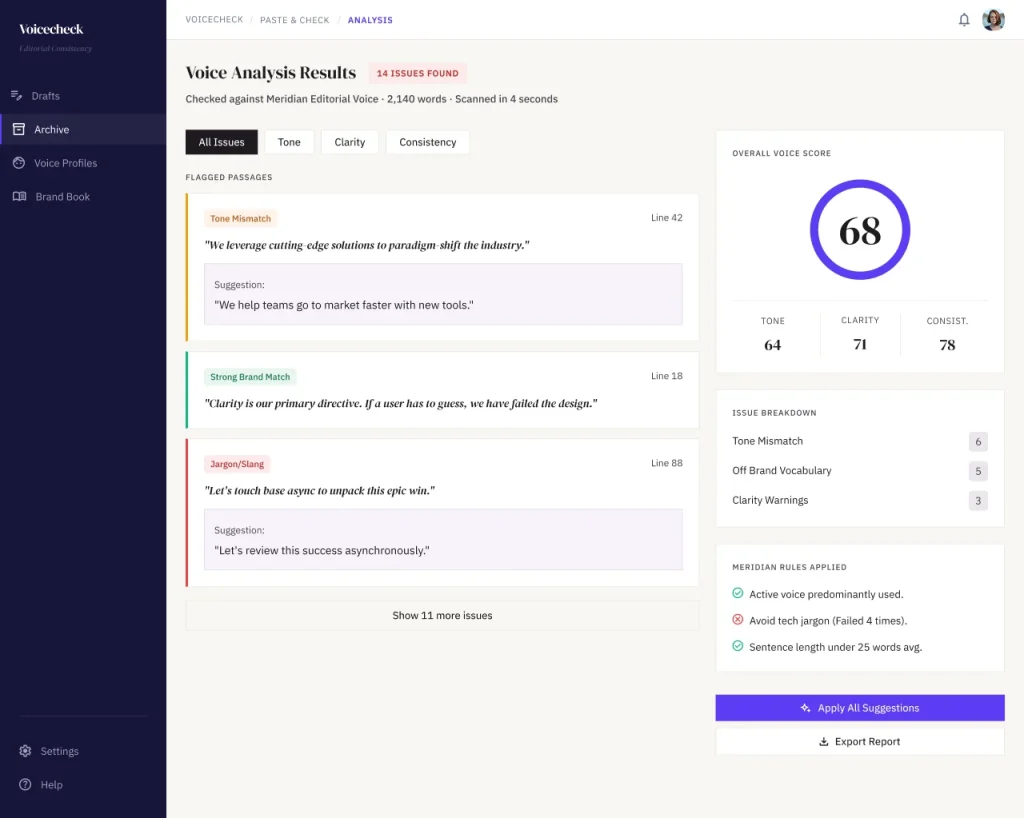
The Tone-of-Voice Enforcer is an AI MicroApp that checks drafts against each client’s brand voice guidelines and suggests fixes. Best for: agencies with multiple writers handling multiple client brands.
The challenge we solve: Five writers, twelve clients, twelve brand voices. Editors end up rewriting tone instead of improving ideas, and off-brand copy still slips through.
What it does:
- Reviews drafts against each client’s tone-of-voice guidelines.
- Flags language, phrases, or structures that break the brand voice, with specific suggestions to fix them.
- Keeps every piece consistent, which matters most when you manage multiple writers or high content volume.
How it saves time:
- Checks content against brand guidelines automatically, before it reaches editorial review.
- Flags off-brand language and suggests corrections in real time, reducing coaching and rewrite cycles.
- Cuts the editorial time spent on tone issues across multi-writer, multi-client teams.
Want this AI workflow set up for your agency?
Stage 4: AI Workflows for PPC Campaigns & Creative
Paid media and creative work run on daily checks and repetitive production steps. Miss one, and a client’s budget runs out by the 20th. These three workflows watch spend, clean up targeting, and handle video finishing. Each one saves a team 4–10 hours a week.
13. Video Subtitle & B-Roll Automator (AI Video Production)
Category: Creative & Asset Generation · Type: MicroApp · Saves your team: 6–10 hrs/week
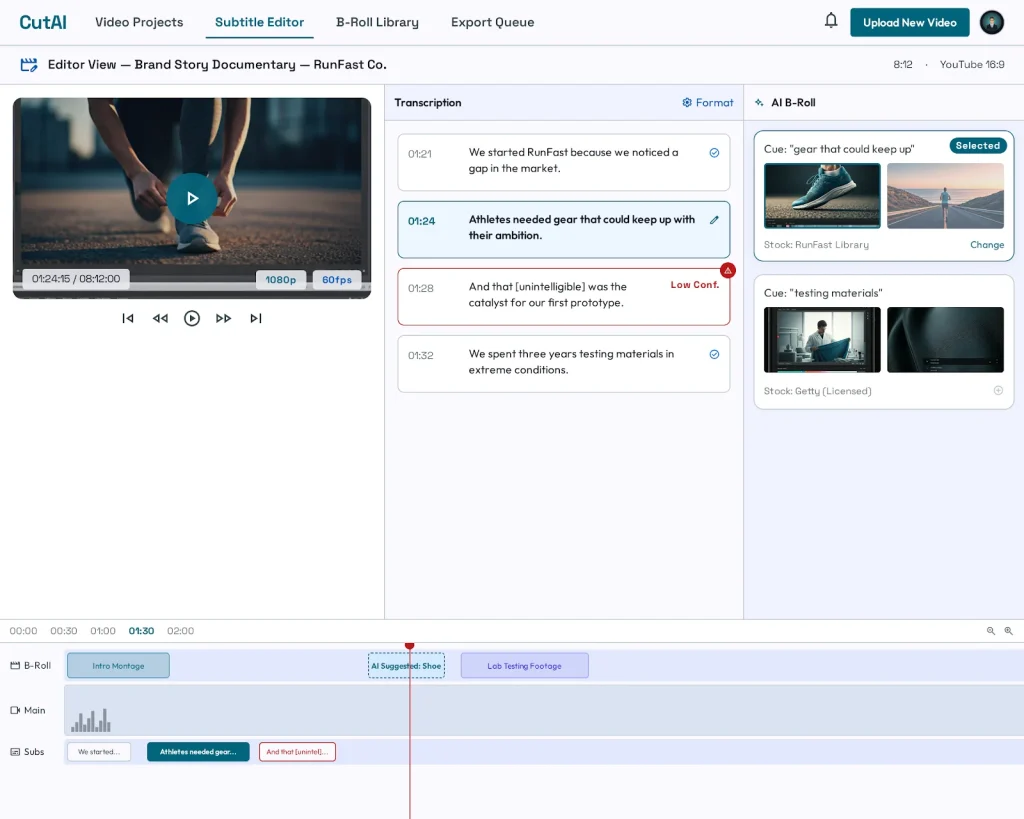
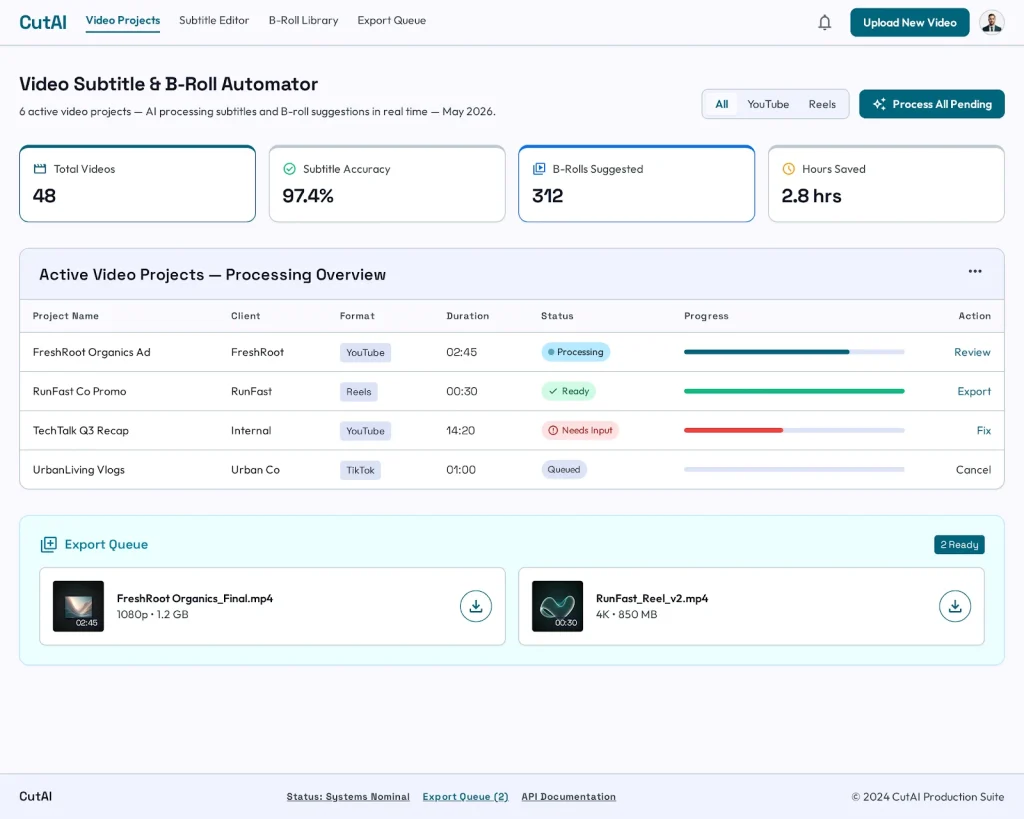
The Video Subtitle & B-Roll Automator is an AI MicroApp that adds subtitles and timed B-roll to videos, producing a ready-to-publish package.
Best for: agencies producing short-form social or YouTube ad videos at volume.
The challenge we solve: Every short video needs captions and B-roll before it can go live. For an agency producing dozens of clips a month, that finishing work becomes a full-time job no one wants.
What it does:
- Generates accurate subtitles and closed captions for video content.
- Suggests and sources relevant B-roll or AI-generated overlays, timed to the audio.
- Outputs a production-ready package that improves accessibility, social performance, and viewer retention, with no manual editing per asset.
How it saves time:
- Transcribes video and formats subtitles automatically, removing manual captioning from every production.
- Sources and suggests B-roll, so editors stop browsing stock libraries by hand.
- Places subtitles and overlays on the timeline automatically, removing a major editing step per video.
14. Search Term Report Analyzer (PPC Query Optimization)
Category: Campaign Management · Type: MicroApp · Saves your team: 4–7 hrs/week
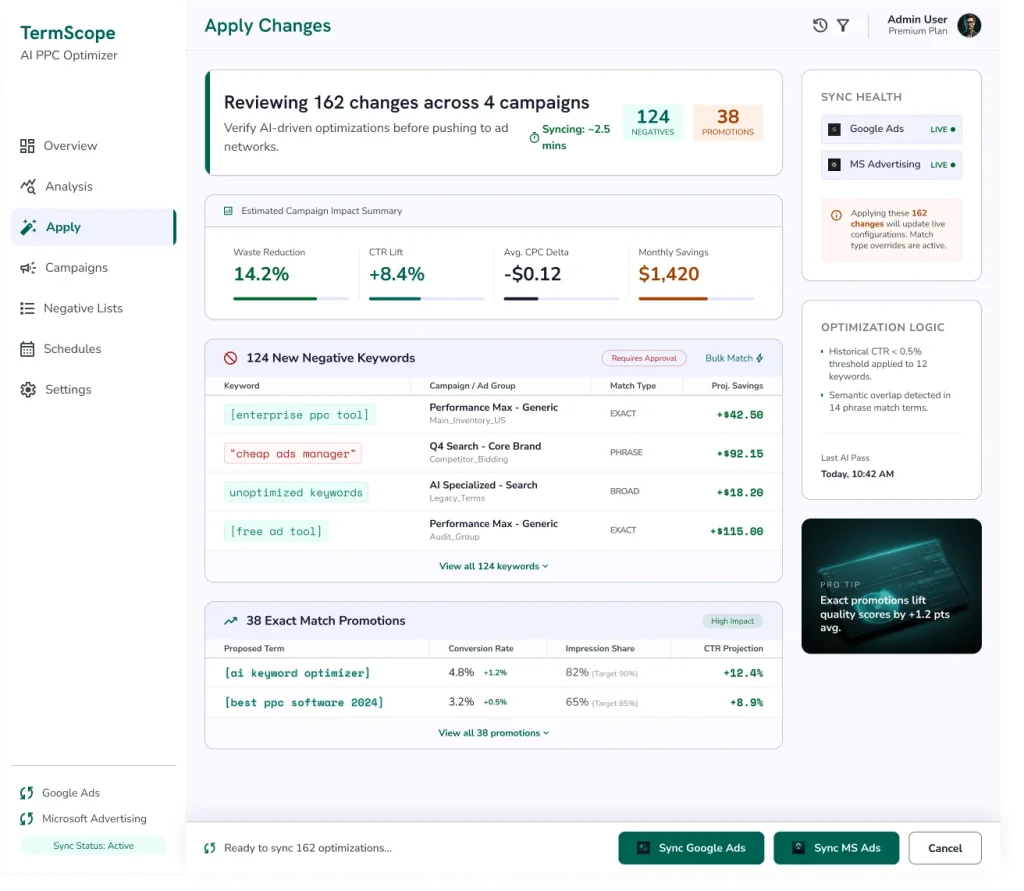
The Search Term Report Analyzer is an AI MicroApp that reviews Google Ads and Microsoft Ads search terms weekly and recommends negatives and new exact-match keywords.
Best for: PPC teams managing many search accounts.
The challenge we solve: Search term reports are where wasted spend hides. Reviewing them line by line every week across every account is exactly the task that gets skipped when things get busy.
What it does:
- Pulls and analyzes search term reports from Google Ads and Microsoft Ads.
- Identifies irrelevant queries, high-performing terms to add as exact match, and negative keyword opportunities.
- Delivers a structured weekly update with recommended additions and exclusions, cutting waste and improving conversion rates.
How it saves time:
- Downloads and processes reports automatically on a set schedule, replacing the weekly manual workflow.
- Finds irrelevant terms, patterns, and opportunities without an analyst reviewing data by hand.
- Sends structured recommendations directly to PPC managers, with no separate write-up step.
15. Budget Pacing & Anomaly Detector (Ad Spend Monitoring)
Category: Campaign Management · Type: MicroApp · Saves your team: 4–6 hrs/week
The Budget Pacing & Anomaly Detector is an AI MicroApp that tracks ad spend against targets in real time and alerts your team to overspend or underspend.
Best for: agencies managing monthly budgets across Google Ads, Meta, and other platforms.
The challenge we solve: Overspend gets you an awkward client call. Underspend quietly costs them results. Both usually go unnoticed until someone checks, and with 30 accounts, someone rarely checks daily.
What it does:
- Monitors ad spend across all active campaigns in real time, tracking daily and monthly pacing against targets.
- Detects budget depletion, overspend risk, and unexpected underspend.
- Sends automated alerts with recommended fixes to the campaign team, before the client notices.
How it saves time:
- Removes the daily manual pacing check across multiple platforms and client accounts.
- Flags only the accounts that need attention, so managers stop reviewing the ones that are on track.
- Recovers time that adds up fast across a large client portfolio.
Stage 5: AI Workflows for Client Reporting & Retention
Clients rarely leave over one bad month. They leave because they stopped seeing the value, and no one noticed in time. These three workflows make results visible every month and flag risk early. Each one saves a team 5–10 hours a week.
16. Automated Monthly Client Digest & Success Summary (AI Client Reporting)
Category: Customer Service · Type: MicroApp · Saves your team: 6–10 hrs/week
The Automated Monthly Client Digest is an AI MicroApp that compiles and sends every client a personalized, branded summary of wins, progress, and next steps.
Best for: retainer agencies where account managers handle 10+ clients each.
The challenge we solve: Monthly updates are the clearest proof of your value, and the first thing to slip when account managers are stretched. Writing a personal summary for every client, every month, doesn’t scale.
What it does:
- Compiles and sends a personalized monthly digest to each client: key wins, performance milestones, completed actions, and upcoming priorities.
- Pulls content from campaign platforms and project management tools into a branded client email.
- Shows value consistently, without account managers building each update by hand.
How it saves time:
- Gathers performance data and writes summaries automatically, removing manual production every reporting cycle.
- Formats and delivers client-ready digests with no account manager involvement in data collection or writing.
- Frees account managers from one of the most time-consuming recurring tasks on their calendar.
Want this AI workflow set up for your agency?
17. Client Health Score Dashboard (Churn Prediction)
Category: Customer Service · Type: MicroApp · Saves your team: 5–8 hrs/week
The Client Health Score Dashboard is an AI MicroApp that scores every client account on performance, payment, sentiment, and engagement signals to flag churn risk early.
Best for: agency leadership and account management teams focused on retention.
The challenge we solve: By the time a client says they’re “reviewing options,” the decision is usually made. The warning signs were there for weeks, spread across your inbox, your invoices, and your reports.
What it does:
- Calculates a live health score for every client account from measurable signals: performance trends, payment history, email sentiment, meeting frequency, ticket volume, and renewal timing.
- Flags at-risk accounts for immediate attention.
- Gives account managers and leadership a data-driven view of relationship health, so you act before dissatisfaction turns into churn.
How it saves time:
- Aggregates signals across every account automatically, replacing manual portfolio reviews.
- Produces a live score for each client without account managers assessing each one individually.
- Surfaces risk early, so time goes into prevention, not damage control.
18. SEO Rank Volatility Tracker (Ranking Drop Alerts)
Category: Data Analytics & Centralized Tracking · Type: MicroApp · Saves your team: 5–8 hrs/week
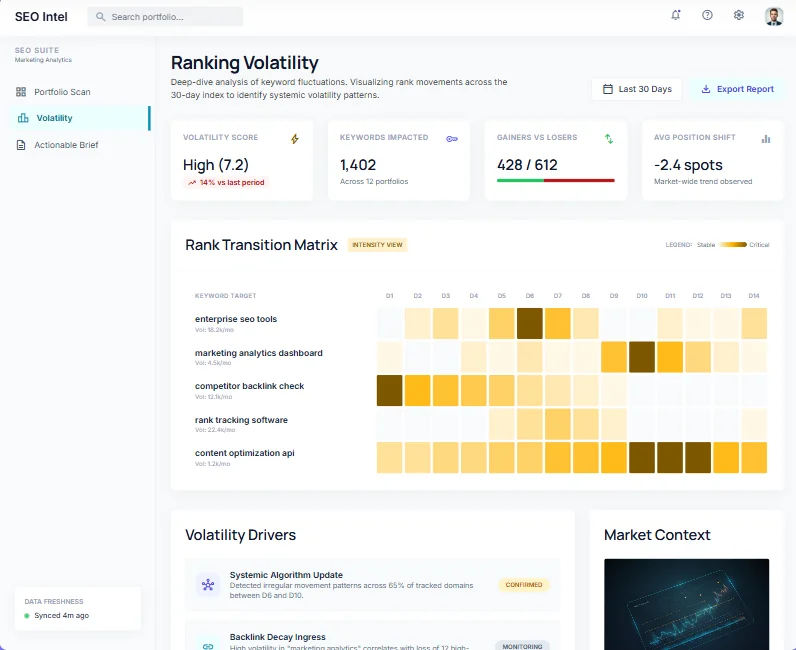
The SEO Rank Volatility Tracker is an AI MicroApp that detects significant ranking changes across client campaigns and classifies the likely cause.
Best for: SEO and GEO/AEO teams managing many client niche domains.
The challenge we solve: Finding a ranking drop during the monthly report means explaining it to the client three weeks late. Finding out why it happened takes even longer.
What it does:
- Monitors keyword rankings across every client SEO campaign and detects significant volatility.
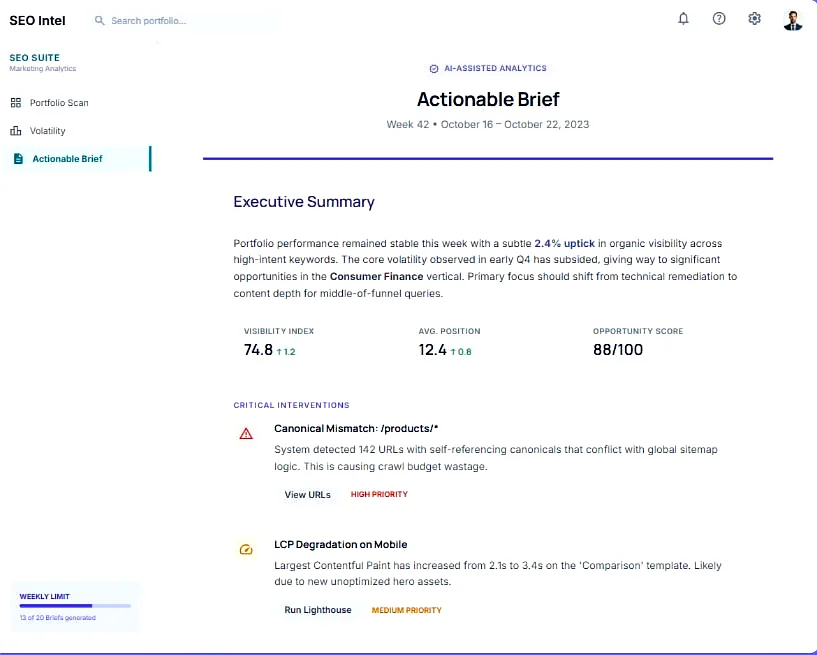
- Classifies each movement by probable cause: algorithm update, technical issue, competitor activity, or content change.
- Sends alerts and a weekly volatility report with recommended responses, protecting your clients’ organic traffic.
How it saves time:
- Monitors ranking movement automatically, removing manual tracker reviews.
- Flags significant volatility immediately, instead of relying on late, inconsistent manual checks.
- Investigates likely causes automatically, shortening the time from detecting a drop to finding the root cause.
Stage 6: AI Workflows for Agency Operations
The last two workflows don’t face clients, but they protect everything that does: your team’s time and your margins. Each one saves a team 4–9 hours a week.
19. Internal Knowledge Base Assistant (AI Team Knowledge Assistant)
Category: AI Chatbots & Conversational Automations · Type: MicroApp · Saves your team: 6–9 hrs/week
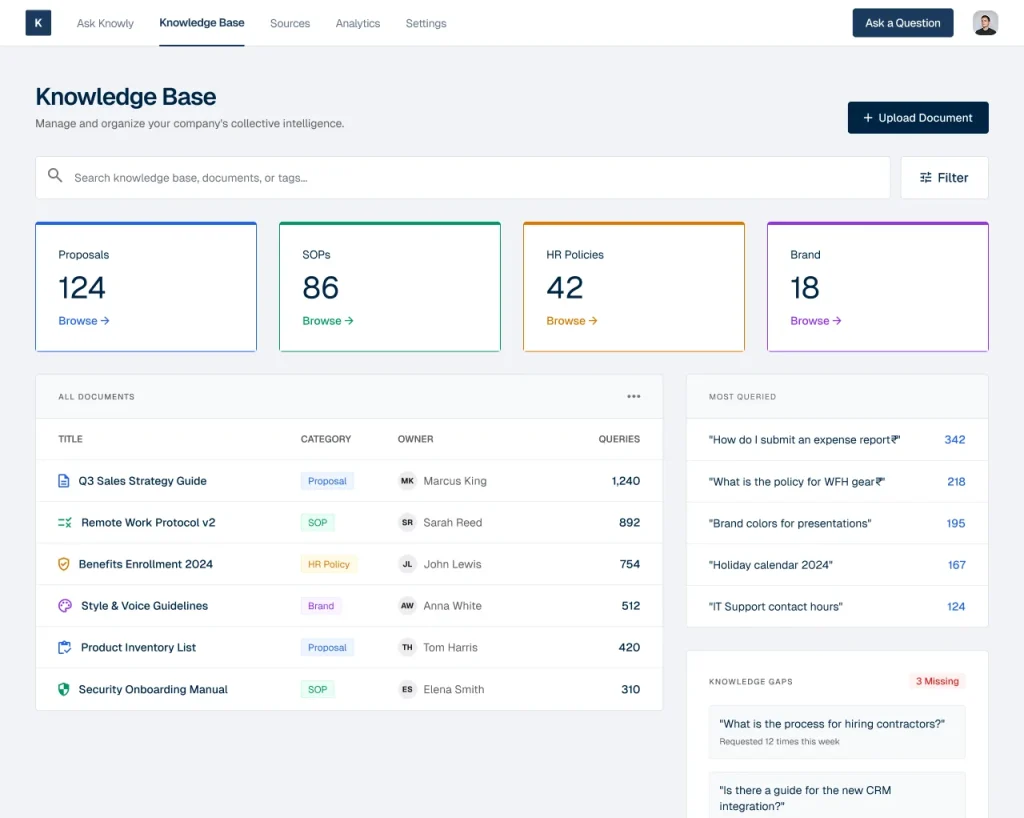
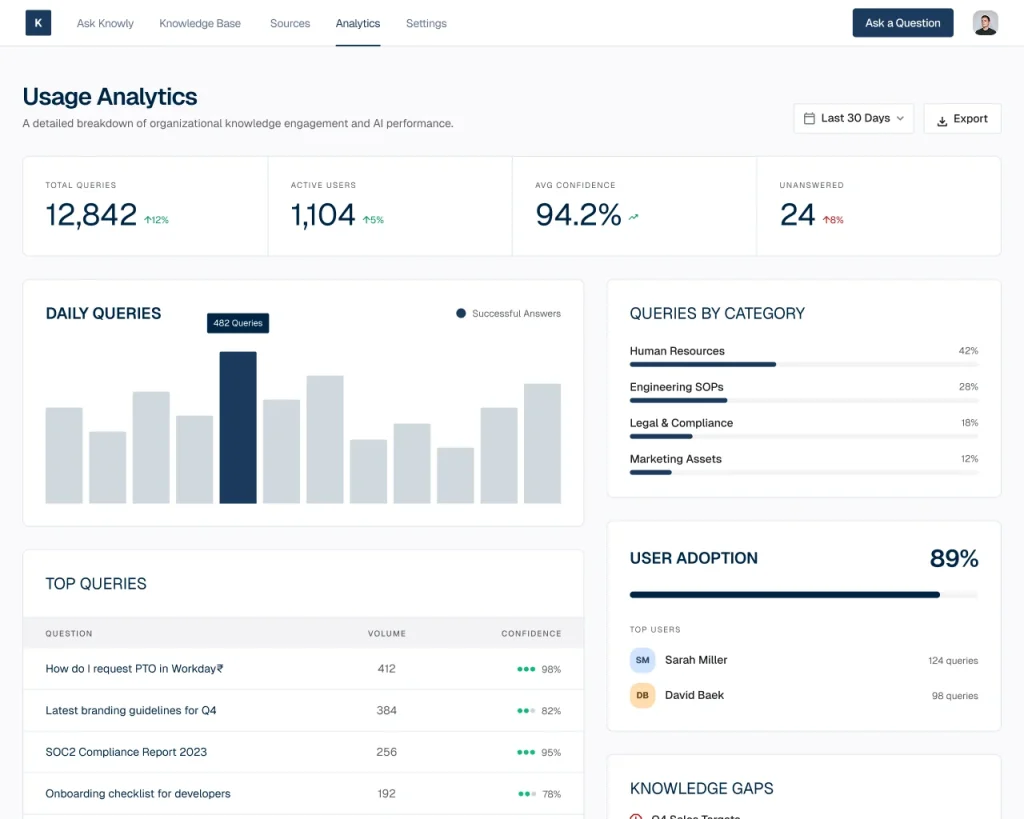
The Internal Knowledge Base Assistant is an AI MicroApp that answers team questions in plain language using your SOPs, service guides, and internal docs.
Best for: growing agencies onboarding new hires or working across time zones.
The challenge we solve: “Where’s the SOP for this?” “Which pricing tier applies here?” Every question a junior team member asks costs a senior person ten minutes and their focus. Multiply that across a week, and your most expensive people are working as a help desk.
What it does:
- Gives your team an AI assistant trained on your internal docs: SOPs, service guides, brand guidelines, case studies, pricing structures, and FAQs.
- Answers questions in plain language, so no one searches through folders or waits on a colleague.
- Reduces errors from outdated process knowledge and helps new hires get up to speed faster.
How it saves time:
- Answers repetitive internal questions automatically, removing interruptions for senior staff and managers.
- Gives everyone instant access to institutional knowledge, without chasing a colleague for an answer.
- Cuts the volume of internal queries that eat into leadership and account manager time.
Ready to Scale Your Agency’s AI Services?
Stop worrying about AI Specialist capacity constraints and start building and selling AI Agents, automation. See if E2M’s white label AI Agent development is the right fit for your agency.
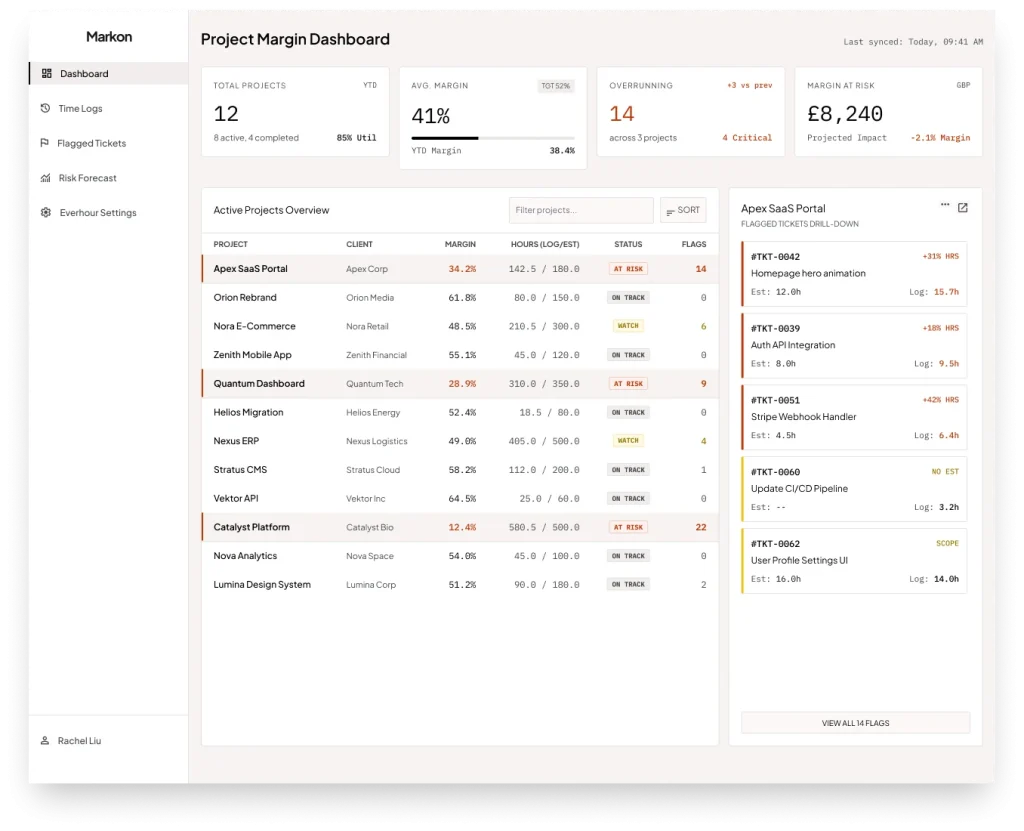
20. Time-Log to Project Margin Tracker (Agency Profitability Tracking)
Category: Development & Project Management · Type: MicroApp · Saves your team: 4–6 hrs/week
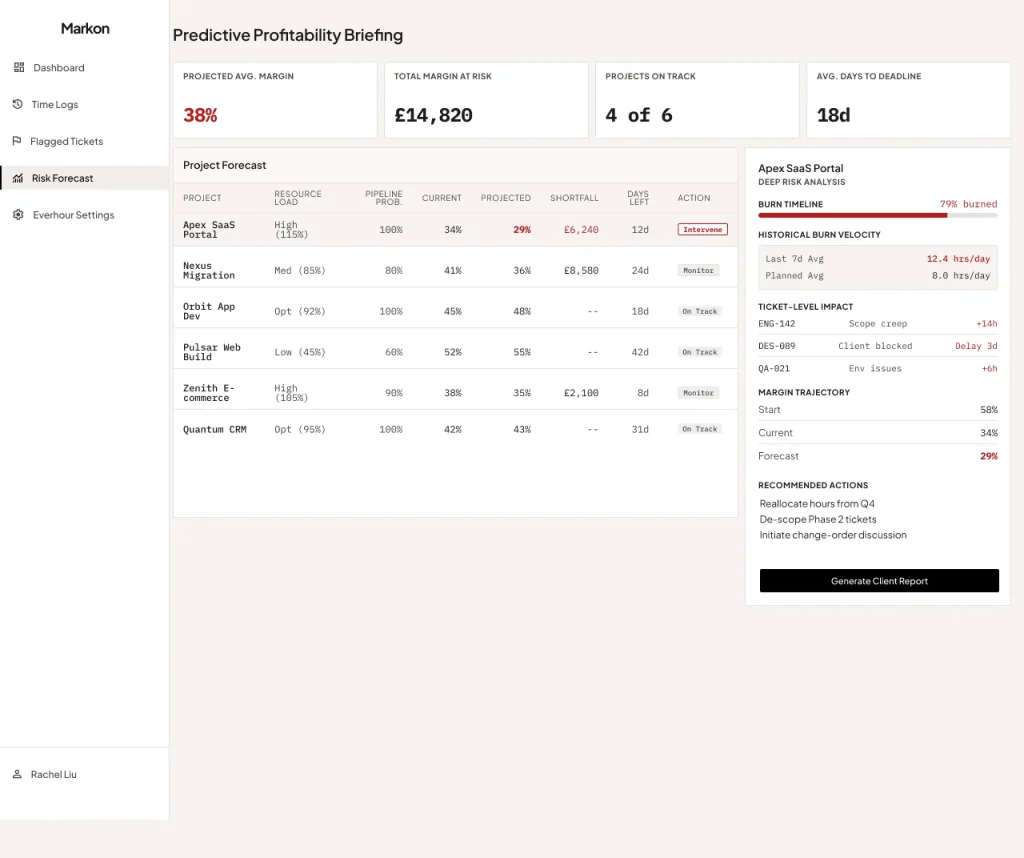
The Time-Log to Project Margin Tracker is an AI MicroApp that turns time logs into live project margin, flagging projects before they go over budget.
Best for: agencies running fixed-fee or project-based work where scope creep eats profit.
The challenge we solve: Most agencies find out a project lost money after it’s finished. By then, the hours are spent and the scope conversation is too late to have.
What it does:
- Imports time logs from your time-tracking tools and maps them to project cost codes.
- Calculates real-time project margin and compares actual hours against budget.
- Flags projects nearing margin thresholds, with recommended scope or resource changes, so you manage scope early instead of finding the loss afterwards.
How it saves time:
- Pulls time-log data and maps it to projects automatically, removing manual data pulls and reconciliation.
- Calculates burn rates against budgets in real time, replacing the occasional manual report.
- Surfaces margin risk early enough to act on, which the manual process rarely does consistently.
AI Workflows vs. AI Agents vs. Agent Frameworks: Where to Start in 2027
Start with workflows. They automate repeatable tasks with defined inputs and outputs, and simple implementations can often go live in days. Introduce custom AI agents when tasks require multi-step reasoning, tool use, or decisions based on changing context. Consider an agent framework when you need greater control over agent coordination, complex logic, or a scalable AI solution for clients.
The right starting point depends on your agency’s processes, technical resources, and delivery goals. You don’t need a framework for every automation project, and workflows, agents, and frameworks can work together within the same system.
| AI workflow (MicroApp) | Custom AI agent | Agent framework | |
|---|---|---|---|
| Best for | Repeatable tasks with defined inputs and outputs | Multi-step tasks requiring contextual decisions and tool use | Custom agent orchestration, complex logic, and multi-agent systems |
| Indicative setup time | Days for simple implementations | Weeks for more involved implementations | Weeks to months for complex custom builds |
| Skills needed | Operations expertise and access to connected tools | Automation expertise, prompt design, integrations, and testing | Software development, LLM integration, and system design |
| Examples | Bulk Meta Tag & Schema Generator, Budget Pacing & Anomaly Detector | Lead Analyst, Client Analyst | CrewAI, LangGraph, or AutoGen implementations |
| Start here if | You want to reduce repetitive work and reclaim team capacity | Your processes need more adaptive, multi-step execution | You're building a complex AI solution or productizing AI services for clients |
How to Roll Out Your First 3 Workflows in 30 Days
Don’t automate everything at once. Pick three workflows, prove the hours, then scale. Here’s the rollout we recommend.
Prefer not to run this alone? A fractional AI consultant can lead the audit and rollout with your team.
- Week 1: Find your biggest time sinks. Ask each team lead to list the three tasks that eat the most hours each week. Choose one workflow for revenue, one for retention, and one for delivery.
- Week 2: Map the data and access. List the tools each workflow needs (CRM, ad accounts, analytics, project management) and confirm who owns access. Record how long each task takes today. That’s your baseline.
- Week 3: Pilot with a human in the loop. Run each workflow on one team or a few accounts. A person reviews every output before it reaches a client. Fix prompts, templates, and edge cases as you go.
- Week 4: Measure and decide. Compare hours spent against your baseline, check output quality, and collect team feedback. Keep what works, adjust what doesn’t, and choose the next three.
The rule we follow: AI drafts, people decide. Every client-facing output gets a human review, especially in white-label work where your agency’s name is on it.
How to Calculate the ROI of an AI Workflow
An AI workflow pays off when the value of the hours it saves is greater than what it costs to run. Use this simple formula:
Monthly value = hours saved per week × blended hourly team cost × 4.33
For example, a workflow that saves 8 hours a week, at a blended team cost of $50 an hour, frees up about $1,732 of capacity a month (8 × $50 × 4.33). Compare that with the monthly cost of setup, platform fees, AI usage, and maintenance.
One rule matters more than the math: saved hours only turn into profit when you move them to billable or growth work. Decide where those hours go before the workflow goes live.
Risks and Guardrails for AI Workflows in Client Work
AI workflows touch client data and client-facing work, so the guardrails matter as much as the automation. Here’s what we recommend before any workflow goes live:
- Human review: every client-facing output gets checked by a person before it’s sent.
- Client data and access: get client approval before processing their data with AI, and use scoped access instead of shared logins.
- Client separation: keep each client’s data, credentials, and outputs separate.
- Accuracy checks: AI drafts can be wrong. Add review checkpoints wherever numbers, claims, or pricing appear.
- Disclosure: agree with each client on how you use AI in their deliverables.
- Ownership and handover: decide upfront who owns the workflow and its data if the engagement ends.
What Agency Owners Say About Building AI With E2M
We work white-label, so client results stay confidential. But here’s what agency owners say about building AI with us:
- Josiah Bussing, Founder & CEO, Mountaintop Web Design: “We Set the AI Goal. E2M Made It 10x Better.”
- Jennifer McPherson, Founder, Chickenango Marketing Solutions: “Pie-in-the-Sky AI Product. Six Months Later — Almost Live.”
- Adam Burrage, Director, We Are Trident: “Started With a Bottleneck. Ended Up With a New AI Revenue Line.”
FAQs
An AI workflow is a focused automation that handles one repeatable agency task from start to finish, such as drafting a proposal, analyzing a search term report, or sending a monthly client digest. At E2M, each workflow runs as a MicroApp: a lightweight AI app built to do one job well.
An AI workflow does one defined task with clear inputs and outputs. An AI agent handles multi-step work that needs judgment across several tools, and it often connects multiple workflows. Most agencies get faster results by starting with workflows, then adding agents.
Start with one workflow each for revenue, retention, and delivery. Our picks are the Automated RFP & Proposal Builder (8–14 hrs/week), the Automated Monthly Client Digest (6–10 hrs/week), and the Bulk Meta Tag & Schema Generator (7–12 hrs/week).
Each of the 20 AI workflows in this guide saves a team 4–14 hours a week, based on E2M’s MicroApp estimates for a typical agency team. Your results depend on team size, client count, and current processes.
No. They remove the repetitive parts of the job: data pulls, formatting, first drafts, and routine checks. Your people still review outputs, make decisions, and own client relationships. They just spend more of their week on that work.
Yes, as long as every client-facing output gets a human review and you have the right access to client data. Workflows like the Monthly Client Digest can be branded with your agency’s name, so they fit white-label AI delivery.
This guide covers 20 of the 100 workflows E2M has mapped across 12 agency functions. Request access to the full library, and we’ll walk you through the ones that fit your agency.
Most MicroApps connect to tools agencies already use: CRMs, Google Ads and Microsoft Ads, analytics platforms, project management and time-tracking tools, Slack, and email. The exact setup depends on your agency’s stack.
Cost depends on how many workflows you run, which tools they connect to, and how much AI usage they need. The simplest test is to compare the monthly cost with the value of the hours saved, using the ROI formula above. Book a Growth Call for a scoped estimate.
Yes, with the right guardrails: client approval, scoped access, separate data for each client, and human review of every client-facing output. Treat AI workflows like any other system that handles client data.
Yes. Many agencies now package AI automation as a client service. E2M’s AI Service Reseller Partner program lets you offer AI solutions under your own brand, with E2M delivering behind the scenes. See also our white-label AI solutions for agencies.
Give Your Team Its Hours Back in 2027
The agencies that win in 2027 won’t have the biggest teams. They’ll have teams that spend their week on strategy, creative, and client relationships, while AI handles the repetitive work.
You don’t need to automate everything to get there. Start with three workflows, measure the hours, and build from there.
Want access to the full workflow library? Book a Growth Call, and we’ll map your first three together.